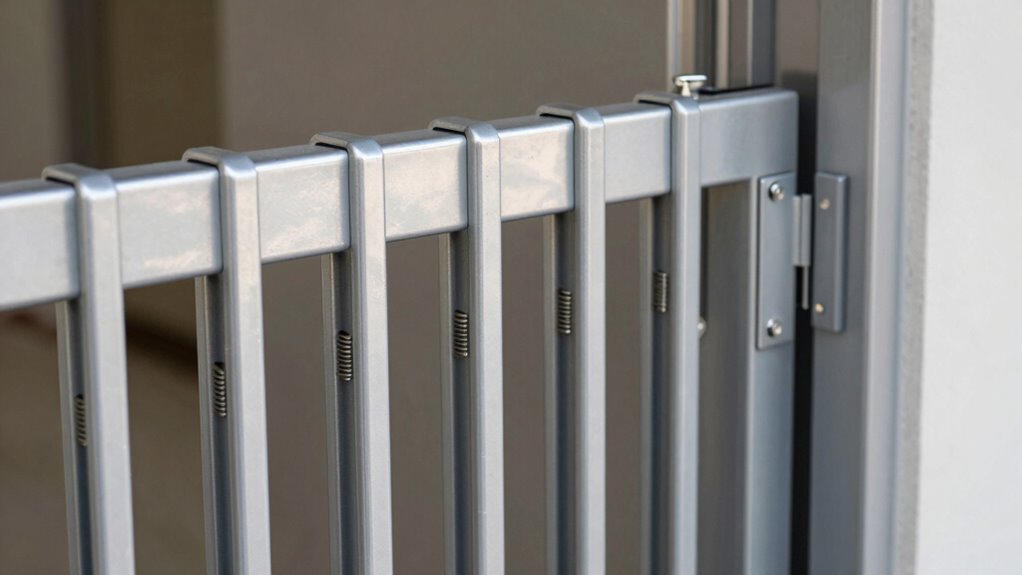

When using retractable gates, it’s crucial to check for pinch-point risks where fingers or small hands could get caught during opening or closing. Faulty installation or damaged hardware can create hazards, especially if safety features aren’t functioning properly. Always follow manufacturer instructions carefully, make sure the gate is securely mounted, and regularly inspect for wear and tear. Taking these steps helps prevent injuries and keeps your home safe—continue to explore more about safeguarding your space effectively.
Key Takeaways
- Ensure the gate’s mesh or fabric is durable, without sharp edges or loose parts that could cause pinching.
- Check that mounting hardware is secure to prevent gate instability and accidental pinches or falls.
- Verify that safety mechanisms, like childproof locks, are functioning properly to prevent accidental pinching or opening.
- Regularly inspect the gate for signs of wear or damage that could create pinch points over time.
- Follow manufacturer instructions carefully during installation to avoid misalignment that may increase pinch-point risks.
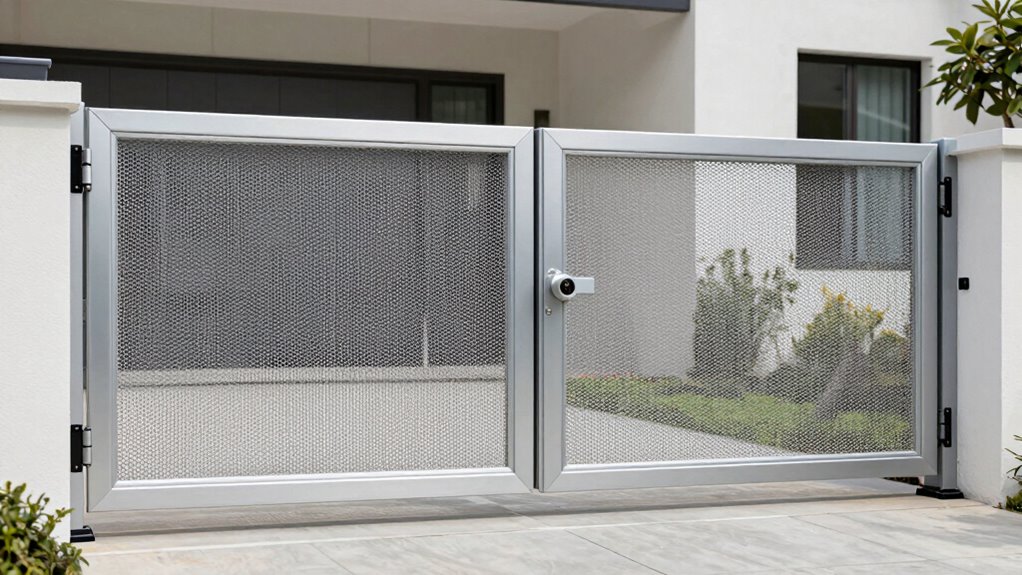
Have you ever needed a flexible way to secure a doorway or barrier without sacrificing space? Retractable gates are an excellent solution, offering convenience and versatility in many settings. They slide out easily when needed and retract out of sight when not in use, making them ideal for busy households or areas where space is limited. However, before you commit to a particular model, it’s essential to consider safety aspects, especially installation safety and childproof features. Proper installation is critical to ensure the gate functions correctly and remains secure over time. Many retractable gates come with mounting hardware, but you need to verify that it’s appropriate for your wall type or doorway material. Faulty installation can lead to instability, creating a dangerous pinch-point risk where fingers, hands, or even small children could get caught if the gate malfunctions or isn’t mounted securely. Always follow the manufacturer’s instructions meticulously, and if you’re unsure, consider professional installation to prevent accidents.
Childproof features are equally important, especially if you have curious little ones. Many retractable gates incorporate childproof locks or mechanisms designed to prevent young children from opening them on their own. Look for gates with secure locking systems that require a deliberate action to open, such as a push button or a twist lock, which little fingers can’t easily manipulate. Additionally, check for smooth operation to avoid pinched fingers during opening or closing. The fabric or mesh of the gate should be durable and free of sharp edges or loose parts that could pose a hazard. Some models include built-in safety indicators or automatic locking features that activate once the gate is extended, adding an extra layer of protection. Regularly inspecting your gate for signs of wear or damage is also crucial, as mechanical integrity can decrease over time, increasing the pinch-point risk. Over time, the mechanism can weaken, or the mounting hardware can loosen, increasing the pinch-point risk. Maintaining the gate by tightening screws and replacing worn parts can prevent accidental falls or injuries. When choosing a retractable gate, prioritize models with safety certifications and clear instructions on installation and maintenance. Remember, a well-installed, childproof retractable gate can provide peace of mind and keep your children safe while maintaining the open feel of your space. Ultimately, taking the time to assess installation safety and childproof features ensures that your retractable gate is both functional and safe for everyone in your home.
Frequently Asked Questions
What Safety Standards Apply to Retractable Gates?
You need to guarantee your retractable gates meet safety standards like manufacturing regulations and material compliance. These standards require that the gates are constructed with durable, non-toxic materials and designed to prevent pinch points, reducing injury risks. Always check that your gates conform to local safety codes, such as ASTM or EN standards, and verify proper installation and maintenance to keep users safe. Staying compliant helps prevent accidents and legal issues.
How Often Should Retractable Gates Be Inspected?
You should inspect your retractable gate at least once a month to guarantee gate durability and safety. Regular checks help identify wear, loose components, or damage that could compromise installation guidelines. If you notice any issues, address them promptly to prevent pinch-point risks. Frequent inspections keep the gate functioning smoothly, maintain safety standards, and extend its lifespan, ensuring it continues to protect effectively.
Are Retractable Gates Suitable for High-Traffic Areas?
Think of retractable gates like the traffic cop of door security—they’re quick to respond but may struggle under a heavy load. In high-traffic areas, their durability can be tested, risking pet safety and security. While they work well for moderate use, you should consider sturdier options for constant, busy entrances to keep everything running smoothly and safely. Always weigh the gate’s capacity against your needs to make the best choice.
Can Retractable Gates Be Customized for Different Openings?
Yes, retractable gates can be customized for different openings. You have various installation options to fit your space, ensuring a seamless look. You can also choose from different materials for material customization, matching your decor or durability needs. This flexibility makes retractable gates ideal for unique or irregular openings, giving you tailored safety solutions that blend seamlessly into your environment.
What Maintenance Is Required to Ensure Safety?
Think of your retractable gate as a trusty ship needing regular maintenance. You should routinely check hardware durability, ensuring all parts are secure and rust-free. Keep the track clean and lubricate moving components. Plus, you’ll want to provide user training so everyone understands safe operation, reducing pinch-point risks. Regular inspections and proper handling keep your gate safe, reliable, and shipshape for years to come.
Conclusion
So, next time you’re installing a retractable gate, remember that even the safest-looking gates can turn into pinch-point nightmares. Don’t be that person who learns the hard way—by pinched fingers or worse. Double-check those mechanisms, keep a keen eye on the moving parts, and maybe, just maybe, avoid turning your home into a DIY horror show. After all, safety’s not just a suggestion; it’s the gatekeeper of your sanity.