
When delivery people arrive, your dog reacts differently because of their powerful senses and natural instincts. Their keen sense of smell detects unfamiliar scents from uniforms, packages, or shoes, triggering alert behaviors like barking or blocking the door. These reactions are normal, but they can be managed through proper training and scent exposure. Understanding why they act this way can help you create a calmer environment—if you want to know how to do that, keep exploring further.

Get pet supplies delivered free with Prime
- Fast, free delivery on millions of items
- Prime Video, Amazon Music and more included
- Member-only deals all year
Key Takeaways
- Dogs’ heightened senses detect unfamiliar scents from delivery personnel and packages, triggering alert behaviors like barking or blocking the door.
- Their natural instincts interpret new scents as potential threats, leading to reactive behaviors during delivery visits.
- Proper training, including desensitization and positive reinforcement, can help dogs remain calm around delivery people.
- Exposure to delivery-related scents helps dogs associate these scents with non-threatening situations, reducing overreactions.
- Understanding a dog’s natural scent detection abilities and instincts aids in managing and modifying their responses effectively.

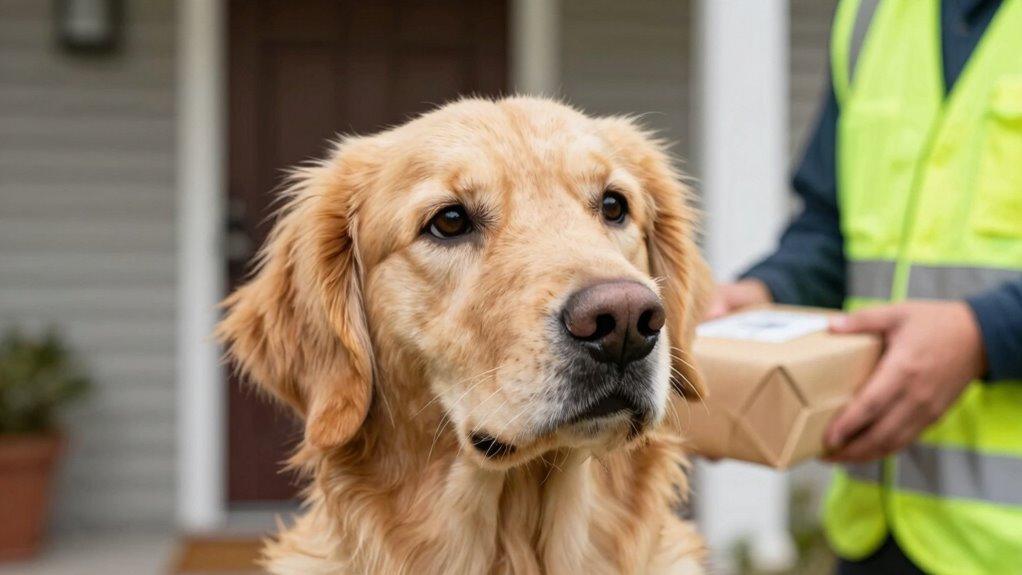
Many dogs act noticeably different when delivery people arrive, often barking loudly or becoming more alert. It’s as if they sense something unfamiliar, and their instincts kick in. This behavior is natural, rooted in their keen senses and instincts. Dogs are highly perceptive and rely heavily on their sense of smell, which is far superior to ours. Their heightened scent detection allows them to pick up on unfamiliar scents—like those of a delivery person’s package or clothing—that trigger their alertness. This is why some dogs will bark, growl, or even try to block the door; they’re reacting to the scent profile of someone they don’t recognize.
Dogs sense unfamiliar scents and react instinctively, often barking or alerting when delivery people arrive.
Understanding why dogs behave this way involves considering their training and natural instincts. Many dog owners incorporate specific training techniques to manage this behavior. For example, dog training can help your pet distinguish between normal visitors and potential threats, reducing unnecessary barking or agitation. Proper training reinforces commands like “sit,” “stay,” or “quiet,” which can be useful when a delivery arrives. Consistent training helps your dog understand what’s expected and creates a calmer environment during these moments. Additionally, desensitization exercises can expose your dog gradually to delivery scenarios, reducing their over-the-top reactions.
Scent detection plays a significant role here. Dogs are naturally curious about new smells, and delivery personnel often carry distinct scents from their uniforms, shoes, or packages. Your dog’s nose picks up on these cues immediately, triggering a heightened state of alertness. Some dogs may even associate the scent of delivery people with strangers or potential intruders, especially if they haven’t been exposed to many visitors. Over time, you can help your dog learn that these scents are harmless through controlled exposure and positive reinforcement. For example, giving treats or praise when your dog remains calm around delivery people helps reshape their response.
Incorporating scent detection into your training routine can improve your dog’s reaction to visitors. You might introduce scent exercises by allowing your dog to sniff delivery packages or clothing, then rewarding calm behavior. This approach helps them associate unfamiliar scents with positive experiences instead of fear or aggression. By combining proper dog training with scent detection techniques, you can make delivery visits less stressful for both you and your pet. Ultimately, understanding the role of scent and training empowers you to manage your dog’s natural instincts, fostering a more relaxed and controlled environment whenever the delivery person arrives. Additionally, understanding the role of delivery scents can further enhance your training strategies for a calmer dog during visits. Recognizing the importance of meticulous scent analysis can help you better interpret your dog’s reactions and tailor your training accordingly. Engaging in consistent exposure to delivery-related scents can help desensitize your dog and reduce their overreaction over time.
Products Worth Considering

PetSafe Guardian GPS 2.0 Dog Fence and Tracking Collar

PetSafe Guardian GPS Dog Fence for Properties 3/4 Acre or Larger

PETLIBRO RFID Automatic Cat Feeder with Collar Sensor
As an affiliate, we earn on qualifying purchases.
Frequently Asked Questions
Do Dogs Recognize Delivery People by Scent or Appearance?
You might notice your dog recognizes delivery people quickly, mainly through scent recognition, which is incredibly powerful for dogs. They can distinguish individuals by their unique smells, even if they look similar. Appearance cues also play a role, especially if the person’s outfit or accessories are consistent. Your dog’s ability to pick up on these signals helps them identify familiar visitors, making them act differently around delivery people compared to strangers.
Can Frequent Delivery Visits Change a Dog’s Behavior Long-Term?
Frequent delivery visits can lead to lasting behavioral adaptations in your dog. Studies show that dogs exposed repeatedly to specific stimuli often adjust their reactions over time, influenced by environmental factors. You might notice your dog becoming more relaxed or alert around delivery people after consistent interactions. This long-term change results from their ability to learn and adapt, making their behavior shaped markedly by ongoing environmental influence.
Are Certain Dog Breeds More Likely to React Differently to Delivery People?
Yes, certain dog breeds are more likely to react differently to delivery people due to their breed tendencies and scent recognition processes. For example, herding or guarding breeds might be more alert or territorial, while others may be more curious or indifferent. Understanding these breed-specific traits helps you anticipate their reactions. Recognizing how their scent recognition processes influence behavior can also explain why some dogs bark or become anxious around unfamiliar scents.
How Can I Train My Dog to Be Calmer Around Delivery Personnel?
You can train your dog to be calmer around delivery personnel using targeted behavior modification and training techniques. Start by desensitizing your dog to delivery sounds and smells, rewarding calm behavior with treats. Practice controlled greetings, gradually increasing exposure. Consistency is key—use positive reinforcement daily to reinforce good behavior. With patience and persistence, your dog will learn to stay relaxed, reducing stress for both of you when deliveries arrive.
Does a Dog’s Past Experiences Influence Its Reaction to Delivery Visitors?
Yes, a dog’s past trauma and territorial instincts profoundly influence how it reacts to delivery visitors. If your dog has experienced negative encounters or feels threatened, it may act wary or aggressive. These past experiences can heighten territorial instincts, making your dog protective or anxious around outsiders. To help, gradually desensitize your dog to delivery scenarios and build positive associations, which can reduce fear and territorial reactions over time.
Conclusion
Understanding why your dog behaves differently around delivery people helps you see the world through their eyes. Just like a lighthouse guides ships safely to shore, your dog’s reactions are a beacon of their instincts and experiences. By recognizing these signals, you can build trust and comfort between you and your furry friend. Remember, their behavior is a story waiting to be read—an open book of feelings, fears, and loyalty shining through just beneath the surface.