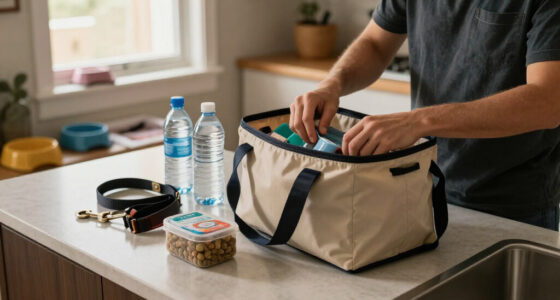
To make your dog feel more secure during visitors, keep a calm and predictable routine. Greet guests slowly, encouraging them to crouch down and offer a gentle hand for sniffing. Maintain your dog’s regular schedule for walks, feeding, and playtime, as consistency helps reduce anxiety. Use soothing voices or treats to reinforce calm behavior. By establishing a stable environment, you’ll help your dog feel safe and comfortable around visitors—there’s more to take into account for a smooth experience.

Get pet supplies delivered free with Prime
- Fast, free delivery on millions of items
- Prime Video, Amazon Music and more included
- Member-only deals all year
Key Takeaways
- Allow the dog to choose and retreat to their safe zone during visits to reduce stress.
- Introduce visitors gradually with positive reinforcement to create positive associations.
- Instruct visitors to approach slowly, crouch, and offer a hand for sniffing to promote comfort.
- Maintain a calm, predictable routine during visits to foster a sense of security.
- Observe and respect the dog’s body language, adjusting interactions to prevent discomfort.
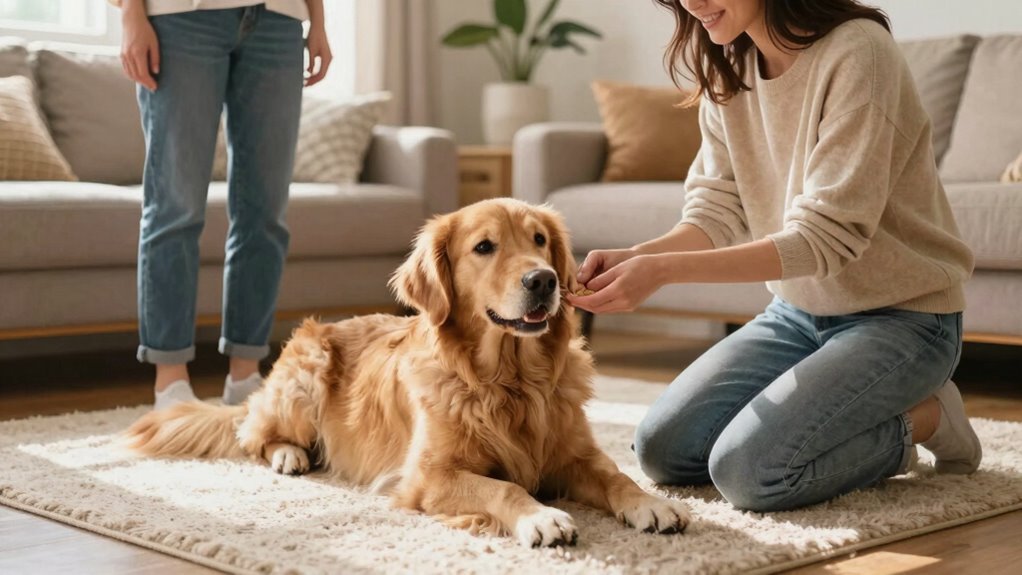
When visitors come to your home, dogs can often feel anxious or unsure if they aren’t accustomed to sudden changes or unfamiliar people. You might notice your dog’s body language—ears back, tail lowered, or avoiding eye contact—as signs of discomfort. Recognizing these signals helps you understand when your dog feels uneasy. To make your home a more welcoming space, you need to create a secure environment setup that minimizes stress. This involves setting up a designated area where your dog can retreat if they start feeling overwhelmed. Having a quiet, comfortable space with their bed, some toys, and water ensures they can escape the activity if needed. When visitors arrive, give your dog the option to stay in their safe zone rather than forcing them into close proximity. This respects their boundaries and helps them feel more in control.
Before your guests arrive, introduce your dog to the idea of visitors gradually. Short, positive interactions with friends or family members can help your dog learn that new people aren’t a threat. During these introductions, pay attention to your dog’s body language—wary eyes, stiff posture, or lip licking may indicate discomfort. If you notice these signs, calmly redirect their attention with a treat or toy, helping them associate visitors with positive experiences. When your guests arrive, instruct them to avoid overwhelming your dog. They should approach slowly, crouching down and offering a hand for sniffing rather than reaching over the dog’s head. This respectful approach helps your dog feel more secure and less threatened. Understanding dog body language can significantly improve your ability to gauge your pet’s comfort level during social interactions. Additionally, being aware of dog stress signals allows you to respond quickly and appropriately to your pet’s needs.
Creating a calm and predictable environment during your visits also involves maintaining a consistent routine**, which can help your dog feel more secure and less anxious about unfamiliar situations. Throughout the visit, monitor your dog’s body language. If they seem relaxed—tail wagging, loose posture, or gentle eye contact—they’re comfortable. If they start showing signs of stress, like yawning, lip licking, or trying to retreat, give them space and reinforce calm behavior** with a soothing voice or treats. Keep the environment predictable by maintaining a routine, such as feeding or walks, around the visit so your dog’s day remains stable. This consistency helps reduce anxiety and builds trust. Establishing a predictable routine is a key component of creating a sense of security for your dog during social situations.
Products Worth Considering

Shark PowerDetect Robot Vacuum & Mop Combo (AV2800ZE)

Dyson Ball Animal 2 Plus Corded Vacuum

PETLIBRO Automatic Litter Box with AI Camera, Odor Control & Multi‑Cat Recognition
As an affiliate, we earn on qualifying purchases.
Frequently Asked Questions
How Long Should the Visitor Stay to Comfort My Dog?
You should keep visitors for about 10 to 15 minutes initially, gradually increasing the time as your dog becomes more comfortable. During this period, focus on positive interactions to reinforce good dog socialization. Maintain clear visitor boundaries by encouraging gentle, calm behavior and avoiding overwhelming your dog with too many people or loud noises. Observe your dog’s body language, and if they seem stressed, end the visit sooner to make certain they feel secure.
What if My Dog Is Shy Around Visitors?
If your dog is shy around visitors, focus on gentle dog socialization and visitor training. Start by introducing visitors gradually, allowing your dog to approach at their comfort level. Use treats and praise to create positive associations. Keep initial visits short and calm, increasing exposure over time. Consistency and patience help your dog build confidence, making social situations less stressful and more enjoyable for both of you.
Should Visitors Bring Treats or Toys for the Dog?
Bringing treats or toys can ease dog anxiety, but only if you respect visitor boundaries. When visitors offer treats, it signals trust, helping your dog feel more secure. However, guarantee they don’t overwhelm your dog or violate its comfort zone. Sometimes, a gentle toy or a calm presence does more good. Coincidentally, these small gestures can foster trust, creating a safe environment where your dog’s confidence naturally grows around visitors.
How Can I Prepare My Dog for Unexpected Visitors?
To prepare your dog for unexpected visitors, focus on dog socialization to build confidence and reduce visitor anxiety. Practice controlled greetings and reward calm behavior to help your dog feel secure. Keep a designated safe space where your dog can retreat if overwhelmed. Regular socialization and positive reinforcement teach your dog to stay relaxed around new people, making surprise visits less stressful and more manageable for both of you.
Are There Specific Breeds That Respond Better to Routines?
Certain breeds respond better to routines due to their breed-specific training and canine temperament. For example, herding and working breeds like Border Collies or German Shepherds often thrive with structured routines, providing them a sense of security. Conversely, some breeds may be more adaptable. Understanding your dog’s breed-specific traits helps you tailor routines that enhance their comfort, making visits more positive and reducing anxiety during unexpected or planned visitors.
Conclusion
By following this simple visitor routine, you’ll turn your home into a fortress of calm for your dog. Imagine every visitor as a gentle breeze, soothing your pup’s nerves, transforming their anxiety into a peaceful, wagging tail parade. Your consistent, caring approach creates a sanctuary so secure, even the most anxious dogs will feel like they’re basking in a warm, loving hug every time someone new arrives. It’s like magic—trust me, your dog will thank you forever!