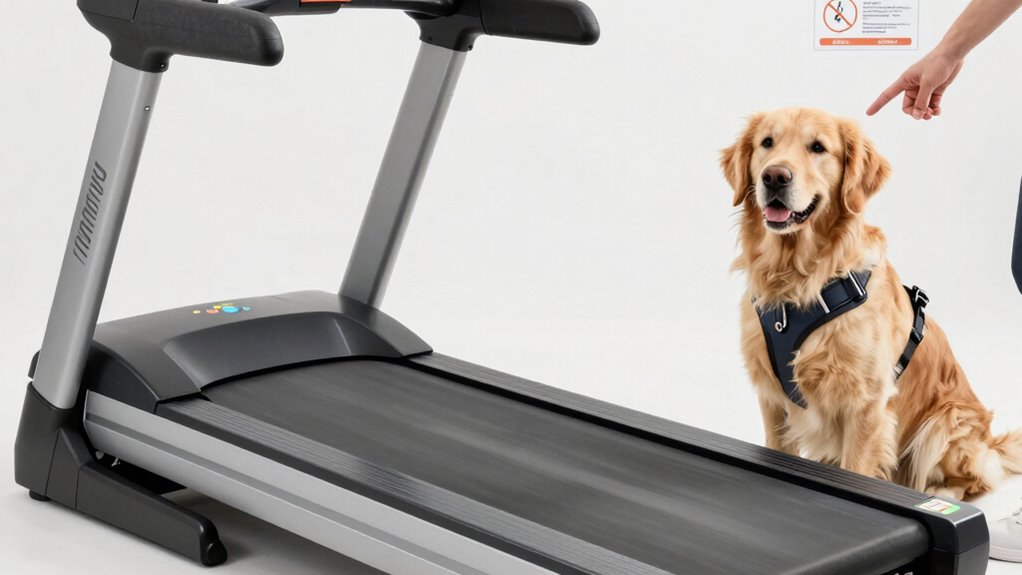

Before your dog steps on a treadmill, make certain their safety by using a well-fitting harness that distributes pressure and attaching a sturdy leash to prevent escapes. Set up a calm environment in a familiar, quiet space, and introduce the treadmill gradually, using treats and praise to build positive associations. Check that the treadmill is in good condition, monitor your dog’s reactions closely, and never force them. Keep exploring to learn more about making treadmill sessions safe and comfortable for your pet.
Key Takeaways
- Use a properly fitted harness attached to a sturdy leash, not directly to the treadmill, for secure control.
- Place the treadmill in a quiet, familiar space and inspect it regularly for hazards.
- Introduce the treadmill gradually with positive reinforcement to build comfort and trust.
- Start at the slowest speed, monitoring the dog’s behavior for signs of stress or discomfort.
- Prioritize safety by observing the dog closely and stopping immediately if they show signs of distress.
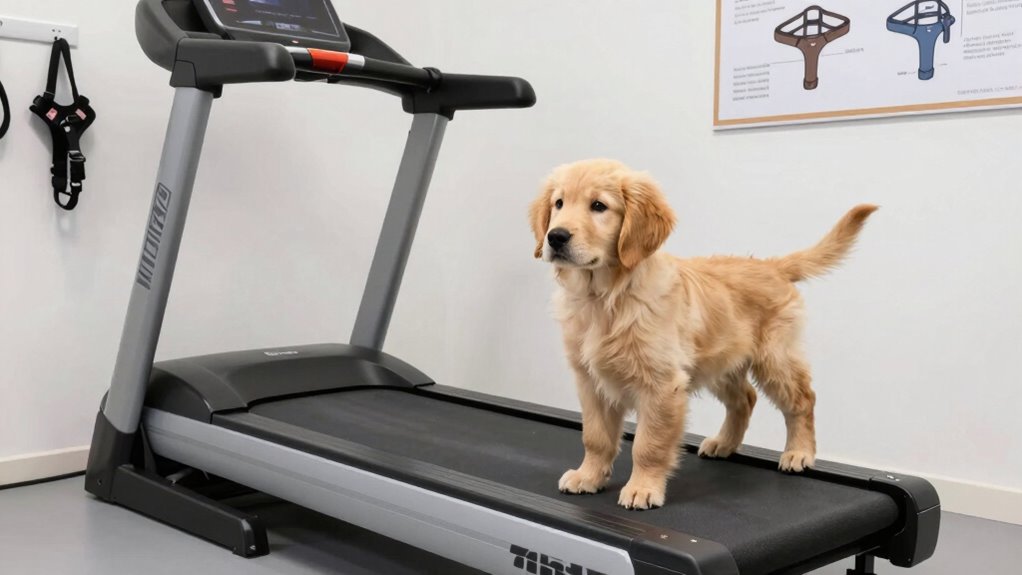
If you’re new to using a dog treadmill, understanding safety rules is crucial to guarantee your pet’s well-being. One of the most important aspects is proper harnessing. You want to ensure your dog is securely and comfortably fastened to prevent slipping or sudden escapes that could result in injury. A well-fitting harness distributes pressure evenly across your dog’s chest and shoulders, avoiding strain on the neck or spine. Before starting, double-check that the harness isn’t too tight or loose, and always use a sturdy leash attached to the harness rather than directly to the treadmill. This gives you better control and minimizes the risk of your dog falling or lunging off the treadmill. Proper harnessing isn’t just about safety; it also helps your dog feel secure, making the experience less stressful for both of you. Additionally, understanding local automation options can help you set up a safe environment that supports your dog’s treadmill routine, such as automatic shut-off features or remote controls. Noise considerations are another critical factor. Many dog treadmills generate noise that can startle or stress your pet, especially if they’re not used to the sound. To address this, introduce your dog to the treadmill in a calm environment before turning it on. Use positive reinforcement, like treats and praise, to build familiarity and reduce anxiety. When you do start the treadmill, begin at a very slow speed and gradually increase as your dog gets comfortable. Keep in mind that some models produce more noise than others, so choosing a quieter treadmill can make the process smoother. If your dog shows signs of discomfort, such as trembling, barking excessively, or trying to escape, stop immediately and give them time to adjust. Noise considerations also extend to the environment where you use the treadmill; placing it in a quiet, familiar space helps your dog feel safe and less overwhelmed. Throughout the process, keep a close eye on your dog’s behavior and physical responses. Never force your pet onto the treadmill; instead, make it a positive experience. Use treats, praise, and patience to encourage them. Regularly inspect the treadmill for any loose parts or hazards that could pose a risk during use. Remember, safety is a continuous process—reassess your setup and your dog’s comfort level regularly. Proper harnessing combined with thoughtful noise considerations creates a safer, more enjoyable experience for your dog. By taking these precautions, you’re helping your pet build confidence and enjoy the benefits of treadmill exercise without unnecessary stress or risk.
Frequently Asked Questions
Can All Dog Breeds Use a Treadmill Safely?
Not all dog breeds can use a treadmill safely. Breed considerations, like size and energy levels, play a big role. Smaller breeds or those with joint issues might struggle or get injured, so size limitations matter. Always supervise your dog during treadmill use, and consult your vet first. Tailor the workout to fit your dog’s breed characteristics and physical capabilities to guarantee safety and effectiveness.
How Long Should a Beginner Dog Treadmill Session Last?
For beginner treadmill sessions, you should start with a dog treadmill duration of just 5 to 10 minutes. Keep a close eye on your dog’s behavior and comfort level, gradually increasing the time as they get used to the exercise. Short, positive sessions help prevent fatigue and stress, ensuring your dog enjoys treadmill workouts safely. Remember, patience and consistency are key to successful beginner treadmill sessions.
Are There Signs My Dog Is Uncomfortable on the Treadmill?
You’ll notice signs of treadmill discomfort through your dog’s body language, like stiff posture, tucked tail, or avoiding eye contact. If your dog seems uneasy, stops frequently, or shows signs of panting or yawning, they might be uncomfortable. Pay close attention to these cues to prevent stress or injury. Always observe your pup’s reactions closely and gradually introduce the treadmill to make sure they feel safe and secure.
What Safety Gear Is Recommended for Dog Treadmill Use?
Did you know that over 60% of dog injuries occur during exercise? To keep your pup safe, use a sturdy leash harness that fits well, preventing slipping or choking. Additionally, place safety mats around the treadmill to cushion any accidental falls. These safety gear essentials help make sure your dog stays secure and comfortable during workouts, reducing risks and making treadmill sessions enjoyable for both of you.
How Do I Train My Dog to Use the Treadmill Confidently?
To train your dog confidently on the treadmill, start with dog training basics like positive reinforcement and patience. Use treats and praise to encourage your dog to stay calm and gradually increase their comfort. Highlight the treadmill benefits, such as improved exercise and mental stimulation, to motivate your pet. Keep sessions short, consistent, and always supervise. Over time, your dog will gain confidence and enjoy their treadmill workouts.
Conclusion
Remember, your dog’s safety is like guiding a puppy through its first steps—patience and care make all the difference. I once saw a dog excitedly hop onto a treadmill, only to slip and learn quickly. With proper safety rules, you’re building trust and confidence, turning a potential stumble into a confident stride. So, stay vigilant, follow those guidelines, and soon your furry friend will be confidently pacing like a pro, enjoying safe, healthy exercise.