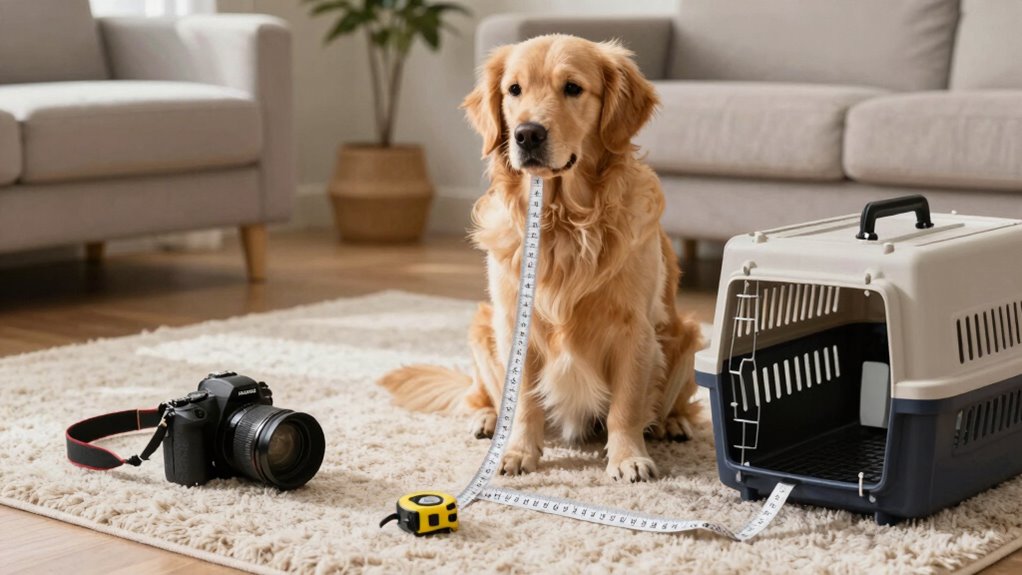
Stop guessing your dog’s perfect crate size by measuring them accurately in just 5 minutes. Use a flexible tape to measure from the tip of their nose to the base of their tail for length, then from the top of their head or ears to the ground for height, and the widest part of their chest for width. Add a few inches to each measurement for comfort. Keep going to discover tips that will make choosing the right crate an easy, stress-free process.
Key Takeaways
- Use a flexible measuring tape to measure from your dog’s nose tip to the base of the tail for length.
- Measure from the top of the head or ears to the ground for height.
- Measure the widest part of the chest or shoulders for width.
- Add 2-4 inches to length and height measurements for comfortable space.
- Choose a crate that allows your dog to stand, turn, and lie down comfortably based on these measurements.
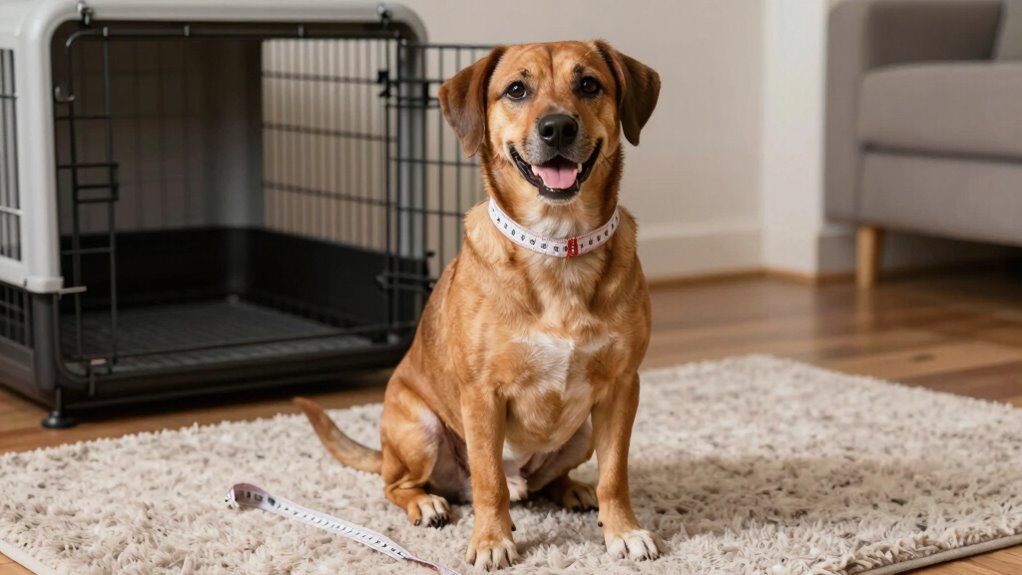
Choosing the right crate size is crucial to guarantee your dog’s comfort and safety. When you select an appropriately sized crate, it makes crate training easier and ensures your pet feels secure rather than confined. A crate that’s too small can cause discomfort, while one that’s too large might encourage your dog to use one corner as a bathroom, defeating the purpose of crate training. To find the perfect fit, you need to measure your dog accurately. This quick task can be done in just five minutes, and it’s the best way to avoid guesswork.
Choosing the correct crate size ensures your dog’s comfort and supports successful crate training.
Start by gathering a flexible measuring tape, a pen, and some paper. Have your dog stand naturally on a flat surface, ideally on a non-slip floor. First, measure from the tip of their nose to the base of the tail. This gives you the length of your dog, which is the minimum internal length your crate should have. Next, measure from the top of their head or ears to the ground to determine their height. For width, measure the widest part of their chest or shoulders. These measurements will help you choose a crate that allows enough space for your dog to stand, turn around, and lie down comfortably.
When you’re shopping for a crate, add a few extra inches to these measurements, especially length and height. This extra space ensures your dog can stretch out without feeling cramped, which is essential for comfortable pet safety and proper crate training. For example, if your dog measures 20 inches in length, look for a crate around 22 to 24 inches long. Similarly, if their height from the ground to the top of their ears is 12 inches, select a crate around 14 to 16 inches tall. This margin of safety prevents your dog from feeling confined and helps them settle into their new space more easily.
Avoid choosing a crate based solely on your dog’s current size—consider their growth if they’re still young. This foresight prevents having to replace the crate prematurely. Remember, the right size encourages positive crate training experiences, making your pet associate the crate with comfort and security rather than punishment or restriction. When your dog feels secure in their crate, they’ll be more willing to stay calm and even look forward to their designated space. Accurate measurements now mean fewer issues later, creating a safe environment that promotes healthy behavior and peace of mind for you. By spending just a few minutes measuring your dog properly, you’re setting the foundation for successful crate training and ensuring your pet’s safety every step of the way. Understanding dog size and proportions is essential for choosing the most suitable crate.
Frequently Asked Questions
Can I Use a Generic Crate Size for All Dog Breeds?
Did you know that breed-specific needs vary greatly? You shouldn’t use a universal crate size for all dog breeds, as this can lead to discomfort or safety issues. Smaller breeds need less space, while larger breeds require more room to stand and turn around. By choosing breed-specific crates, you guarantee your dog’s comfort and well-being, rather than relying on a generic, one-size-fits-all solution.
How Often Should I Re-Measure My Dog for the Crate?
You should re-measure your dog every few months, especially during growth spurts, to guarantee the crate remains a good fit. As your dog grows, their size changes, affecting crate durability and comfort. Regular measurements help you choose a crate that provides enough space without being too large, promoting safety and well-being. Staying vigilant ensures your dog’s crate adapts to their growth and maintains lasting durability.
What if My Dog Is Between Two Crate Sizes?
If your dog is between two crate sizes, choose the larger one for better dog size and crate fit. A slightly bigger crate allows your dog to stand, turn around, and stretch comfortably, ensuring they’re not cramped. Remember, a proper crate fit promotes comfort and safety. If needed, add a cozy mat or blanket to fill extra space without compromising their comfort or restricting movement.
Are There Safety Tips for Measuring Very Young Puppies?
To guarantee puppy safety when measuring, handle your puppy gently and use soft, flexible measuring tape. Keep measurements comfortable, avoiding tight fits that could cause stress or injury. Measure quickly and calmly to prevent distress, and always reward your puppy afterward. Remember, patience is key—use gentle handling and positive reinforcement as measuring tips to keep your young pup safe and comfortable during the process.
Should I Consider My Dog’s Future Growth When Choosing a Crate?
Yes, you should consider your dog’s future growth when choosing a crate. Growth considerations are essential to make sure your pup has enough space as they grow, preventing the need for frequent replacements. Opt for a crate that offers future sizing, allowing your dog to move comfortably and stretch out. This way, you provide a safe, cozy environment now and accommodate their size in the months ahead.
Conclusion
Now that you’ve mapped out the perfect crate size, you’re ready to give your furry friend a cozy castle they can call their own. Think of it as crafting a snug nest where they can relax and feel secure, like a little knight’s fortress. With these measurements in hand, you’re set to create a space that fits just right—no more guesswork, only comfort and peace of mind for both of you.