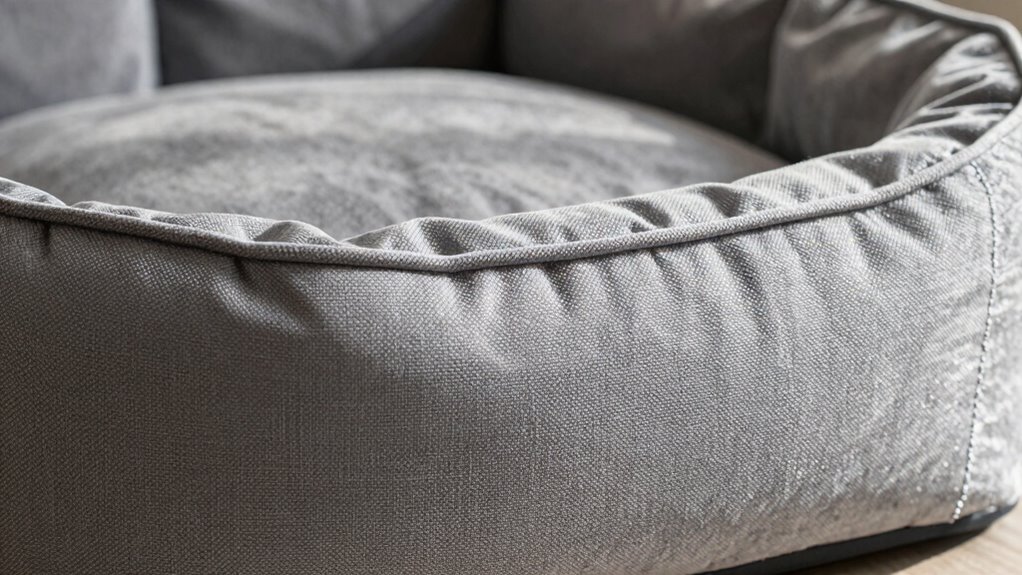
When choosing a chew-proof bed, the fabric’s durability matters more than its thickness or fluffiness. Strong, tear-resistant fabrics like ballistic nylon or reinforced canvas resist biting and gnawing, preventing your pet from shredding the bed and swallowing shredded material. Weaker fabrics can tear easily, creating safety hazards and short lifespan. Focusing on the right fabric guarantees safety, longevity, and fewer replacements. If you keep exploring, you’ll discover how fabric quality truly impacts your pet’s safety and comfort.
Key Takeaways
- Durable fabrics like ballistic nylon and reinforced canvas resist tearing better than just increasing thickness.
- Fabric strength directly impacts safety by preventing ingestion of shredded or frayed material.
- Thinner, plush fabrics can still be easily torn, making fabric choice more crucial than thickness alone.
- High-quality, tough fabrics reduce the need for frequent replacements and maintenance.
- Prioritizing fabric durability ensures a safer, longer-lasting, and more effective chew-proof bed.
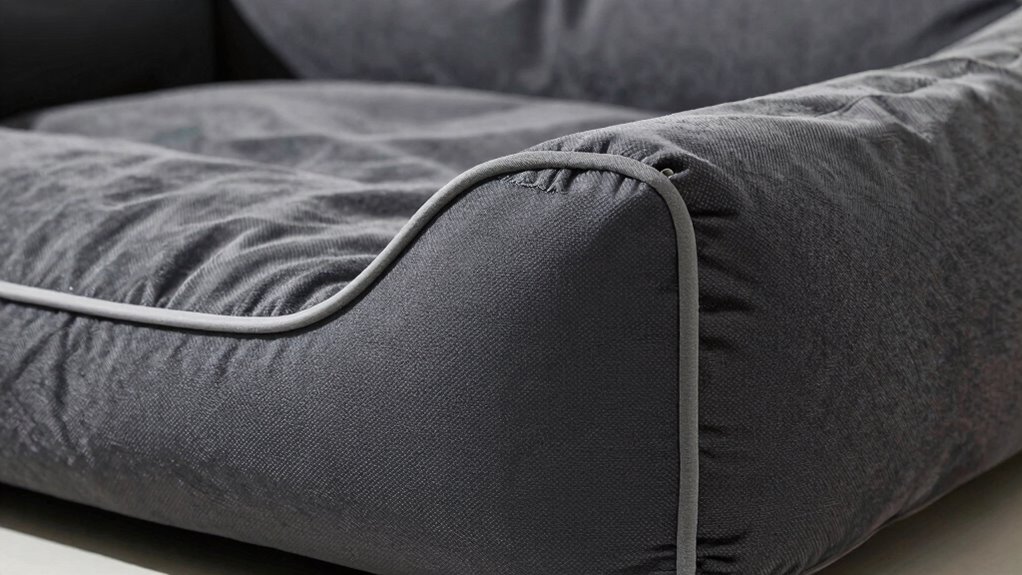
Have you ever struggled with a pet that chews through their bedding? If so, you know how frustrating it can be to constantly replace ruined beds and worry about your dog’s safety. When it comes to choosing a chew-proof bed, the material’s durability is more important than simply opting for a thicker or plush-looking option. Thick beds might seem sturdy, but if they’re made from low-quality or easily torn fabrics, your dog’s sharp teeth can still penetrate and destroy them. Instead, prioritize beds crafted from durable materials specifically designed to withstand persistent chewing. These fabrics are engineered to resist tears, bites, and gnawing, ensuring your pet stays safe and comfortable without the constant need for replacements.
Material durability plays a vital role in maintaining dog safety. Chew-proof beds made from high-quality, tough fabrics reduce the risk of your dog swallowing or choking on shredded material. Chewing through weak fabrics can lead to loose threads, stuffing ingestion, or even injuries from frayed edges. Choosing a bed with a strong, tear-resistant outer layer minimizes these hazards, giving you peace of mind that your pet can chew safely. It’s tempting to pick a bed based on appearance or thickness alone, but durability and safety should always come first, especially if your dog has a history of destructive chewing habits.
The key is to look for fabrics that are specifically designed for durability. Materials such as ballistic nylon, heavy-duty polyester, or reinforced canvas are popular choices because they resist tearing even under persistent gnawing. These fabrics don’t just last longer—they also contribute to your dog’s safety by preventing accidental ingestion of shredded fabric or stuffing. Remember, it’s not about making your dog’s bed look thick or plush but about ensuring it’s made from a material that can stand up to your dog’s chewing strength. The added benefit is that these sturdy fabrics often require less maintenance, stay looking newer longer, and ultimately save you money over time.
Frequently Asked Questions
Are Chew-Proof Beds Suitable for All Dog Breeds?
Chew-proof beds aren’t suitable for all dog breeds, especially aggressive chewers. You should consider durability testing results and fabric maintenance when choosing. For tough chewers, fabrics like ballistic nylon or reinforced materials hold up better, but some breeds might still damage them. Regularly inspect and clean your dog’s bed to guarantee longevity. Ultimately, pick a bed that matches your dog’s chewing habits and your ability to maintain it.
How Often Should I Replace a Chew-Proof Bed?
You should replace a chew-proof bed when it shows signs of wear, tears, or compromised fabric. Regular durability testing helps you spot weak spots early, ensuring your dog’s comfort and safety. Maintain the fabric by cleaning it as recommended, which extends its lifespan. If the fabric starts to degrade despite maintenance, it’s time for a replacement to prevent your dog from ingesting fibers or damaging themselves.
Can Fabric Choice Affect a Dog’s Chewing Behavior?
Yes, fabric choice can influence your dog’s chewing behavior. Durable fabrics reduce the likelihood of your dog finding the bed a tempting chew toy, as they resist tearing and breaking. Conversely, fabrics with chewing triggers like loose threads or soft textures can encourage your dog to chew more. Picking a sturdy, chew-resistant fabric helps keep your dog safe and preserves the bed longer, minimizing damage and frustration.
Do Chew-Proof Beds Come in Different Sizes for Multiple Pets?
Yes, chew-proof beds come in various sizes to suit multiple pets. You should check the dog bed dimensions to find the right fit for each of your pets. Pet bed sizing is essential to guarantee comfort and durability, especially if you have larger or multiple dogs. Many brands offer options ranging from small to extra-large, making it easy to select a suitable chew-proof bed for your furry friends.
Are There Eco-Friendly Options for Chew-Proof Bed Fabrics?
You’ll be amazed at how eco-friendly options exist for chew-proof bed fabrics. Many beds now use sustainable fibers and biodegradable materials, making your choice kinder to the planet. These fabrics are just as durable, ensuring your pet’s comfort and safety, without sacrificing environmental responsibility. Embrace these green options, and you’ll feel like you’re making a difference with each purchase, proving that caring for your pet and the planet go paw in paw.
Conclusion
Choosing the right fabric for your pet’s bed isn’t just a small detail—it’s the secret weapon against relentless chewers. The right material can turn a bed into a fortress, defying even the most determined nibblers. Don’t let your pet turn their resting spot into a shredded mess; instead, opt for fabrics that stand up to the challenge. Remember, a well-chosen fabric could be the difference between peace and chaos in your home.