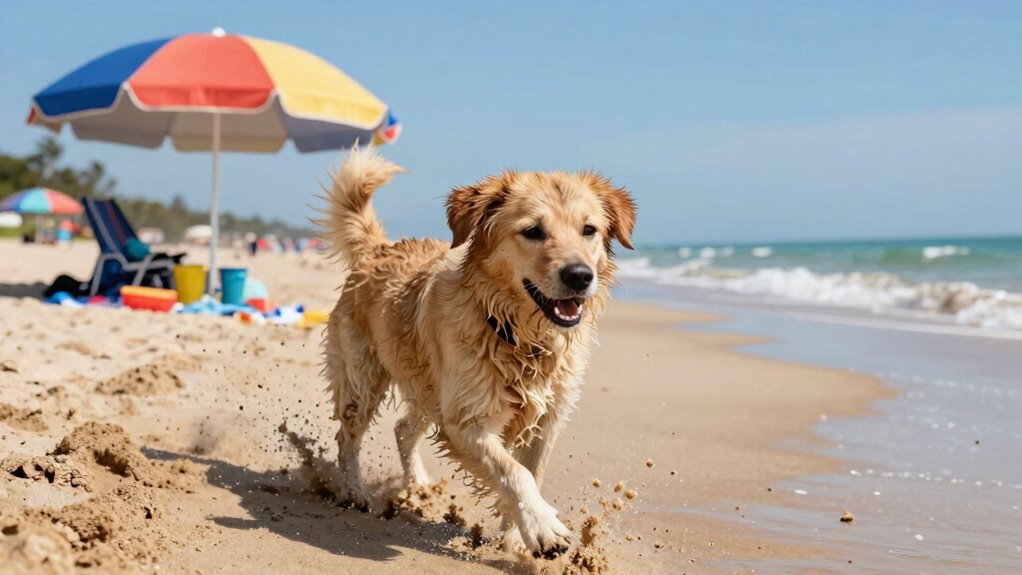

One common mistake that leaves dogs miserable after a beach day is neglecting proper rinsing and hydration. If you don’t rinse off salt, sand, and bacteria from their face, paws, and belly, your dog might ingest or inhale irritants, leading to discomfort later. Without offering plenty of fresh water, dehydration can set in, and heat or salt exposure can cause health issues. Keep your cleanup routine thorough to prevent your dog from feeling miserable afterward—more tips are just ahead.

Get pet supplies delivered free with Prime
- Fast, free delivery on millions of items
- Prime Video, Amazon Music and more included
- Member-only deals all year
Key Takeaways
- Allowing dogs to drink saltwater can cause dehydration and gastrointestinal upset later.
- Not rinsing sand and salt from their face, paws, and belly increases discomfort and infection risk.
- Ignoring signs of heat exhaustion or sunburn during hot days leads to prolonged misery.
- Overexposing dogs to sand and saltwater without hydration or shade worsens dehydration and stress.
- Failing to clean ears and nose after beach play can result in infections and respiratory issues.
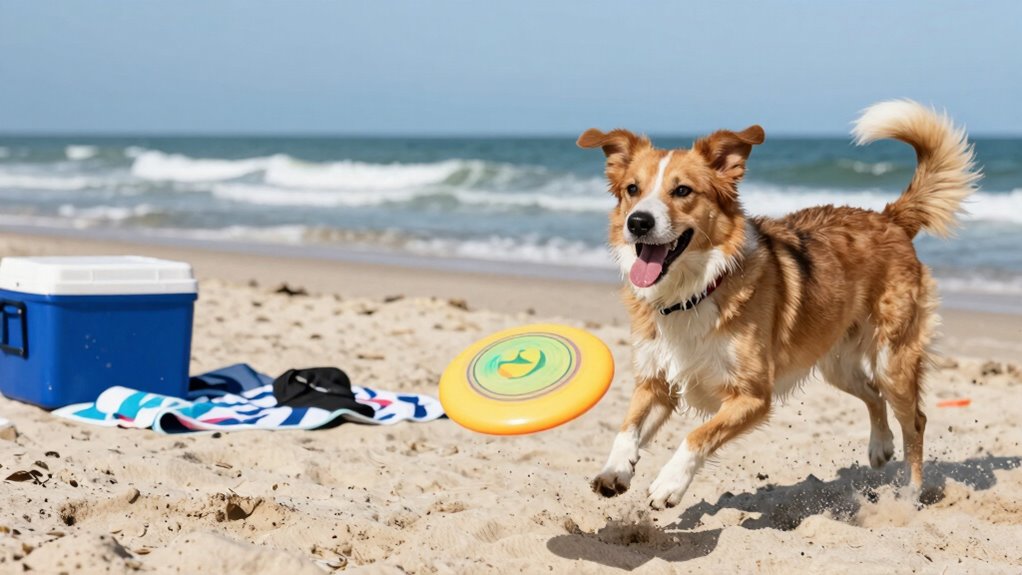
Spending a day at the beach with your dog can be fun, but one common mistake can leave your furry friend miserable long after the sun sets. Many owners overlook the risks of sand inhalation and saltwater ingestion, which can cause discomfort and health issues. As your dog romps through the sand and splashes in the waves, they naturally tend to swallow some saltwater or breathe in tiny particles of sand. These may seem harmless at first, but they can lead to dehydration, gastrointestinal upset, or respiratory irritation.
Enjoy the beach with your dog but watch for sand inhalation and saltwater ingestion to keep them healthy and happy.
When your dog ingests saltwater, they’re taking in more than just water; they’re also consuming high levels of salt, which can upset their stomach and cause symptoms like vomiting or diarrhea. Excess salt can also lead to dehydration, especially if your dog isn’t drinking enough fresh water to compensate. This dehydration can turn into a more serious problem if your dog already has underlying health issues or if the day at the beach is particularly hot. To prevent this, it’s vital to offer plenty of fresh water during and after your beach visit and discourage your dog from drinking seawater directly from the ocean.
Sand inhalation poses another, often overlooked, danger. As your dog digs, sniffs, or plays with sand, tiny particles can be inhaled into their lungs. For most dogs, this might just cause some coughing or sneezing, but in some cases, it can lead to respiratory irritation or even infection if bacteria or parasites are present in the sand. Dogs with preexisting respiratory issues are especially vulnerable. To minimize this risk, keep your dog from digging excessively or inhaling loose sand directly into their nose and lungs. Rinse their nose and mouth afterwards to wash away any lingering sand particles. Additionally, proper hygiene helps reduce the chances of bacterial or parasitic infections that can be present in contaminated sand. Being aware of the potential health risks associated with sand and saltwater exposure can further help you take appropriate precautions. It’s also helpful to keep a first aid kit handy in case your dog gets sand or salt in their eyes or nose.
Furthermore, environmental factors such as hot sand and sun exposure can increase your dog’s risk of heatstroke or sunburn, making it even more important to monitor their activity and provide shaded areas and water. The worst part is that many owners don’t realize their dog is feeling unwell until the day is over. By then, your dog might be sluggish, vomit, or have diarrhea, all signs of the discomfort caused by sand and saltwater. To avoid this, keep a close eye on your pet and limit their exposure to these elements. Offer fresh water frequently, and rinse their face, paws, and belly with clean water after they’ve played in the sand or saltwater. Doing so helps remove residual sand and salt, decreasing the chances of ingestion and inhalation problems. Being proactive about post-beach hygiene can significantly improve your dog’s recovery and comfort after a fun day outdoors.
Additionally, understanding how small wood stoves work can be crucial if you’re considering heating options at home, but for beach days, being mindful of your dog’s environment and the risks involved can make the difference between a fun day and a miserable one for your pet. A little extra caution ensures your furry friend stays happy, healthy, and ready for many more beach adventures.
Products Worth Considering

PetSafe ScoopFree Crystal Pro Self-Cleaning Cat Litter Box, Covered, Black

Roborock Q7 M5+ Robot Vacuum and Mop with Self-Emptying Dock

PETLIBRO Automatic Litter Box with AI Camera, Odor Control & Multi‑Cat Recognition
As an affiliate, we earn on qualifying purchases.
Frequently Asked Questions
Can Certain Dog Breeds Tolerate the Beach Better Than Others?
Certain dog breeds tolerate the beach better than others, especially those with a playful and adaptable temperament. For example, retrievers and labradors usually enjoy water and handle beach conditions well. To keep your dog safe, follow beach safety tips like providing fresh water, avoiding hot surfaces, and watching for signs of fatigue. Understanding your dog’s breed temperament helps you choose the right activities and guarantee a fun, safe beach day.
What Are the Signs My Dog Is Overheating at the Beach?
Like a moth to a flame, your dog may show signs of overheating at the beach. Watch for excessive panting, drooling, weakness, or droopy ears—these are red flags. To guarantee beach safety, keep your dog in shaded areas and offer frequent hydration tips, like fresh water and ice cubes. If your pup seems distressed or unsteady, act quickly and cool them down to prevent heatstroke.
Is Saltwater Ingestion Harmful to Dogs?
Yes, saltwater ingestion can be harmful to dogs, causing symptoms like salty skin, vomiting, diarrhea, and dehydration. To keep your dog safe, watch for signs of saltwater ingestion and prioritize hydration tips, like providing fresh water frequently. If you notice any signs of salt poisoning, contact your vet immediately. Remember, preventing saltwater intake and offering plenty of fresh water helps keep your dog comfortable and healthy after a beach day.
How Can I Prevent My Dog From Eating Sand?
Think of your dog as a curious child exploring a sandbox—inevitably, they’ll want to taste everything. To prevent sand ingestion, keep a close eye on your pup and redirect their attention with toys or treats. Establish clear boundaries during beach visits to prioritize beach safety. Training commands like “leave it” also help. Regularly rinsing your dog’s paws and mouth after beach fun minimizes sand intake and keeps your furry friend happy and healthy.
Are There Specific Toys Safe for Dogs at the Beach?
Yes, there are specific toys that are safe for dogs at the beach. Look for durable, non-toxic, and washable beach toys designed for dogs, which help minimize risks of dog sand ingestion. Avoid cheap plastic or small toys that can break apart easily. Always supervise your pup during playtime to prevent them from swallowing or inhaling sand or toy pieces, ensuring beach fun stays safe and enjoyable for your furry friend.
Conclusion
So, as you pack up and head home, remember that a fun-filled beach day can quickly turn sour if you’re not careful. The joy of wagging tails and sandy paws contrasts sharply with the misery of upset stomachs or sunburned noses later. It’s a delicate balance—you want your dog to enjoy the day, but overlooking simple precautions can transform the happy memories into worries or regret. Keep their comfort in mind, and the beach will remain a place of bliss for both of you.