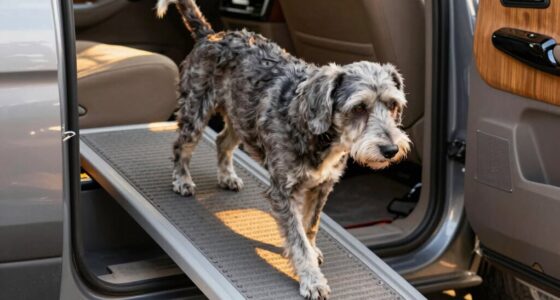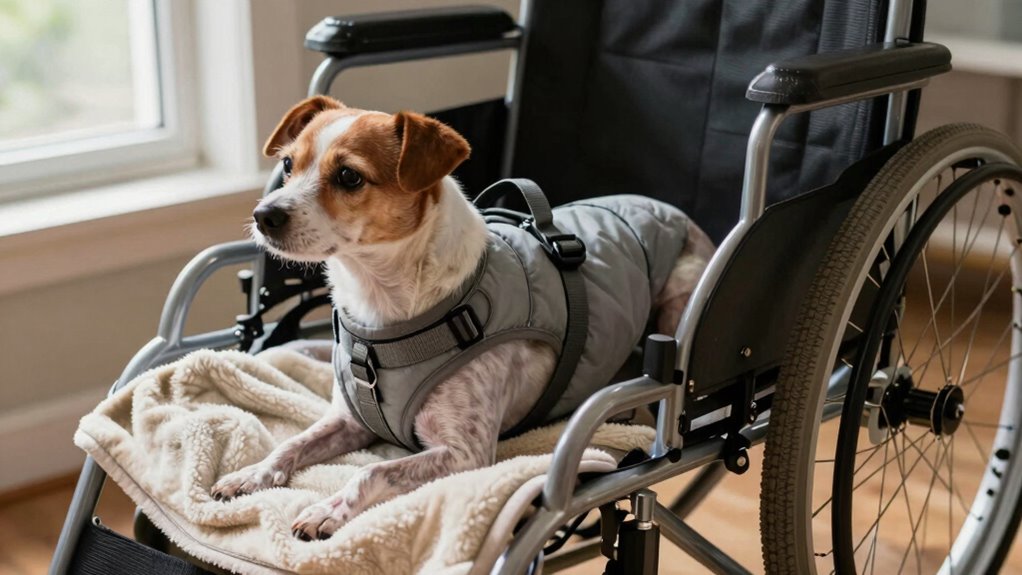

To move your dog safely after surgery, use a well-fitted harness or a secure crate that prevents slips or falls. Drive smoothly, avoiding sudden stops, sharp turns, or loud noises that could jostle your pet. Keep the environment calm and comfortable, maintaining a stable temperature and minimizing stress. Proper restraint and gentle handling are key to preventing re-injury. For detailed tips on ensuring a safe journey, continue exploring proven strategies for post-surgery transport.
Key Takeaways
- Use a well-fitting harness or specialized crate to securely restrain the dog during transport.
- Secure the restraint directly to the vehicle’s seatbelt system for stability and safety.
- Drive smoothly, avoiding sudden stops, sharp turns, and maintaining a comfortable temperature inside the vehicle.
- Administer any prescribed medications before departure to reduce pain or anxiety.
- Carefully unload and remove restraints at the destination, placing the dog in a quiet, comfortable space to rest.
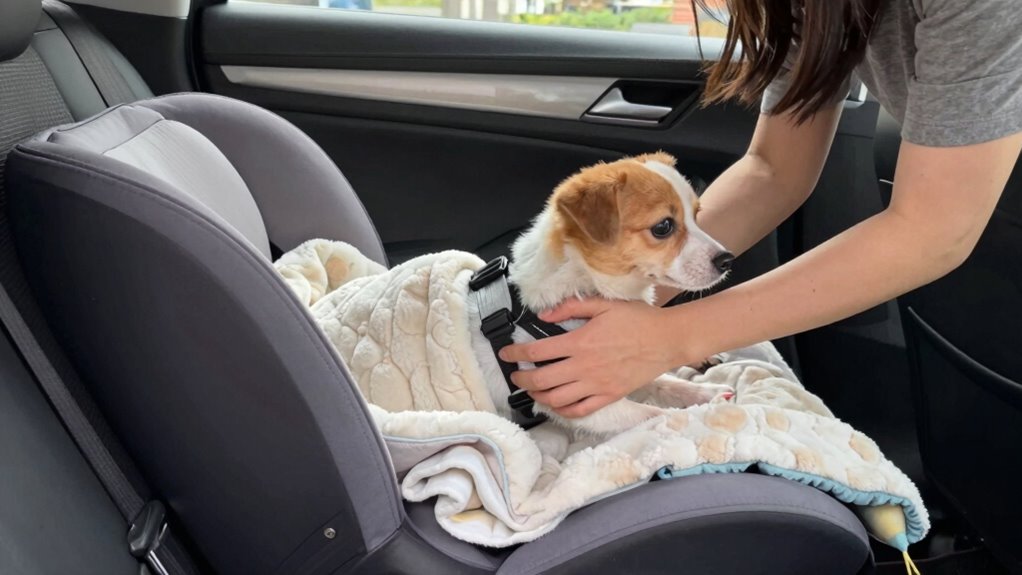
After surgery, safe and efficient transport to your recovery area is essential for your well-being. You want to minimize any risk of re-injury or discomfort during the journey. Proper dog restraint is key to ensuring your pet remains secure and calm, preventing sudden movements that could jeopardize their healing process. Before you start, gather the necessary equipment—such as a well-fitting harness, a sturdy crate, or a specialized pet restraint system—designed to provide maximum safety during vehicle travel. Your goal is to create a stable environment that keeps your dog from sliding or falling, especially if they’re groggy or in pain from anesthesia or surgery. Additionally, understanding how to use drone insights can help you assess the safest routes and environments for your pet’s transport needs.
Proper restraint ensures your dog stays safe and calm during post-surgery transport.
Vehicle safety is a top priority when moving your dog after surgery. You should always secure your pet in a way that prevents them from moving around freely inside the vehicle. A loose dog can become a distraction while driving or be injured if the vehicle suddenly brakes or swerves. Using a harness that attaches directly to the car’s seatbelt system offers a dependable way to keep your dog restrained. If your dog is small, a well-ventilated crate with padding adds extra protection and comfort. For larger dogs, a harness combined with a crash-tested vehicle restraint system provides peace of mind. Avoid using just a blanket or makeshift restraints, as they don’t offer the same level of security and could cause injury if the vehicle stops abruptly.
During the journey, drive smoothly—avoid sudden stops or sharp turns that could cause your dog to shift or jolt. Keep the temperature comfortable, ensuring the vehicle isn’t too hot or cold, which could stress your pet further. Play calming music or speak softly to help ease any anxiety. It’s best to keep the environment quiet and relaxed, as stress can impede healing. If your dog needs medication for pain or anxiety, administer it as directed before departure to help them stay calm during the trip.
Once you arrive at your recovery area, gently unload your dog, avoiding any sudden movements or jostling. Carefully remove the restraint, and place your pet in a quiet, comfortable space where they can rest undisturbed. Remember, the entire process from departure to arrival should prioritize your dog’s safety and comfort. Proper dog restraint and vehicle safety are not just about following rules—they’re about protecting your furry friend’s health and ensuring a smooth, risk-free transition from surgery to recovery.
Frequently Asked Questions
Can I Use My Regular Car for Transporting My Dog?
Yes, you can use your regular car to transport your dog, but prioritize vehicle safety and comfort. Make certain the car has secure seating and consider car modifications like a harness or crate to prevent movement. Avoid sudden stops and sharp turns, and keep the dog on a leash or in a secured carrier. If your dog’s recovery is delicate, consult your vet for specific recommendations on safe transportation.
How Can I Prevent My Dog From Jumping During Transport?
To prevent your dog from jumping during transport, use secure methods like a well-fitted harness or crate, which keep them safely contained. Choose a vehicle with a secure area, such as a spacious SUV or station wagon, to reduce movement. Always make certain the crate or harness is properly anchored with seat belts or straps, providing stability and preventing your dog from jumping or shifting, keeping them safe and comfortable throughout the trip.
Is It Necessary to Use a Harness Instead of a Collar?
Yes, it’s necessary to use a harness instead of a collar. Proper harnessing provides better control and distributes pressure evenly, reducing the risk of re-injury. Collars can strain your dog’s neck, especially during recovery, so consider collar alternatives like a well-fitted harness. This safer option guarantees your dog stays secure and comfortable during transport, helping prevent sudden movements or jumps that could cause setbacks.
What Are Signs of Discomfort During Transport?
Imagine you’re holding a fragile treasure—your dog. Signs of discomfort during transport include whimpering, restlessness, trembling, or trying to escape, which may indicate postoperative anxiety or pain. Watch for rapid breathing or whining, as these pain indicators suggest your pup’s distress. Stay alert, gentle, and calm, offering reassurance. If you notice any of these signs, stop and assess, ensuring your dog feels safe and supported throughout the journey.
How Long Should I Limit Movement After Surgery?
You should limit your dog’s movement for at least 7-14 days post-surgery, depending on your vet’s advice. During this restricted activity period, focus on pain management and keeping your dog calm. Avoid strenuous activities, jumping, or running. Follow your vet’s instructions carefully, and watch for signs of discomfort. Proper rest helps prevent re-injury and promotes healing, so don’t rush your dog’s recovery.
Conclusion
Now, imagine gently lifting your dog, cradling them like a fragile treasure, as you carefully navigate each step. Picture the soft hum of the car engine, offering a calming rhythm, while you guarantee their comfort and safety. With steady hands and gentle movements, you create a safe haven, guiding your furry friend through this delicate journey. Your careful attention transforms a stressful trip into a peaceful voyage, helping your dog heal with every gentle, loving movement.