Many dogs get stiff after naps because their muscles are going through normal recovery and repair. This brief muscle tightness happens as blood flow slows during rest, but most dogs can walk it off easily. It’s a common part of the healing process and isn’t usually a cause for concern. If you want to understand more about why this happens and how to support your dog’s muscle health, keep exploring these helpful insights.

Get pet supplies delivered free with Prime
- Fast, free delivery on millions of items
- Prime Video, Amazon Music and more included
- Member-only deals all year
Key Takeaways
- Temporary stiffness after naps is normal due to reduced blood flow and muscle relaxation during rest.
- Gentle movement and stretching help loosen muscles and promote circulation post-nap.
- Short-lived stiffness typically resolves quickly with activity; persistent stiffness may indicate health issues.
- Rest periods align with natural recovery processes, supporting muscle repair and overall mobility.
- Monitoring stiffness duration can help determine if veterinary attention is needed.
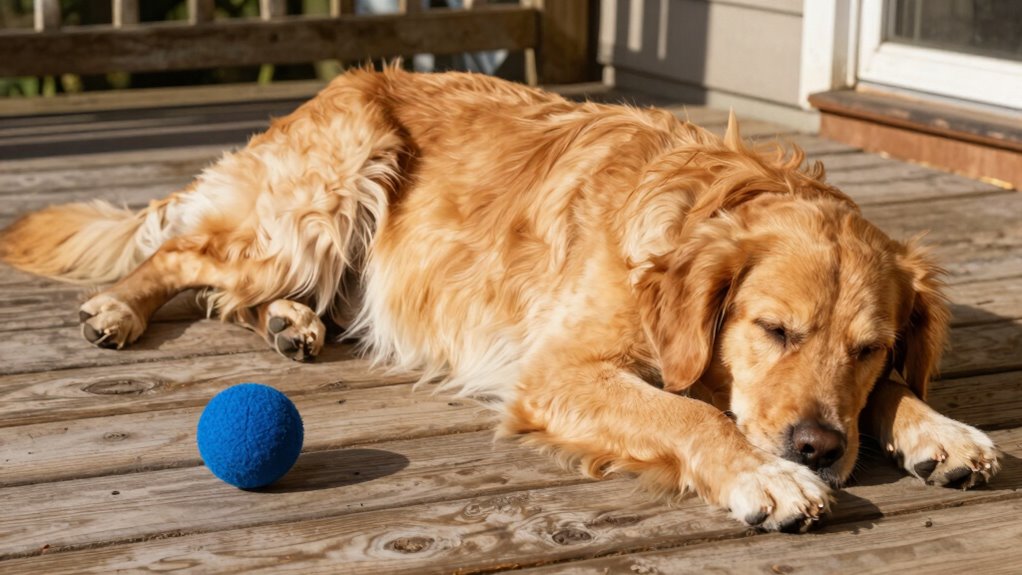
Your dog’s sleep patterns are quite different from ours; they tend to sleep multiple times throughout the day in short bursts. These naps are essential for their overall health, providing rest that restores energy and supports their canine muscle health. During sleep, muscle tissues repair and regenerate, which helps keep your dog’s muscles strong and flexible. When they wake, their muscles may feel temporarily stiff because blood flow has slowed during their rest. This stiffness isn’t usually a sign of a problem but a normal part of their body’s recovery process. As your dog stretches and starts walking around, the muscles loosen up, and the stiffness dissipates. Additionally, understanding the importance of muscle repair can help you better support your dog’s recovery process. If you notice that your dog is frequently stiff after naps and it persists for a long time, it could point to other health issues, such as arthritis or muscle strain. But in most cases, the stiffness is mild and short-lived. It’s a natural response to their sleep cycle, especially considering how their bodies are built to rest and recover quickly. Recognizing the body’s natural healing processes can help you provide better care for your dog during their rest periods. Incorporating gentle stretching exercises can further aid in their recovery and prevent prolonged stiffness. Gentle movement and light activity after naps can help stimulate blood flow and support their muscle health. Regular exercise can also enhance their overall mobility and reduce stiffness after rest. You can help by encouraging gentle stretching or light activity after naps, which promotes healthy blood flow and eases the change from rest to activity. Keeping your dog at a healthy weight and ensuring they get enough exercise supports their muscle tone and overall mobility.
Products Worth Considering

PetSafe Guardian GPS 2.0 Dog Fence and Tracking Collar

Fi Series 3+ Smart GPS Dog Collar and Pet Health Tracker, Gray, Large

PetSafe Guardian GPS Dog Fence for Properties 3/4 Acre or Larger
As an affiliate, we earn on qualifying purchases.
Frequently Asked Questions
Can Stiffness Indicate a Serious Health Problem in Dogs?
Yes, stiffness can indicate a serious health problem in dogs. If your dog shows signs of joint pain or persistent muscle soreness, it’s essential to monitor their condition. Stiffness that lasts beyond a normal nap or worsens over time might signal issues like arthritis or other health concerns. Consult your veterinarian promptly to diagnose the cause and prevent further discomfort or injury.
How Long Does It Typically Take for a Dog to Recover From Stiffness?
You’ll usually see your dog recover from stiffness within a few minutes to about 15 minutes after waking from a nap. As they relax and stretch, their muscles loosen, and stiffness diminishes. The duration depends on their nap length and overall health. Longer naps might cause slight stiffness, but regular movement and gentle stretching help them walk it off quickly, restoring their usual comfort and mobility.
Are Certain Dog Breeds More Prone to Post-Nap Stiffness?
Yes, certain breed predispositions make some dogs more prone to post-nap stiffness. Breeds with shorter legs or compact bodies, like Bulldogs or Dachshunds, often experience this more. Longer nap durations can also increase stiffness, especially in these breeds. Your dog’s breed and nap length influence how quickly they recover. Keeping naps shorter and gentle stretching afterward helps reduce stiffness and promotes better overall comfort.
What Home Remedies Can Help Reduce My Dog’s Stiffness?
Did you know that over 60% of dog owners use natural remedies for joint issues? To help reduce your dog’s stiffness, try gentle massages and warm compresses to improve circulation. Incorporate joint supplements like glucosamine or omega-3 fatty acids into their diet, and consult your vet for personalized advice. These approaches can promote flexibility and comfort, making post-nap stiffness less of a concern.
When Should I See a Vet About My Dog’s Stiffness?
You should see a vet if your dog’s stiffness persists beyond a day or worsens, especially if it affects their mobility or shows signs of pain. While dietary supplements and tailored exercise routines can help, persistent stiffness might indicate underlying issues like arthritis or injury. A vet can diagnose the problem accurately and recommend appropriate treatments, ensuring your dog’s comfort and health are maintained.
Conclusion
Just like a computer needs a moment to reboot, your dog might need a little time to loosen up after a nap. If they seem stiff but quickly walk it off, it’s usually normal. Keep an eye on their behavior, and if stiffness persists or worsens, don’t hesitate to consult your vet. Remember, a quick stretch or gentle massage can help ease their muscles, making their next nap and walk much more comfortable—like a sunrise after a long night.