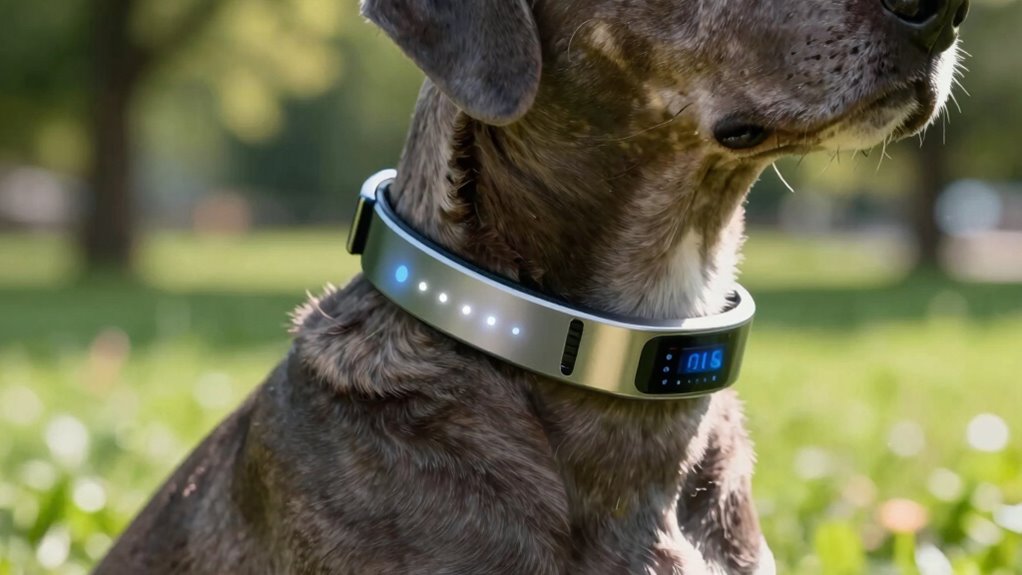

Smart collars track your pet’s location, activity levels, heart rate, and sleep patterns, giving you a helpful overview of their health and daily habits. They can show how active your pet is, alert you to potential health issues, and help you monitor fitness goals. However, these scores are estimates influenced by external factors and shouldn’t replace vet advice. To understand how these features work and their limitations, keep going—you’ll find useful details ahead.

Get pet supplies delivered free — and shop member deals
- Fast, free delivery on millions of items
- Access to Prime Big Deal Days deals on October 6–7
- Prime Video, Amazon Music and more included
Key Takeaways
- Smart collars measure metrics like heart rate, activity levels, and sleep patterns to monitor pet health and behavior.
- They estimate fitness by tracking daily activity scores and movement, but these are influenced by external factors.
- Location data helps identify if a pet is active or resting, providing indirect insights into their wellbeing.
- Data can suggest health issues like irregular heart rates or sudden activity drops, prompting veterinary checks.
- Results are supplementary; they do not replace professional veterinary assessments or diagnostics.
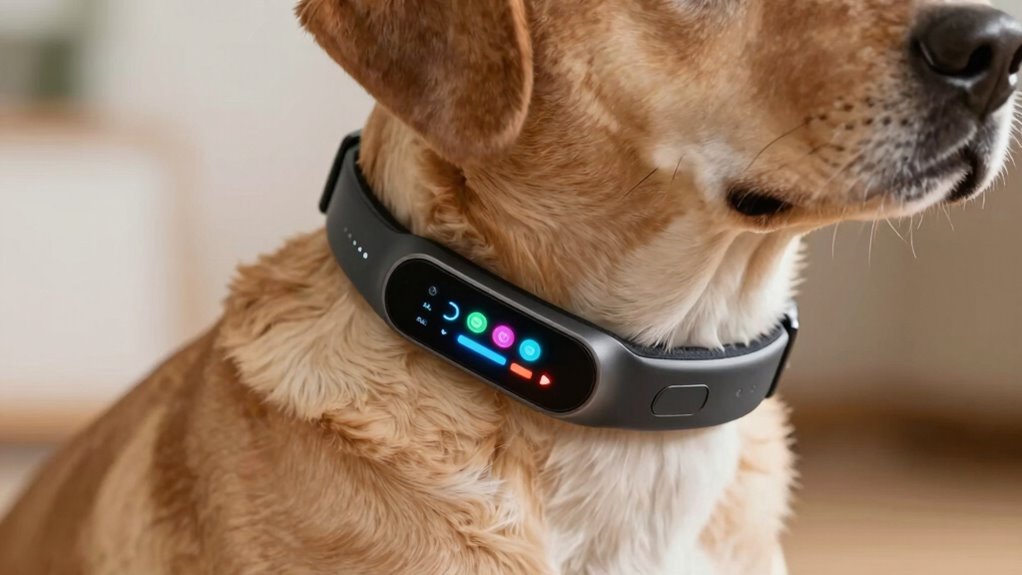
Smart collars are revolutionizing how pet owners monitor their animals’ health and activity levels. With advanced features like GPS tracking, you can now keep a close eye on your pet’s location in real-time, whether they’re exploring the backyard or wandering around the neighborhood. This technology provides peace of mind, especially if your pet tends to escape or has a habit of roaming. GPS tracking not only helps locate your pet quickly if they get lost but also allows you to review their routes and see how much ground they cover during the day. It’s a practical way to ensure they’re safe and give you a better understanding of their habits.
Beyond location, many smart collars include health monitoring capabilities. These devices collect data such as heart rate, activity levels, and even sleep patterns. By analyzing this data, you get a clearer picture of your pet’s overall health and wellbeing. For instance, a sudden drop in activity or irregular heart rate readings could signal health issues that might otherwise go unnoticed. You can then consult your veterinarian with detailed information, making it easier to diagnose potential problems early. This proactive approach helps you prevent illnesses or manage existing conditions more effectively.
These collars often come with user-friendly apps that display health and activity metrics in a simple, digestible format. You can track daily activity scores, monitor your pet’s progress toward fitness goals, and receive alerts if anything seems abnormal. This constant stream of information helps you stay engaged with your pet’s health without invasive procedures or frequent vet visits. It transforms routine care into an ongoing, data-driven process that empowers you to make informed decisions. Additionally, understanding filtration systems used in some devices can help improve data accuracy and device longevity, ensuring reliable monitoring over time.
However, it’s important to recognize the limits of what smart collars measure. While they excel at providing insights into activity and basic health indicators, they do not replace professional veterinary assessments. The data these devices gather can sometimes be influenced by external factors or device inaccuracies, leading to guesses rather than definitive diagnoses. For example, a high activity score might just reflect a particularly energetic day rather than overall fitness, and a low score might be due to external distractions rather than health issues. It’s essential to interpret this information as a helpful supplement to, not a substitute for, regular veterinary care.
smart pet collar with GPS tracking
As an affiliate, we earn on qualifying purchases.
As an affiliate, we earn on qualifying purchases.
Frequently Asked Questions
How Accurate Are Activity Scores Compared to Professional Veterinary Assessments?
Activity scores offer moderate data accuracy when compared to professional veterinary assessments. While they provide useful insights into your pet’s activity levels, they often lack precise veterinary correlation. You can trust these scores as helpful indicators, but they shouldn’t replace regular vet checkups. Keep in mind, smart collars give a good snapshot, but detailed health evaluations still require professional expertise for the most accurate diagnosis and care.
Can Smart Collars Detect Specific Health Issues Besides Activity Levels?
Like a detective with a keen eye, smart collars can detect health issues beyond activity levels. They analyze behavioral patterns and use environmental sensors to spot signs of illness, such as changes in sleep, appetite, or mobility. While they’re not a substitute for vet visits, they offer early warnings that help you catch health concerns sooner, giving your pet a better shot at quick recovery.
Do Different Collar Brands Use Similar Algorithms for Measuring Activity?
Most collar brands don’t use the same algorithms, so you’ll find variations in how they measure activity. Some prioritize algorithm transparency, showing you how data is processed, while others keep it proprietary. This can affect data consistency across brands. If you want dependable results, look for collars that emphasize transparency and standardized algorithms, ensuring you understand how activity is tracked and compare data accurately between devices.
How Do Environmental Factors Influence the Data Collected by Smart Collars?
Environmental impact can secretly skew the data collected by your smart collar, creating unpredictable variability. Sudden changes in weather, dense foliage, or even urban noise might cause your device to misinterpret activity levels, making the numbers less reliable. You might think your pet’s activity is steady, but environmental factors subtly influence the data, adding a layer of complexity that keeps you guessing about the true story behind the numbers.
Are Activity Scores Affected by Pets’ Age or Breed Differences?
Yes, your pet’s activity scores are influenced by breed variations and age impacts. Breed differences mean some dogs naturally have higher or lower activity levels, affecting their scores. Similarly, as pets age, their activity levels tend to decline, leading to lower scores. So, when you interpret activity scores, consider your pet’s breed and age to get a clearer picture of their health and activity patterns.
As an affiliate, we earn on qualifying purchases.
Conclusion
Smart collars and activity scores offer valuable insights into your pet’s health, but they’re not perfect. While they accurately track movement and provide useful data, they often make educated guesses about things like stress or mood. It’s tempting to rely on these gadgets, but remember, they can’t replace a vet’s expertise. Use them as helpful tools, yet stay attentive to your pet’s behavior and consult professionals for a complete picture.
As an affiliate, we earn on qualifying purchases.
As an affiliate, we earn on qualifying purchases.
Fall Picks
fall essentials
As an affiliate, we earn on qualifying purchases.