
You can't just slap Neosporin on your dog without considering the risks. While it's a popular ointment for minor wounds in humans, it's not FDA-approved for canine use. The main ingredient, neomycin, can cause allergic reactions and potential hearing loss. If you decide to use it, make sure to clean the wound first and apply a small amount. Cover it with a sterile bandage, and always monitor for adverse reactions. For safer alternatives, consider pet-specific ointments or natural remedies. Curious about what to do next? There's more valuable information waiting for you on this topic.
Listen free for 30 days with Audible
Thousands of audiobooks and originals — cancel anytime.
As an affiliate, we earn on qualifying purchases.
Key Takeaways
- Neosporin is not FDA-approved for dogs and can cause allergic reactions or other side effects.
- Always clean the wound before applying a small amount of Neosporin to minor cuts.
- Conduct a patch test on a small area of skin to check for allergic reactions.
- Cover the area with a sterile bandage to prevent your dog from licking it.
- Consult a veterinarian for deep wounds, signs of infection, or if no improvement occurs.
pet-safe wound ointment for dogs
As an affiliate, we earn on qualifying purchases.
As an affiliate, we earn on qualifying purchases.
Overview of Neosporin
Neosporin is a popular topical antibiotic ointment that many people use to treat minor cuts, scrapes, and burns. While it effectively prevents bacterial infections in human wounds, it's not FDA-approved for veterinary care and isn't specifically formulated for dogs.
The active ingredient neomycin can cause allergic reactions and even hearing loss, raising safety concerns for your pet. Although Neosporin creates a protective barrier over wounds, you should only apply it to superficial injuries after thoroughly cleaning the area.
Be cautious because using this ointment may lead to gastrointestinal upset if ingested and potential skin sensitivities. It's best to consult with a veterinarian before using Neosporin on your dog to guarantee their safety and well-being.
dog first aid kit with wound care
As an affiliate, we earn on qualifying purchases.
As an affiliate, we earn on qualifying purchases.
Application Guidelines for Dogs
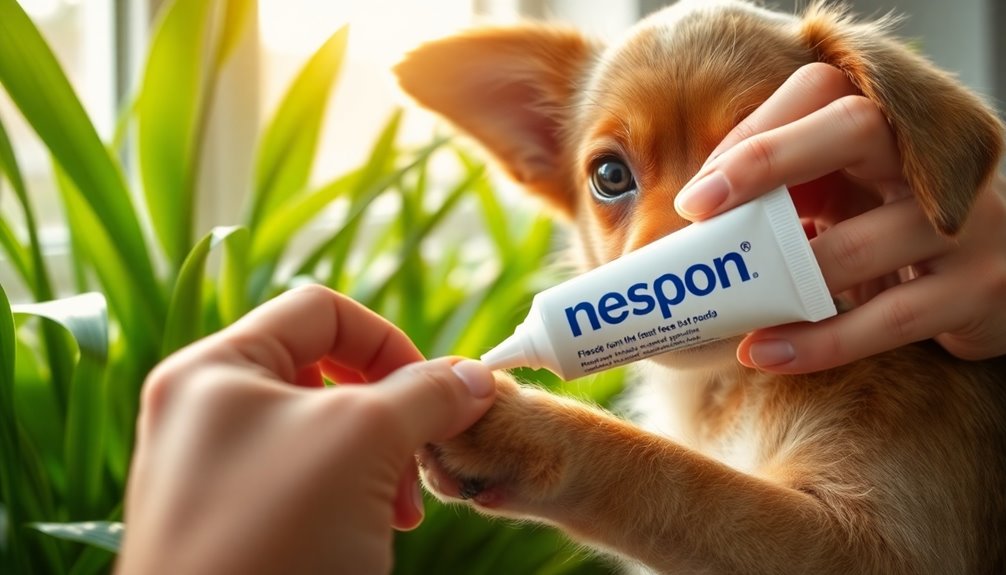
When treating your dog's minor wounds with Neosporin, it is important to follow specific application guidelines to guarantee their safety and promote healing. Here's a quick reference to help you:
| Step | Description |
|---|---|
| Clean the Wound | Flush with mild soap and water to remove debris. |
| Apply Neosporin | Use a small amount on minor cuts, not bleeding. |
| Patch Test | Test on a small skin area first for allergic reactions. |
| Cover the Area | Use a sterile bandage to prevent licking. |
| Consult a Veterinarian | Seek help for deep wounds or signs of infection. |
vet-approved topical ointment for dogs
As an affiliate, we earn on qualifying purchases.
As an affiliate, we earn on qualifying purchases.
Safety and Side Effects
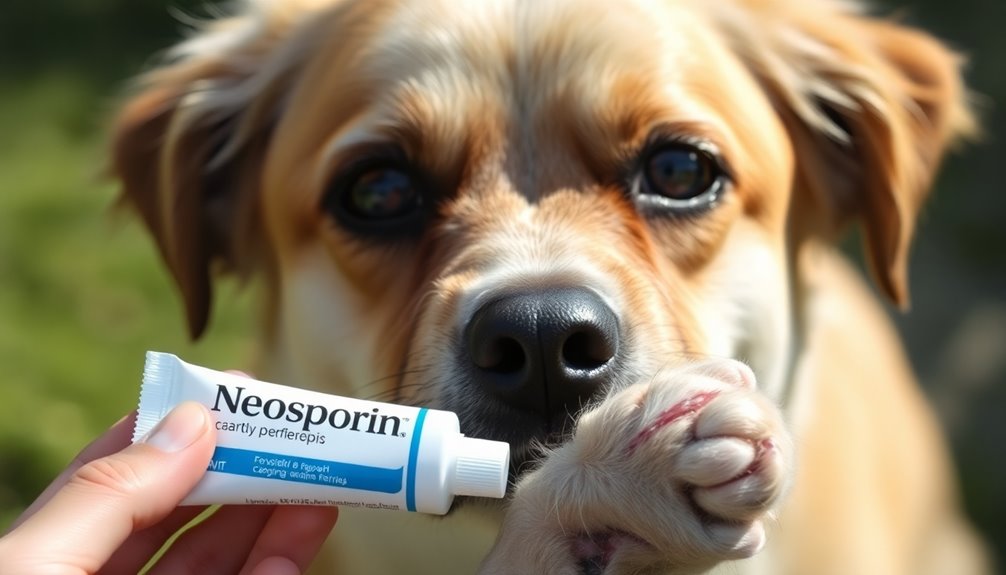
While Neosporin can be helpful for treating minor wounds in dogs, it's important to be aware of potential safety concerns and side effects.
Using Neosporin on dogs isn't always Neosporin safe; it can lead to allergic reactions, gastrointestinal issues, and more. Ingestion may disrupt your dog's gut flora, resulting in vomiting or diarrhea.
Additionally, neomycin, an active ingredient, can cause hypersensitivity, leading to redness and itching at the application site. Always monitor for signs of adverse reactions, such as swelling or increased irritation.
If you notice any concerning symptoms, contact your veterinarian immediately. Remember, while Neosporin can treat minor skin infections, the risks may outweigh the benefits for some dogs.
natural dog wound healing remedies
As an affiliate, we earn on qualifying purchases.
As an affiliate, we earn on qualifying purchases.
Alternatives to Neosporin

If you're looking for safe alternatives to Neosporin for your dog's minor wounds, there are several veterinary-approved options available.
Consider using topical ointments like silver sulfadiazine or pet-safe antiseptics, specifically formulated for dogs, which provide effective wound care without the risks associated with human products.
Natural remedies, such as aloe vera gel and coconut oil, also have antibacterial properties and are safe for ingestion, making them great choices for treating minor cuts and scrapes.
To guarantee you're always prepared, keep a first aid kit stocked with dog-specific products and veterinary-grade wound care solutions.
Always consult a veterinarian to find the most appropriate treatment for your dog's specific injuries or conditions. Additionally, ensuring your dog has regular veterinary check-ups can help detect any underlying health issues that may affect their healing process.
When to Consult a Veterinarian

How can you tell when it's time to consult a veterinarian about your dog's wound? If you notice any signs of infection like swelling, redness, or pus, it's vital to seek immediate veterinary care. Additionally, if your dog experiences adverse reactions to topical treatments, such as increased irritation or gastrointestinal upset, consult with a veterinarian. If a wound doesn't improve within a few days, it's important to prevent infections and guarantee proper healing with a professional diagnosis. Here's a quick reference:
| Signs to Watch For | Action to Take | Severity Level |
|---|---|---|
| Deep or heavily bleeding | Seek immediate veterinary care | High |
| Signs of infection | Consult with a veterinarian | Moderate to High |
| Minor cuts improving | Monitor, no action needed | Low |
| Adverse reactions | Consult with a veterinarian | Moderate |
| No improvement | Seek veterinary advice | Moderate to High |
Frequently Asked Questions
Is It Safe to Use Neosporin on Dogs?
Using Neosporin on dogs can be risky. While it may be safe for minor wounds in small amounts, you should be cautious.
The active ingredient, neomycin, might cause allergic reactions like itching or redness. Plus, if your dog licks the area, it could lead to gastrointestinal issues.
It's best to consult your vet for guidance and consider dog-specific antiseptic products that are formulated for your furry friend's safety and well-being.
What Antibiotic Ointment Can I Use on a Dog?
When your pup's got a boo-boo, it's essential to choose the right remedy. Instead of reaching for human ointments, consider using veterinary-approved ones like silver sulfadiazine or Betadine, which are tailored for dogs.
Natural options like aloe vera gel and coconut oil can also work wonders with their soothing and antibacterial properties.
Always consult your vet first to guarantee you're picking the safest and most effective solution for your furry friend's needs.
Is It Ok if My Dog Licks Antibiotic Ointment?
If your dog licks antibiotic ointment, it can lead to gastrointestinal issues like vomiting or diarrhea.
You should keep an eye on them for any unusual symptoms. Licking can also reduce the ointment's effectiveness, so try to prevent it.
If your dog shows signs of an allergic reaction or if you're worried about potential toxicity, don't hesitate to reach out to your veterinarian for advice and guidance on how to proceed.
How to Treat an Open Sore on a Dog?
Treating an open sore on your dog might seem simple, but it's not just a quick dab and done.
First, you'll want to clean the area with mild soap and lukewarm water to eliminate any dirt.
If a vet gives the green light, you can apply a pet-safe antibiotic ointment.
Keep an eye on the sore for any signs of infection, and prevent your pup from licking it to avoid further complications.
Conclusion
In summary, while Neosporin can be used on dogs in certain situations, it's essential to follow application guidelines and monitor for any adverse reactions. Did you know that around 40% of dog owners have used human medications on their pets without consulting a vet? This highlights the importance of understanding what's safe for your furry friend. Always prioritize their health by seeking professional advice when in doubt, and consider safer alternatives for minor wounds.
Flea & tick season Picks
flea and tick prevention
As an affiliate, we earn on qualifying purchases.