
Understanding your dog’s vision and eye health is key to noticing early signs of problems and keeping their eyes healthy. Dogs have a cornea, iris, lens, retina, and optic nerve that work together for sight. Regular checkups help spot issues like cataracts or glaucoma early. Watch for signs like bumping into things or squinting. Protect their eyes from hazards and provide proper nutrition. To learn how to support your dog’s eye health, keep exploring these important tips.
Key Takeaways
- Dog eyes consist of key structures like the cornea, iris, lens, retina, and optic nerve, essential for proper vision.
- Regular eye exams help detect early signs of conditions such as cataracts or glaucoma, ensuring prompt treatment.
- Breed-specific genetic predispositions increase the risk of certain eye problems; routine monitoring is vital.
- Signs of vision issues include bumping into objects, reluctance to explore, or squinting, requiring veterinary evaluation.
- Protecting dog eyes involves safe environments, avoiding hazards, proper nutrition, and regular veterinary check-ups.
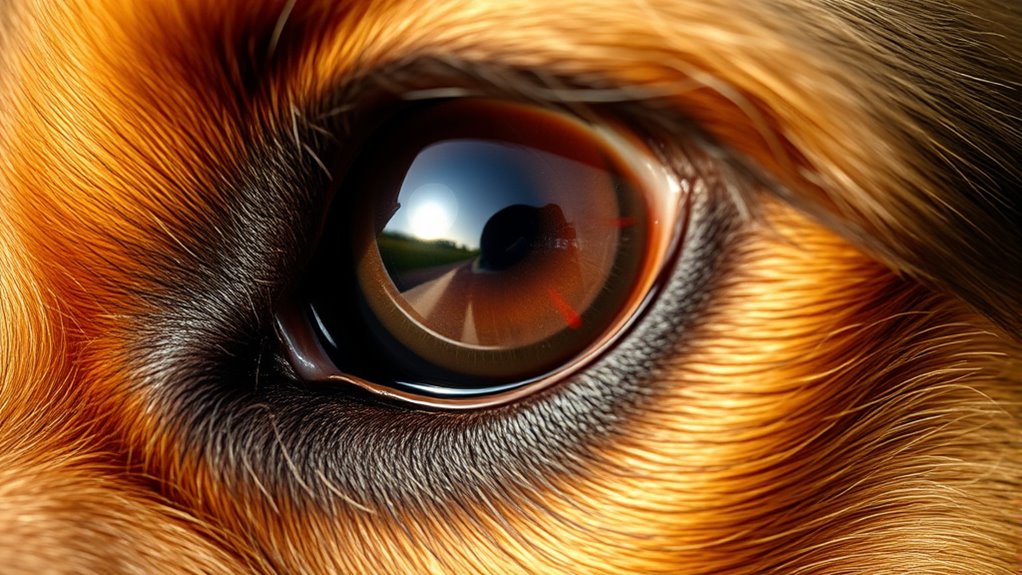
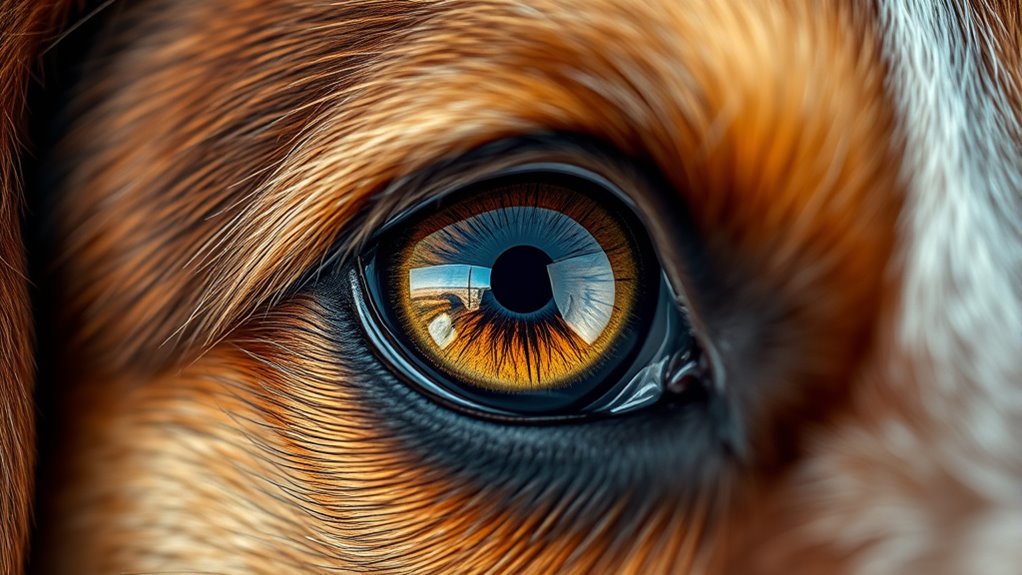
Your dog’s eyes are incredible tools that help them navigate the world around them. Understanding dog eye anatomy is essential if you want to keep their vision sharp and their eyes healthy. The anatomy includes several key parts: the cornea, iris, lens, retina, and optic nerve. The cornea is the clear outer layer that protects the eye and begins focusing incoming light. Behind it, the iris controls how much light enters the eye by adjusting the size of the pupil. The lens fine-tunes the focus, allowing your dog to see objects clearly at different distances. The retina, located at the back of the eye, contains photoreceptor cells that convert light into nerve signals sent to the brain, enabling your dog to see. The optic nerve then transmits these signals, giving your dog their visual perception.
While dogs’ eyes are adapted to their needs, they still require regular checkups to maintain their vision. Routine canine vision tests are crucial, especially if you notice any changes in your dog’s eyesight or behavior. These tests assess various aspects, such as visual acuity, depth perception, and the health of the internal eye structures. An eye exam might involve shining a light into your dog’s eyes to examine their response or using specialized instruments to evaluate the retina and optic nerve. These tests can reveal early signs of issues like cataracts, glaucoma, or retinal degeneration, which, if caught early, can often be treated more effectively.
It is also important to understand that certain breeds are more prone to specific eye conditions due to their genetic predispositions, making regular veterinary visits even more essential for those dogs. You should be vigilant for signs that your dog’s vision might be compromised. Changes such as bumping into furniture, hesitating to go outside, or squinting could indicate eye problems. Regular veterinary exams, including thorough eye assessments, help catch these problems early. Your vet might perform specific canine vision tests to determine the extent of the issue and recommend appropriate treatment. Maintaining good eye health also means protecting your dog from injury and avoiding exposure to harmful substances. Keeping their environment safe, avoiding excessive exposure to bright lights or chemicals, and providing a balanced diet rich in nutrients that support eye health are all essential steps.
Frequently Asked Questions
Can Dogs See in Complete Darkness?
Dogs cannot see in complete darkness; their night vision is better than humans but still limited. You might notice they can navigate well in low light thanks to their special eye features, like a tapetum lucidum, which enhances night vision. Eye color doesn’t substantially impact this ability, but dogs with certain eye colors may have slight differences in vision quality. So, while they see better in the dark, total darkness still challenges them.
How Often Should I Have My Dog’s Eyes Checked?
You should have your dog’s eyes checked at least once a year to maintain good vision and catch issues early. Regular eye examinations help with vision maintenance and prevent problems from worsening. If your dog shows signs of discomfort, redness, or vision changes, schedule an exam sooner. Routine check-ups with your vet guarantee your dog’s eyes stay healthy, keeping their vision clear and comfortable throughout their life.
Do Different Dog Breeds Have Different Vision Qualities?
It’s like stepping into a time machine—breed vision varies widely among dogs. Different breeds have unique eye structures, affecting their visual acuity, color perception, and night vision. For example, retrievers excel in bright light, while breeds with flatter faces might have more eye issues. Recognizing these differences helps you understand your dog’s breed vision, so you can better support their eye health and guarantee they see the world clearly.
Are There Signs of Early Eye Problems in Dogs?
Yes, you can spot early eye problems in your dog by watching for early eye symptoms like redness, cloudiness, excessive tearing, or squinting. These signs often indicate common eye issues such as infections, cataracts, or glaucoma. If you notice any of these symptoms, it’s best to consult your veterinarian promptly. Early detection helps prevent more serious problems and keeps your dog comfortable and healthy.
Can Diet Impact My Dog’s Eye Health?
Yes, your dog’s diet can impact their eye health. Proper nutrition, including nutritional supplements and vision-enhancing foods, supports healthy eyes, sharpens vision, and prevents issues. You should feed your dog foods rich in antioxidants, vitamins A, C, and E, and omega-3 fatty acids. Regularly providing these nutrients helps maintain eye clarity, reduce inflammation, and boost overall eye health, ensuring your dog sees clearly and stays comfortable.
Conclusion
By understanding your dog’s unique vision and eye health needs, you can spot issues before they become emergencies and keep their world vibrant and clear. Regular check-ups and attentive care ensure you’re not just watching over your furry friend but safeguarding a treasure more precious than gold. Remember, their eyes are the window to their soul—and a tiny problem can turn into a sight-threatening disaster overnight. Stay vigilant, love deeply, and watch your pup thrive in a world of wonder.