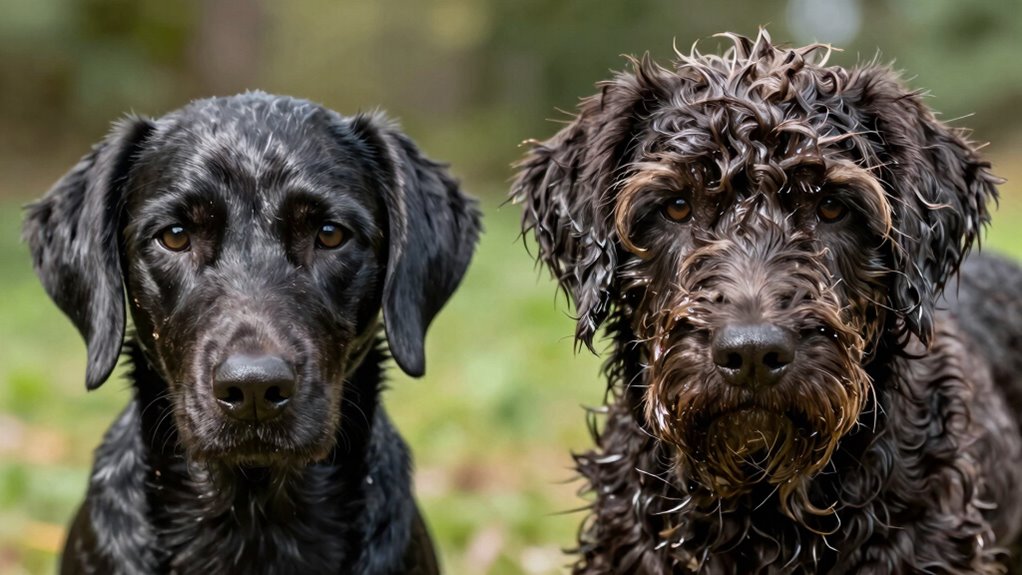

Some dogs get greasy coats faster because certain breeds naturally produce more oil, especially those with dense or curly fur. Skin conditions like allergies or dermatitis can also boost oil production, while diet and grooming products play a role too. Environmental factors such as heat and humidity can increase oiliness, and hormonal changes or stress might affect your dog’s coat. To understand more about why this happens, keep exploring these common factors in detail.
Key Takeaways
- Certain breeds naturally produce more oil, leading to quicker greasy coat buildup.
- Skin conditions like dermatitis or allergies increase oil production and oiliness.
- High temperatures and humidity boost sebum secretion, causing faster greasiness.
- Hormonal imbalances or stress can elevate oil levels in some dogs.
- Inappropriate grooming products or diet may contribute to excessive oil accumulation.
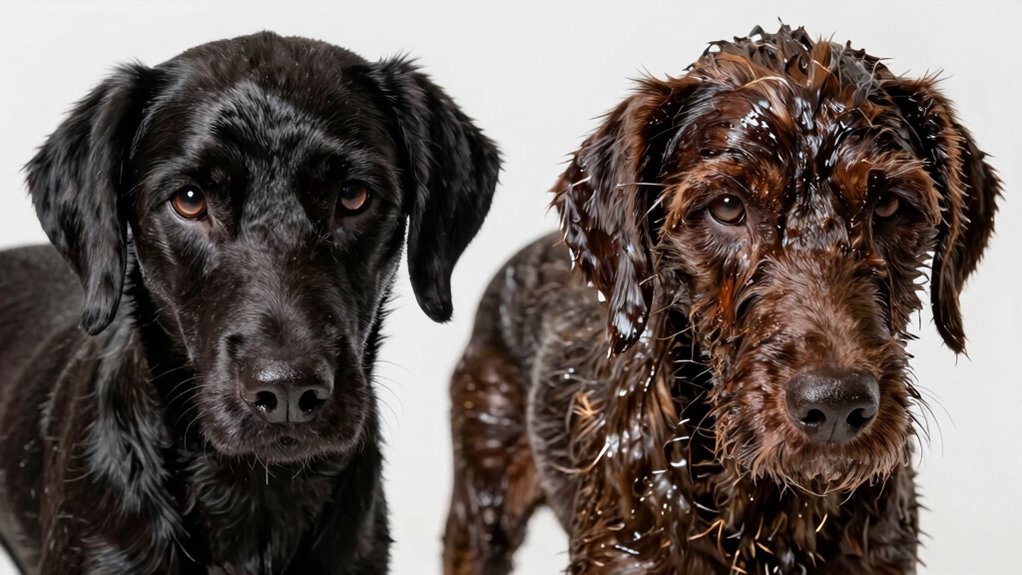
If you’ve noticed your dog’s coat becoming greasy more quickly than expected, you’re not alone. Many dog owners find themselves puzzled by the shiny, oily appearance that seems to develop faster than it should. This issue often points to underlying factors related to your dog’s skin health and coat texture. Understanding why some dogs develop greasy coats can help you better manage their grooming routine and keep their coat healthy.
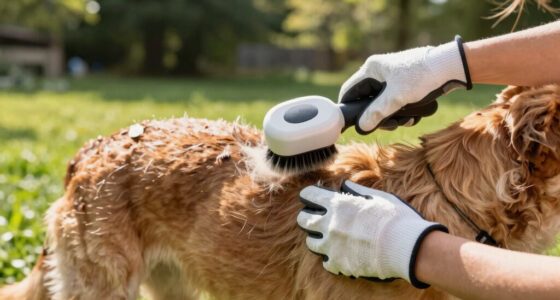
One common reason is the breed’s natural coat texture. Some dogs, especially those with oily skin or certain coat types like terriers or spaniels, tend to produce more sebum—the skin’s natural oil—than others. This excess oil can accumulate quickly, making the coat appear greasy. Regular dog grooming becomes essential in these cases to manage the oil levels and prevent buildup. Proper grooming not only keeps the coat clean but also stimulates the skin, encouraging a healthy balance of oils. If your dog has a dense or curly coat, it may trap oil more easily, so frequent brushing and bathing are necessary to prevent greasy patches. Additionally, skin conditions such as dermatitis or allergies can cause increased oil production, further contributing to greasy coats.
Certain breeds naturally produce more oil, requiring regular grooming to prevent greasy patches and maintain a healthy coat.
Another factor is the health of your dog’s skin. Skin conditions such as dermatitis or allergies can cause increased oil production. When your dog’s skin is irritated or inflamed, it naturally produces more oil to protect and heal itself. If you notice other symptoms—like itching, redness, or hair loss—consulting your veterinarian is crucial. They can diagnose underlying issues and recommend appropriate treatments. In some cases, an imbalance in diet or a reaction to grooming products could also contribute to greasy coats. Choosing gentle, veterinarian-approved grooming products and providing a balanced diet can make a significant difference.
Seasonal changes and environmental factors also play a role. During warmer months, your dog’s skin might produce more oil as a response to heat and humidity. In these situations, adjusting your grooming routine—like more frequent baths or wipes—can help control the grease. Additionally, stress or hormonal fluctuations can influence oil production, so consider your dog’s overall health and routine.
dog grooming brushes for oily coats
As an affiliate, we earn on qualifying purchases.
As an affiliate, we earn on qualifying purchases.
Frequently Asked Questions
Can Diet Influence How Quickly a Dog’s Coat Becomes Greasy?
Yes, diet can influence how quickly your dog’s coat becomes greasy. Diet deficiencies, especially lacking essential fatty acids, can lead to an oily, greasy coat. The coat’s texture also depends on proper nutrition; a balanced diet helps maintain a healthy, shiny coat, while poor nutrition can cause excess oil production. Ensuring your dog receives the right nutrients supports a healthier coat and reduces greasiness.
Do Grooming Habits Affect the Rate of Grease Buildup?
Yes, your grooming routine considerably affects how quickly grease builds up on your dog’s coat. Regular brushing helps distribute natural oils evenly, preventing excess buildup. Proper coat maintenance, including timely baths with suitable shampoos, reduces grease accumulation and keeps the coat clean. Skipping grooming sessions can cause oils to accumulate and make the coat appear greasy faster. Consistent grooming guarantees your dog’s coat stays healthy, shiny, and less prone to greasy patches.
Are There Specific Breeds More Prone to Greasy Coats?
Certain breeds, like Basset Hounds, Beagles, and Cocker Spaniels, are more prone to greasy coats due to breed predispositions. Their coat texture—whether oily or dense—can also influence grease buildup. You’ll notice that dogs with oily or oily-textured coats tend to get greasy faster. Regular grooming tailored to your dog’s breed and coat type helps manage excess oil, keeping their coat healthier and cleaner.
How Does Climate Impact a Dog’s Skin Oil Production?
Climate impacts your dog’s skin oil production through humidity fluctuations and seasonal changes. You might notice more greasy coats during humid summer months when excess moisture encourages oil glands to overproduce. Conversely, in dry winter air, your dog’s skin may become drier, reducing oil output. These climate shifts trigger your dog’s skin to adapt, leading to changes in grease levels, affecting coat health and cleanliness.
Can Stress or Health Issues Cause Increased Greasiness?
Stress and health issues can definitely cause your dog’s coat to become greasier. Hormonal imbalances, for example, can trigger excess oil production, making their coat appear greasy. Skin infections also play a role, as they irritate the skin and stimulate oil glands. When your dog is stressed or unwell, their body’s response can lead to increased oil, so keeping them healthy and managing stress helps keep their coat cleaner.
As an affiliate, we earn on qualifying purchases.
Conclusion
So, next time you notice your dog’s coat becoming greasy faster than others, ask yourself—are you keeping up with their specific grooming needs? Every dog is unique, with different skin and coat types that require tailored care. Understanding these differences helps you address issues before they worsen. Isn’t it worth taking a little extra time to make certain your furry friend stays comfortable and healthy? After all, a well-groomed dog is a happy, shiny one!
dog skin allergy treatment products
As an affiliate, we earn on qualifying purchases.
As an affiliate, we earn on qualifying purchases.
As an affiliate, we earn on qualifying purchases.