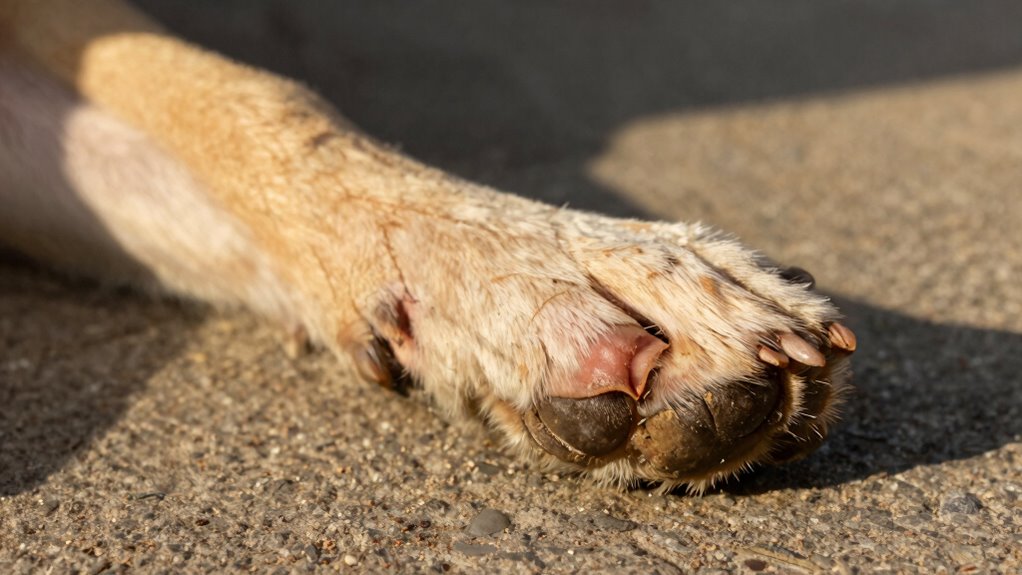

In warm months, you need to pay extra attention to your dog’s paw pads because hot pavement, concrete, and asphalt can quickly cause burns, cracks, or blisters. Surfaces may feel cool to you but be scorching for their paws, increasing injury risk. Regular checks, protecting with booties, and avoiding hot surfaces help keep paws healthy and comfortable. Stay vigilant—there’s more you can do to keep your dog safe and happy during the warmer seasons.
Key Takeaways
- Hot surfaces can cause burns and injuries to paw pads during outdoor activities.
- Paw pads are more prone to cracking and dryness without proper moisture care in warm months.
- Increased outdoor activity exposes paws to environmental hazards like sharp rocks and hot sand.
- Elevated temperatures accelerate wear and tear, requiring more frequent inspection and maintenance.
- Protecting paws helps prevent painful injuries, burns, and infections during peak heat seasons.
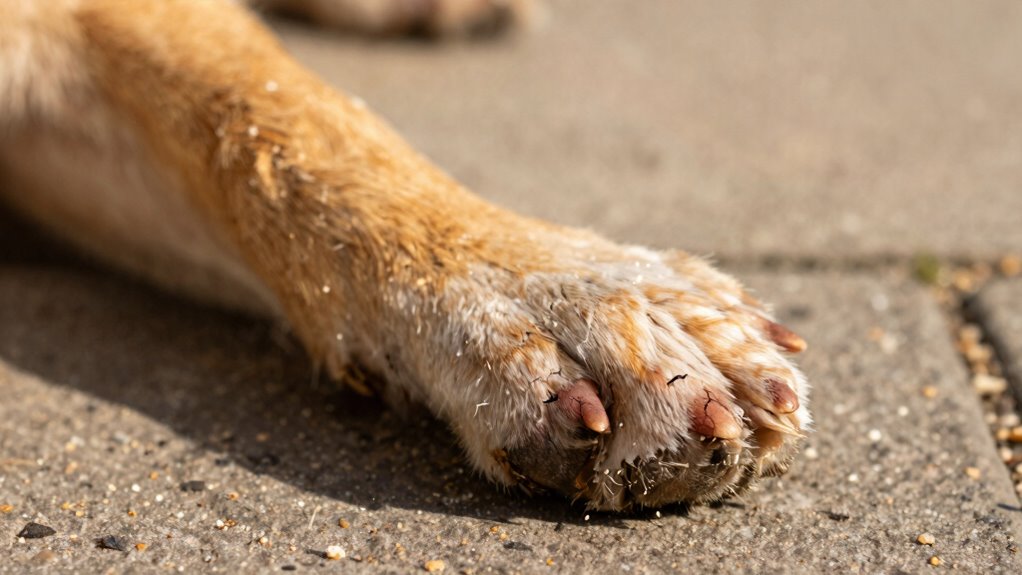
Have you ever noticed your dog’s paw pads looking sore or cracked during the warmer months? It’s common, and it highlights the significance of seasonal paw care. As temperatures rise, your dog’s paws are exposed to different hazards than during cooler seasons. Hot pavement, rough surfaces, and increased outdoor activity demand your attention to keep their paws healthy and safe. Without proper care, your dog can develop painful cracks, blisters, or even burns. That’s why paying extra attention during warm months is essential for their comfort and safety.
The summer heat can make surfaces dangerously hot, and if you’re not cautious, your dog could suffer burns on their paw pads. Asphalt and concrete absorb heat quickly, often reaching temperatures that can damage sensitive paw tissue in just a few seconds. During outdoor activity, it’s imperative to check the temperature of the ground before walks and to stick to shaded paths or grassy areas when possible. Shortening walks during the hottest parts of the day helps prevent overheating and paw injuries. Remember, even if the pavement feels cool to you, it can still be scorching for your dog’s paws.
Seasonal paw care isn’t just about avoiding burns; it also involves protecting against other environmental hazards like sharp rocks, thorns, and hot sand. These can cause cuts or abrasions that become infected if not treated promptly. Regularly inspecting your dog’s paws after outdoor adventures allows you to spot any injury early. Keep their paw pads moisturized with pet-safe balms to prevent cracking, especially if they’re walking on rough surfaces frequently. Proper hydration and a healthy diet also contribute to stronger, more resilient paw pads during the warmer months. Additionally, understanding how seasonal environmental factors influence paw health can help you better prepare for outdoor activities. Recognizing the role of regular paw inspections as part of seasonal paw care can further safeguard your dog’s paws during busy outdoor seasons.
Being aware of proper paw protection methods, such as using paw wax or booties, can significantly reduce injury risk and enhance comfort during outdoor ventures. Outdoor activity safety is a fundamental part of summer paw care. Always carry water for your dog and encourage frequent breaks in shady spots to prevent overheating. Avoid walking on icy or hot surfaces during peak hours, and consider protective booties if your dog is particularly sensitive or if you’re exploring rugged terrain. These boots shield paw pads from sharp objects and extreme temperatures, making outdoor adventures safer and more enjoyable. Remember, your dog’s paws are their primary connection to the world — safeguarding them means more happy, healthy adventures together during the warm months.
As an affiliate, we earn on qualifying purchases.
Frequently Asked Questions
Can Paw Pads Get Sunburned?
Yes, paw pads can get sunburned, especially during warm months when exposure to UV rays is higher. To protect them, you should focus on paw pad hydration and apply pet-safe sunscreens. Use sun protection tips like limiting outdoor walks during peak sunlight hours and keeping your pet in shaded areas. Regularly check their paw pads for signs of redness or burns, and take action to keep them healthy and comfortable.
How Often Should I Check My Dog’s Paw Pads?
Think of your dog’s paws as a garden needing regular tending. You should check your dog’s paw pads daily, especially during warm months, to guarantee they stay healthy. Regularly inspect for cuts, debris, or signs of irritation, practicing seasonal paw care. Good paw pad hygiene helps prevent discomfort and injury. By staying attentive, you protect your furry friend’s comfort and health, keeping their paws in top shape all year round.
Are Certain Breeds More Prone to Paw Pad Issues?
Yes, certain breeds are more prone to paw pad issues due to breed-specific sensitivity and coat influence. Breeds like Bulldogs and Pugs, with their short noses and sensitive skin, often experience paw problems more frequently. Additionally, thick or long coats can trap moisture and debris, leading to irritation. You should pay extra attention to these breeds, especially in warm months, by checking their paw pads regularly and keeping them clean and moisturized.
What’s the Best Way to Protect Paw Pads From Hot Pavement?
To protect your dog’s paw pads from hot pavement, start with seasonal paw care by avoiding walks during peak heat. Always test the pavement with your hand—if it’s too hot for you, it’s too hot for your dog. Apply protective paw wax before walks to create a barrier against heat and rough surfaces. These steps help prevent burns and keep your dog comfortable during warm months.
When Should I See a Vet for Paw Pad Injuries?
Have you noticed your dog licking or chewing their paws excessively? If so, you should see a vet promptly. Seek medical attention if you observe signs of paw pad infections, such as swelling, redness, or pus, or if you suspect paw pad allergies, like persistent itching or rash. Ignoring these issues can worsen discomfort or cause secondary infections, so timely vet visits guarantee proper diagnosis and treatment for your pet’s paw health.
As an affiliate, we earn on qualifying purchases.
Conclusion
As the warm months arrive, don’t forget your pup’s paw pads—they’re the tiny shields protecting them from the blistering heat and rough terrains. By giving them extra care, you’re not just preventing discomfort; you’re safeguarding a crucial part of your furry friend’s well-being. Neglecting this can lead to pain that’s as intense as a wildfire in a dry forest. Show your dog love and protect their paws—because they’re more precious than the rarest gem.
As an affiliate, we earn on qualifying purchases.
As an affiliate, we earn on qualifying purchases.