The nail quick in dogs is a sensitive area containing blood vessels and nerves beneath the hard nail. Cutting too close can cause bleeding, pain, and potential infection. To prevent accidents, trim gradually, especially in dark nails where the quick isn’t visible. Use sharp tools, apply gentle pressure if bleeding occurs, and keep styptic powder nearby. Knowing where the quick is and how to avoid it helps keep nail trims safe—continue to discover more tips and techniques.
Key Takeaways
- The nail quick is the sensitive soft tissue containing blood vessels and nerves beneath the nail plate, visible as a pink area in light-colored nails.
- Cutting into the quick causes bleeding, pain, and increases infection risk; careful trimming prevents injury.
- Use sharp, appropriate tools and trim gradually, especially in dark nails where the quick is less visible.
- Watch for signs of cutting too close, such as bleeding or dog distress, and stop trimming immediately if they occur.
- Keep styptic powder or pen nearby to quickly stop bleeding if the quick is accidentally cut.
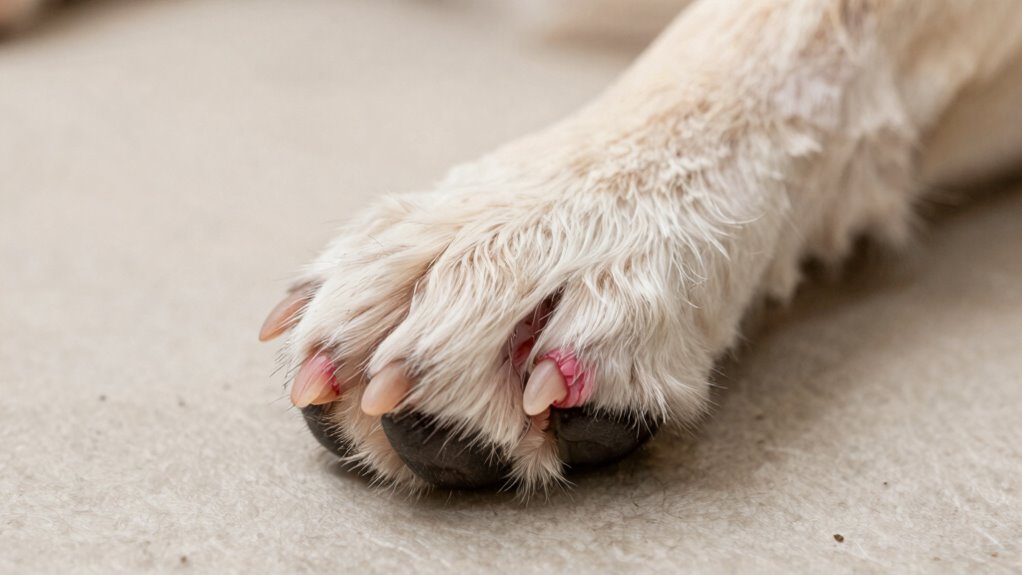
Ever wondered what the nail quick is and why it’s important? The nail quick is the sensitive part of your dog’s nail that lies just beneath the visible nail plate. To understand it better, it helps to know about nail anatomy: the outer hard keratin layer, the softer tissue underneath, and the blood vessels and nerve endings within that soft tissue. This is what makes the quick so sensitive and prone to bleeding if cut too short. When you trim your dog’s nails, the goal is to avoid cutting into this area because it contains the blood supply and nerve endings, which, if damaged, can cause bleeding and pain.
Knowing about nail anatomy is vital because it directly relates to bleeding risks. If you cut the quick, you’ll likely see blood, and your dog may react with discomfort or even pain. Bleeding risks aren’t just about causing immediate pain but also about potential infection or prolonged bleeding, especially if the quick is cut multiple times or if your dog has a bleeding disorder. This is why proper nail trimming technique is essential. You want to trim the nail gradually, stopping just before you get to the quick, especially if your dog has dark nails where the quick isn’t visible. Light-colored nails make it easier to see the pink quick, but dark nails require extra caution.
There are certain signs that you might be cutting too close, such as a sudden gush of blood or your dog yelping in pain. If you do accidentally cut into the quick, don’t panic. Keep some styptic powder or a styptic pen nearby, as these can help stop bleeding quickly. Applying gentle pressure with a clean cloth can also help. Going forward, it’s smart to trim nails in small increments over multiple sessions to avoid accidental cuts. Using the right tools, like sharp, high-quality nail trimmers, makes a difference too. Dull blades can crush or tear the nail instead of cleanly cutting it, increasing the chance of hitting the quick. Additionally, understanding water’s role in hydrotherapy can help with post-trimming care, especially if you’re using water-based treatments to soothe your dog’s paws after trimming.
In addition to proper trimming, regular maintenance can help prevent the quick from growing too long, which makes trimming safer and easier. If your dog’s nails are dark or you’re unsure about where the quick is, seek guidance from a professional groomer or veterinarian. They can show you the correct technique and help you build confidence. Understanding nail anatomy and the associated bleeding risks empowers you to trim your dog’s nails safely, reducing discomfort for your pet and avoiding unnecessary accidents.
Frequently Asked Questions
Can Nail Quick Bleeding Be Dangerous for Dogs?
Yes, nail quick bleeding can be dangerous for your dog’s health and pet safety. If you cut into the quick, it can cause pain, infection, or excessive bleeding. To protect your dog, be careful when trimming nails, use proper tools, and avoid cutting too short. If bleeding occurs, apply pressure or a styptic powder. Always monitor your dog afterward and consult your vet if you’re concerned about their health.
How Long Does It Take for a Nail Quick to Heal?
A nail quick injury typically takes about 1 to 2 weeks for the quick to heal, depending on the severity of the injury and your dog’s health. During this time, keep an eye out for signs of infection and prevent your dog from licking the wound. You can help speed up the quick healing time by keeping the area clean and avoiding further trauma. If healing stalls or worsens, consult your vet promptly.
Are There Any Home Remedies for Stopping Quick Bleeding?
When your dog’s quick bleeds, don’t just sit around twiddling your thumbs—try natural remedies like applying a mixture of cornstarch or flour to help clot the blood swiftly. Use first aid techniques such as gentle pressure with a clean cloth or styptic powder if you have it. Remember, quick action is key, and these remedies can help stop the bleeding faster, preventing further injury or infection.
How Often Should I Trim My Dog’s Nails to Avoid Hitting the Quick?
You should trim your dog’s nails every 3 to 4 weeks to maintain quick awareness and prevent hitting the quick. Regular nail trimming guarantees you become familiar with the quick’s location, reducing the risk of bleeding. Use sharp clippers and trim small amounts at a time, especially if your dog’s nails are dark. Consistent grooming helps you avoid accidental cuts and keeps your dog comfortable during nail trims.
What Signs Indicate My Dog’s Nail Quick Is Infected?
Around 20% of dogs develop nail infections, highlighting the importance of monitoring nail health. Signs of an infected nail include redness, swelling, persistent bleeding, foul odor, and pain when touched. If your dog shows any of these symptoms, it’s essential to consult your vet promptly. Keeping an eye on infection signs helps prevent further complications and guarantees your dog’s nails stay healthy and comfortable.
Conclusion
Knowing about the nail quick helps you keep your dog safe and pain-free. By trimming carefully and avoiding the quick, you prevent bleeding and discomfort. Remember, even the bravest of pups can get spooked, so take your time—like a courteous knight of old. With patience and proper care, you’ll be a pro at keeping those nails healthy and bleeding at bay. Your dog will thank you, and you’ll both enjoy happier, more comfortable walks!