
Understanding dog microchipping is key to keeping your pet safe. The tiny chip is implanted under your dog’s skin during a quick, minimally invasive procedure, storing a unique ID linked to your contact details. Laws and best practices recommend early implantation and regular updates to guarantee it works properly. Microchipping offers a permanent way to identify your dog, surpassing collars or tattoos, and can greatly improve chances of reunion if your pet gets lost. Keep exploring to learn more essential tips.
Listen free for 30 days with Audible
Thousands of audiobooks and originals — cancel anytime.
As an affiliate, we earn on qualifying purchases.
Key Takeaways
- Microchipping involves implanting a tiny device under a dog’s skin to provide permanent identification linked to owner contact info.
- The procedure is quick, minimally invasive, performed by professionals during routine vet visits, and safe for the dog.
- Proper registration and regular updates ensure the microchip’s information is current, facilitating quick recovery if lost.
- Microchips are more reliable than collars or tattoos, as they are unaffected by weather or accidents.
- Verification with a scanner is essential to confirm the microchip’s functionality and improve chances of reuniting with lost dogs.
As an affiliate, we earn on qualifying purchases.
What Is a Microchip and How Does It Work?

A microchip is a tiny, rice-sized device implanted under your dog’s skin that acts as a permanent identification method. It’s a simple procedure often performed during veterinary care visits, ensuring your pet’s safety. The microchip contains a unique number linked to your contact information in a database, making it easy to identify your dog if lost. While microchipping doesn’t replace good dog training, it complements responsible pet ownership by providing a reliable way to recover your dog. When a lost dog is found, a vet or animal shelter can use a scanner to read the microchip, quickly connecting you with your pet’s details. This technology is an essential part of a thorough approach to caring for your dog, combining training, responsible behavior, and safety measures like microchipping. Understanding microchip technology helps pet owners appreciate its significance in modern pet safety practices. Additionally, understanding the microchip implantation process can alleviate concerns about the procedure’s safety and effectiveness. Recognizing the importance of emergency identification tools like microchipping enhances your ability to protect your pet in unexpected situations. Moreover, advancements in microchip longevity ensure that the device remains functional for your pet’s lifetime without needing replacement.
As an affiliate, we earn on qualifying purchases.
The Process of Microchipping Your Dog
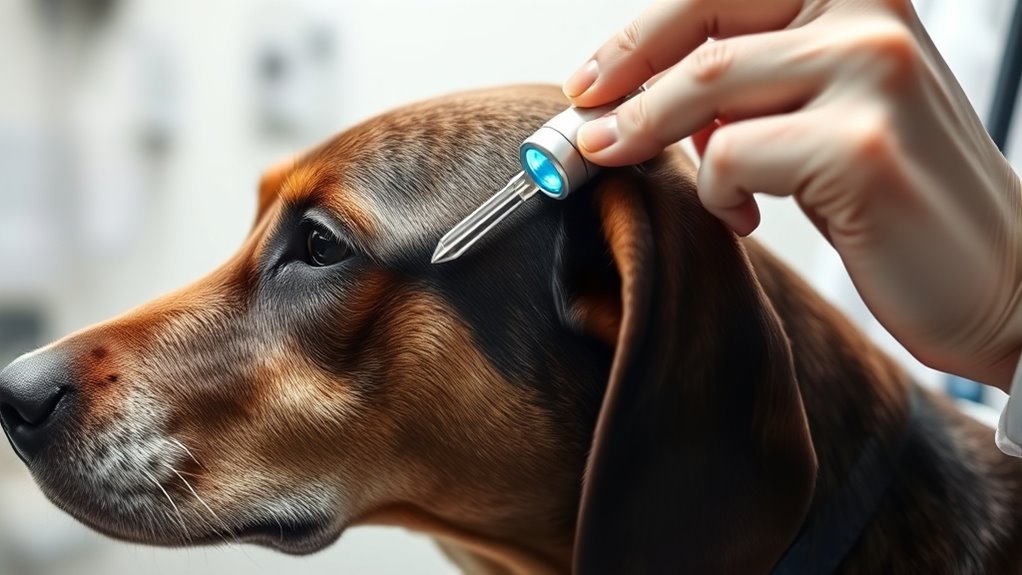
Microchipping your dog is a quick and straightforward procedure typically performed during a routine veterinary visit. The vet uses a small needle to insert the microchip between your dog’s shoulder blades. The process is minimally invasive and usually takes just a few seconds. Before the procedure, it’s helpful to contemplate your dog’s background, including any genetic testing results or behavioral training needs, to ensure they’re comfortable. While the microchip itself contains your contact information, it’s important to keep this data current. After insertion, you might notice a slight bump or swelling, which usually subsides quickly. Microchipping doesn’t interfere with your dog’s daily activities or training routines. It’s a simple step that markedly increases the chances of being reunited if your dog gets lost. Incorporating data privacy considerations into your pet’s microchipping process can help safeguard your personal information. Additionally, understanding animal identification methods can help you make informed decisions about your pet’s safety. Being aware of city regulations related to pet identification can also ensure compliance with local laws. Understanding insurance coverage options for pet identification procedures can also be beneficial in case of unexpected costs.
dog microchip registration service
As an affiliate, we earn on qualifying purchases.
As an affiliate, we earn on qualifying purchases.
Legal Requirements and Recommendations

You need to know the legal requirements for microchipping your dog, which vary by location but often make it mandatory for certain ages or breeds. Registration rules typically specify when and how you should update your information to stay compliant. Proper registration procedures are essential to ensure your pet’s microchip information remains current and accessible to authorities. Incorporating proper yoga practices and techniques can also promote your pet’s well-being, supporting a healthy and balanced lifestyle. Staying aware of angel number guidance related to relationships can help you better understand the significance of your pet’s health and connections.
Mandatory Microchipping Laws
Many regions have implemented mandatory microchipping laws to guarantee lost dogs can be quickly identified and reunited with their owners. These laws often align with breed-specific legislation, targeting certain breeds for safety reasons. As a responsible owner, you’ll need to make sure your dog’s microchip is registered and up to date. Proper microchip registration is essential to ensure your pet’s information is current and accurate. Some areas also require vaccination requirements, like rabies shots, before issuing licenses or permits. Failure to comply with these laws can result in fines or other penalties. Microchipping becomes a legal obligation, not just a recommendation, helping authorities trace ownership efficiently. By adhering to these regulations, you contribute to public safety and ensure your pet’s swift recovery if lost. Legal compliance with local laws is crucial for pet owners to meet all mandatory microchipping and vaccination requirements. Staying informed about local regulations can help you meet all requirements for microchipping and vaccinations.
Age and Registration Rules
At what age should a dog be microchipped to guarantee compliance with legal requirements? Typically, dogs should be microchipped before reaching the age restrictions set by local laws, often around 12 weeks old. Meeting these age and registration rules ensures your dog’s safety and legal compliance. Keep in mind:
- Check local legislation for specific minimum age requirements
- Register the microchip within the designated registration deadlines
- Update your contact details promptly if they change
- Ensure your veterinarian or breeder administers the microchip at the correct age
- Familiarize yourself with the process of end-of-life care options to be prepared for future circumstances.
Failing to follow registration deadlines or age restrictions may result in penalties. Staying informed about these rules helps you avoid legal issues and guarantees your pet’s proper identification from an early age.
Recommended Best Practices
Adhering to recommended best practices for microchipping guarantees your dog remains legally compliant and easily identifiable. Make certain the microchip is implanted by a qualified professional, following proper procedures. Incorporate training techniques to help your dog become comfortable with handling and vet visits, easing future procedures like spaying. Keep your contact information up to date in the registration database, so your dog can be returned promptly if lost. Regularly verify the chip’s functionality with a scanner. Stay informed about local legal requirements, such as mandatory microchipping deadlines. Legal compliance ensures that your pet’s microchip is recognized by authorities and shelters. Incorporating microchipping benefits into your pet care routine can help you better understand the importance of this simple yet effective identification method. Staying aware of security features can help you protect your pet’s personal data and prevent unauthorized access. Combining these best practices minimizes the risk of misidentification and enhances your dog’s safety. Understanding the importance of self-sufficiency through knowledge of essentials like rendering lard can contribute to a more resilient and prepared household. Ultimately, following these guidelines supports responsible ownership and ensures your dog’s microchip provides reliable identification when needed.
As an affiliate, we earn on qualifying purchases.
Benefits of Microchipping for Pet Owners

Microchipping your dog offers significant peace of mind by increasing the chances of quick reunification if your pet ever gets lost. It’s a simple, permanent way to guarantee your dog can be identified, no matter how much they grow or how messy their collar gets. Beyond recovery, microchips support responsible pet ownership, helping you stay connected to your pet’s health needs, like pet nutrition. It also encourages better dog training, as owners feel more confident knowing their pet can be safely returned if they wander. Additionally, understanding Forsale 100 can help you choose the best microchipping options available. Incorporating Lifestyle considerations, such as regular updates to your contact information, ensures the microchip remains an effective tool for your pet’s safety. Recent advancements in AI Smasher technology are also beginning to influence pet identification methods, making tracking even more efficient.
Microchipping Versus Other Identification Methods

While traditional identification methods like collar tags and tattoo identification are common, microchipping offers a more reliable and permanent solution for identifying your dog. Collar tags can fall off or be removed, and tattoos fade over time, making them less dependable. Microchips are embedded under your dog’s skin, providing a unique, unchangeable ID that can be scanned by a veterinarian or shelter. Unlike collar tags, microchips aren’t affected by weather or accidents, ensuring your pet’s identification remains intact. Additionally, microchipping often includes a registration process, which helps in quickly locating your pet if they become lost. While collar tags and tattoos are easy and inexpensive, microchipping adds a layer of security by offering a lifelong, tamper-proof form of ID. Combining these methods can increase the chances of your dog being safely returned if lost. Additionally, veterinary technology continues to advance, making microchipping an increasingly accessible and effective identification method, which greatly enhances the reliability of pet recovery.
How to Choose the Right Microchip for Your Dog

Choosing the right microchip for your dog involves considering several key factors to guarantee reliable identification. First, verify the microchip is ISO compliant, making it compatible with most scanners worldwide. Second, select a reputable manufacturer known for durability and accuracy. Third, think about your dog’s size and breed to choose a microchip that’s appropriate and comfortable. Fourth, research if the microchip provider offers easy registration and access to your pet’s info. While dog training helps manage behavior, pet nutrition influences overall health and well-being, which can impact the effectiveness of microchipping. Remember, a well-informed choice ensures your dog’s safety and peace of mind for you. Proper selection supports seamless recovery if your dog gets lost.
What Happens If Your Dog Gets Lost?
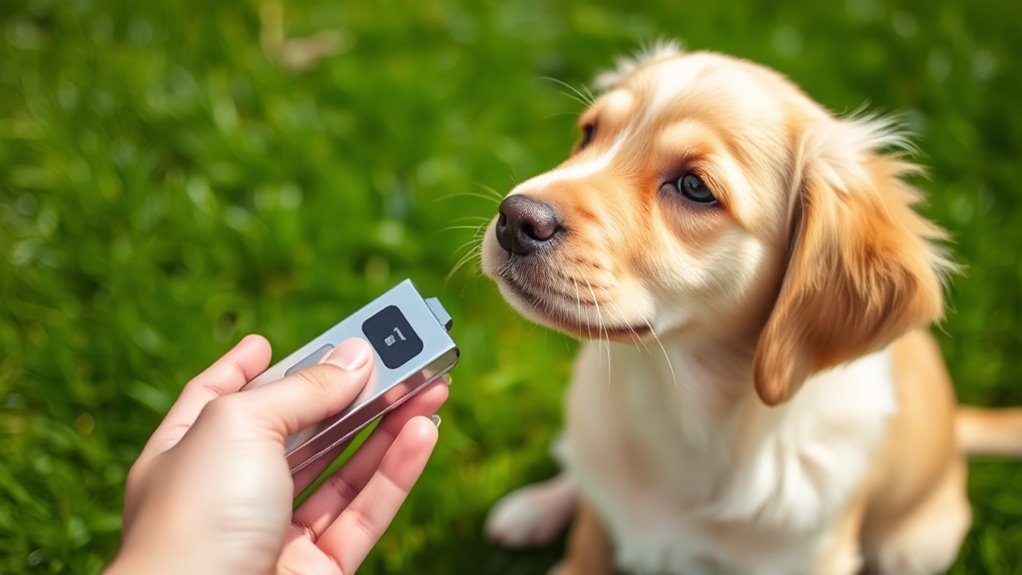
If your dog gets lost, quick action can make all the difference. You’ll want to start your search immediately and contact local shelters or vets to check for a microchip. Once found, the microchip retrieval process helps reunite you with your dog quickly and safely.
Immediate Search Strategies
When your dog goes missing, quick and organized action can make all the difference. Start by searching your immediate area, calling their name, and checking nearby hiding spots. Spread the word by sharing details with neighbors and on social media. Use your dog’s microchip information to alert local shelters and vets. Remember, proper canine training can help your dog respond to commands, making future searches easier. Also, guarantee your dog’s nutrition is maintained, as a healthy dog is more alert and responsive. Don’t forget to leave familiar items like their favorite toy or blanket outside, which can attract their attention. Keep calm and systematic—your swift response increases your chances of a safe reunion.
Microchip Retrieval Process
When your dog gets lost, the microchip plays a crucial role in reuniting you. If someone finds your dog, a veterinarian or shelter can perform a chip scanning process to locate the microchip. During chip scanning, a handheld scanner detects the microchip’s unique ID number, which is then used for data retrieval. This process is quick and painless, allowing the staff to access your dog’s registration information almost instantly. Once the data is retrieved from a secure database, they can contact you directly. It’s important to keep your contact details up-to-date to ensure a smooth retrieval process. Proper microchip scanning and data retrieval are indispensable steps that markedly increase your chances of being reunited with your lost pet quickly.
Reuniting With Owner
Ever wonder what happens next after your dog is found wandering? Once your dog is located and identified via microchip, the shelter or finder will contact the microchip database. They’ll then notify you promptly to arrange a reunion. To guarantee a smooth process, keep these tips in mind:
- Keep your contact info updated in the microchip registry
- Have recent photos of your dog ready for quick identification
- Practice dog training to improve recall, making reunions easier
- Maintain good nutrition tips to keep your dog healthy and happy
Reuniting with your dog is a relief, but staying proactive helps. Regularly update your contact details, invest in training, and ensure your dog’s nutrition supports their well-being. This way, you’re prepared for a quick, safe reunion.
Maintaining and Updating Your Dog’s Microchip Information
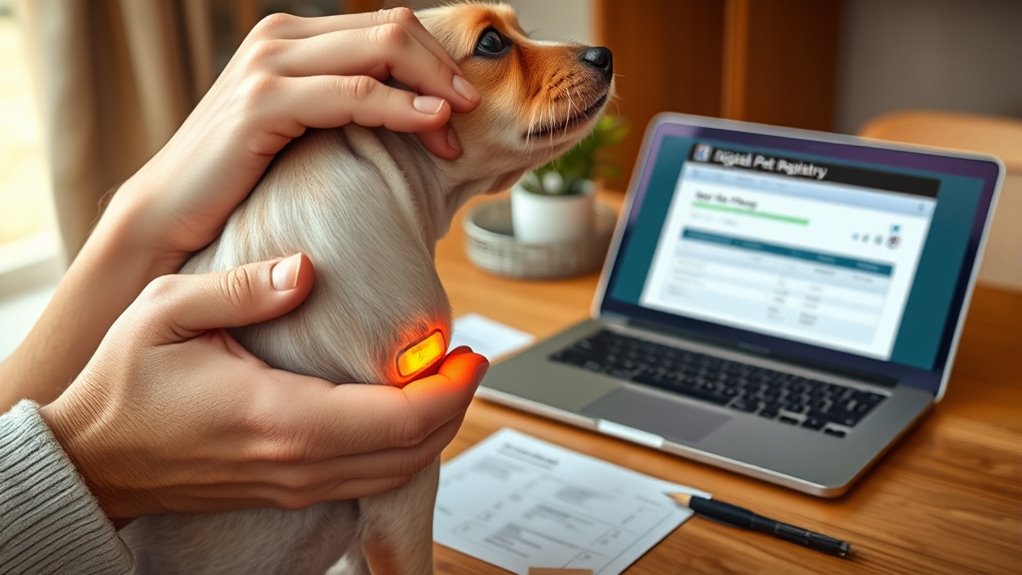
Regularly updating your dog’s microchip information is essential to guarantee your pet can be easily identified and returned if lost. You should review your veterinary records to ensure your contact details are current and accurate. If you move or change phone numbers, update this information promptly with the microchip registry. Remember, there are different microchip types, so verify which one your dog has to follow the correct updating procedures. Some microchips require direct registration updates, while others sync with a centralized database. Keeping your contact info current increases the chances of a swift reunion if your dog ever goes missing. Make it a routine to check your details periodically, so your pet’s microchip remains a reliable tool for identification.
Frequently Asked Questions
Can a Microchip Prevent My Dog From Getting Lost?
A microchip alone can’t prevent your dog from getting lost, but it greatly aids lost prevention by increasing the chances of quick recovery. When someone finds your dog, microchip accuracy ensures they can be identified and returned to you promptly. Keep your contact information up-to-date in the microchip registry and consider other safety measures like collars or GPS trackers for thorough lost prevention.
What Should I Do if My Dog’S Microchip Information Changes?
Did you know that nearly 40% of microchip registrations are outdated? If your dog’s microchip information changes, you should immediately update the contact details through the microchip registry. This guarantees that if your dog gets lost, the shelter or vet can reach you quickly. Always keep your microchip registration current by updating contact details promptly, so your dog remains protected and easily returned if lost.
Are Microchips Safe for Puppies and Senior Dogs?
Microchip safety is generally high for both puppies and senior dogs, making it a safe choice for all ages. You might have puppy microchip concerns, but the tiny implant is tested and regulated to guarantee safety. For seniors, microchipping offers lifelong identification without discomfort. Trust the procedure, as it’s designed to be safe, effective, and non-invasive, providing peace of mind knowing your dog can be identified if lost.
How Long Does a Microchip Typically Last?
A microchip’s lifespan typically lasts for the lifetime of your dog, thanks to its durable design. You can trust the chip’s durability, as it’s built to withstand wear, environmental factors, and aging. The microchip itself doesn’t usually need replacement, but you should have your pet’s information updated regularly. This way, the microchip remains a reliable way to identify your dog if they ever get lost.
Is Microchipping Painful for My Dog During Implantation?
During the microchipping procedure, your dog might feel a quick pinch or slight discomfort, but it’s generally not painful. Their dog sensory response is minimal, and the process is very fast. You’ll notice your dog might react briefly, but most dogs tolerate it well. Rest assured, the tiny implant is a safe, non-invasive way to help identify your pet if they get lost, offering peace of mind for you.
Conclusion
Imagine walking your dog in a park, knowing that a tiny microchip beneath their skin could be the key to reuniting you if they wander off. Just like a lost earring found in the grass, your dog’s microchip is a small but powerful tool, giving you peace of mind. By understanding, maintaining, and updating this tiny device, you guarantee your furry friend’s safety—turning chance encounters into happy reunions.
Flea & tick season Picks
flea and tick prevention
As an affiliate, we earn on qualifying purchases.