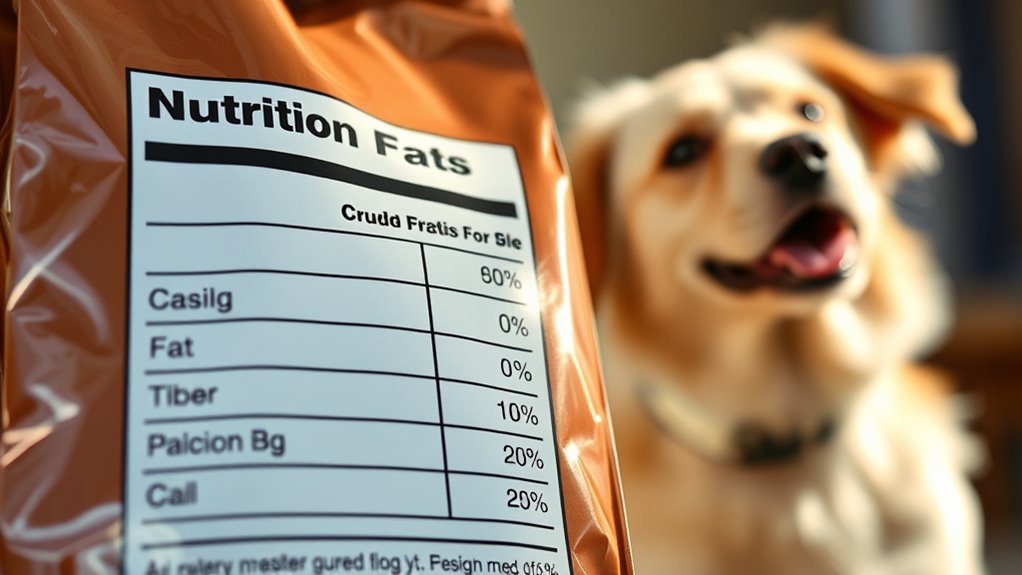

To understand dog nutrition labels, start by examining the ingredient list for recognizable, whole-food ingredients like specific meats, vegetables, and grains—avoid vague terms like “meat by-products.” Check the sourcing details if provided to gauge quality, and review the guaranteed analysis to see essential nutrient levels. Paying attention to both ingredient transparency and nutritional info helps you choose the best food for your dog’s needs. Keep going to discover more tips on making informed choices.

Get pet supplies delivered free with Prime
- Fast, free delivery on millions of items
- Prime Video, Amazon Music and more included
- Member-only deals all year
Key Takeaways
- Examine the ingredient list for recognizable, whole-food ingredients like meat, vegetables, and grains.
- Check the guaranteed analysis for crude protein, fat, fiber, and moisture percentages to assess nutritional content.
- Look for transparency in sourcing details, such as where ingredients are sourced and if sustainably farmed.
- Avoid vague terms like “meat by-products” or “animal digest” to ensure higher-quality ingredients.
- Use both ingredient quality and nutritional analysis to determine if the food meets your dog’s dietary needs.
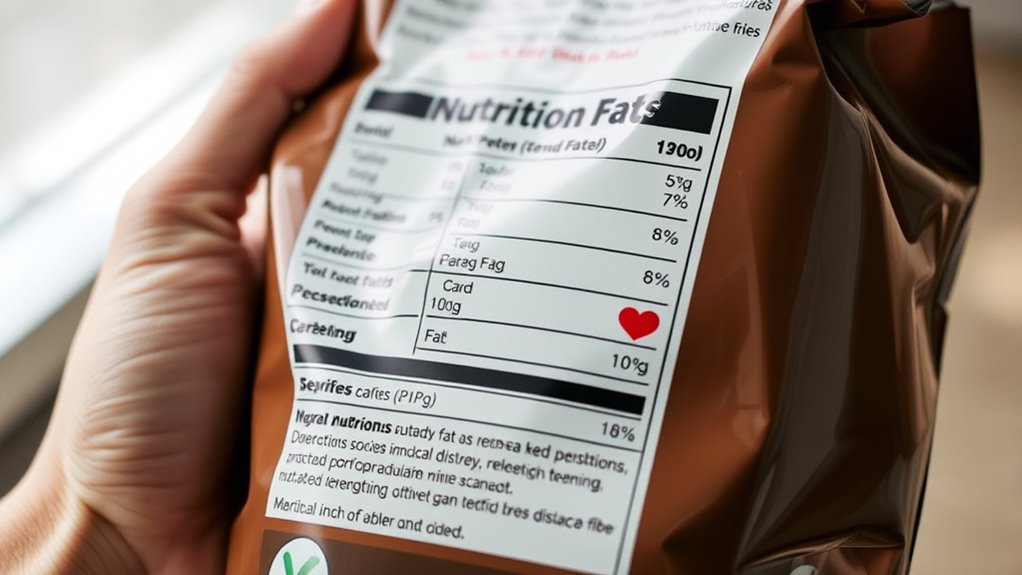
Understanding how to read dog nutrition labels is essential for ensuring your pet gets the right balance of nutrients. When you examine a bag of dog food, the first thing you should focus on is the ingredient list. Ingredient analysis helps you determine the quality and source of what your dog is eating. Look beyond just the first few ingredients; check the entire list to see if the food contains recognizable, whole-food ingredients like real meat, vegetables, and grains. Avoid labels that list vague or unspecified ingredients such as “meat by-products” or “animal digest,” as these often indicate lower-quality sourcing. Instead, seek foods that specify the type of meat used, like “chicken,” “lamb,” or “salmon,” which shows better ingredient sourcing and transparency. This detailed analysis allows you to assess whether the ingredients align with your pet’s dietary needs and preferences.
Next, pay attention to the ingredient sourcing. Knowing where the ingredients originate can be a key factor in choosing the right food for your dog. Reputable brands often highlight their ingredient sourcing practices, such as using locally sourced or sustainably farmed ingredients. This information can usually be found on the label or the company’s website. When you understand where the ingredients come from, you’re better able to gauge their quality and safety. For example, ingredients sourced from trusted farms or suppliers are less likely to contain contaminants or fillers and are more likely to be fresh and nutritious. Sourcing details also reflect the company’s commitment to quality control, which ultimately impacts your dog’s health. Additionally, understanding the nutritional profile helps you evaluate whether the food meets your dog’s specific dietary requirements, ensuring a balanced and healthy diet.
While examining the nutrition label, don’t forget to check the guaranteed analysis, which provides information on the minimum or maximum percentages of crude protein, fat, fiber, and moisture. These figures give you a snapshot of the food’s nutritional profile, but they don’t tell the whole story. The ingredient list and sourcing are more reliable indicators of quality, as they reveal what your dog is actually consuming. Combining both pieces of information allows you to make an informed decision about the best food for your furry friend.
dog food with recognizable ingredients
As an affiliate, we earn on qualifying purchases.
As an affiliate, we earn on qualifying purchases.
Frequently Asked Questions
Are Organic Ingredients Always Better for My Dog?
Organic ingredients aren’t always better for your dog, but organic verification guarantees you’re getting higher quality, pesticide-free options. You should prioritize ingredient transparency, so you know exactly what’s in your dog’s food. Sometimes, non-organic ingredients can be just as nutritious if they meet high standards. Always read labels carefully, and consider your dog’s specific needs. Organic can be a bonus, but it’s not the only factor in choosing healthy, balanced dog food.
How Often Do Dog Nutrition Labels Change?
You might worry that your dog’s nutrition label stays the same forever, but it actually changes regularly. Manufacturers update labels to guarantee accuracy and reflect ingredient updates, which can happen annually or more often if new formulations are introduced. Always check the latest label for the most accurate information. Staying informed helps you make better choices, knowing that label accuracy and ingredient updates keep your dog’s food safe and nutritious.
What Is the Ideal Protein Percentage for My Dog?
The ideal protein percentage for your dog depends on their age, size, and activity level, but generally, dietary guidelines recommend around 18-25% protein for adult dogs. Puppies and active dogs may need higher levels, up to 30%. Always consider your dog’s specific protein requirements, and consult your vet to guarantee their diet aligns with nutritional standards for maximum health and energy.
Can I Rely Solely on Labels for a Balanced Diet?
You shouldn’t rely solely on labels for a balanced diet, as reading accuracy varies and label symbols can be confusing. Studies show that pet owners often misinterpret nutritional info, risking nutritional gaps. While labels provide essential info, they don’t tell the whole story. To guarantee your dog’s health, combine label reading with guidance from your vet, and consider whole-food choices and regular health checkups.
Do Different Breeds Require Different Nutritional Labels?
Yes, different breeds require different nutritional labels because breed-specific needs influence their nutritional requirements. You should look for labels that address breed-specific needs or size-based formulations, as they account for nutritional variability among breeds. By doing so, you guarantee your dog receives the appropriate balance of nutrients. Always consider your dog’s breed, size, and activity level to choose the most suitable nutrition label for their unique needs.
high quality dog food with transparent sourcing
As an affiliate, we earn on qualifying purchases.
As an affiliate, we earn on qualifying purchases.
Conclusion
Now that you know how to read dog nutrition labels, you’re all set to be your pup’s best chef. Just remember, don’t get lost in the weeds like a knight in a labyrinth; focus on the key info and choose wisely. With this knowledge, you’ll be able to navigate the pet store aisles like a modern-day Sherlock Holmes, ensuring your furry friend gets the best nutrition possible. Happy shopping—your dog will thank you!
dog nutrition label reading guide
As an affiliate, we earn on qualifying purchases.
As an affiliate, we earn on qualifying purchases.
grain free dog food with real meat
As an affiliate, we earn on qualifying purchases.
As an affiliate, we earn on qualifying purchases.
Halloween Picks
halloween
As an affiliate, we earn on qualifying purchases.