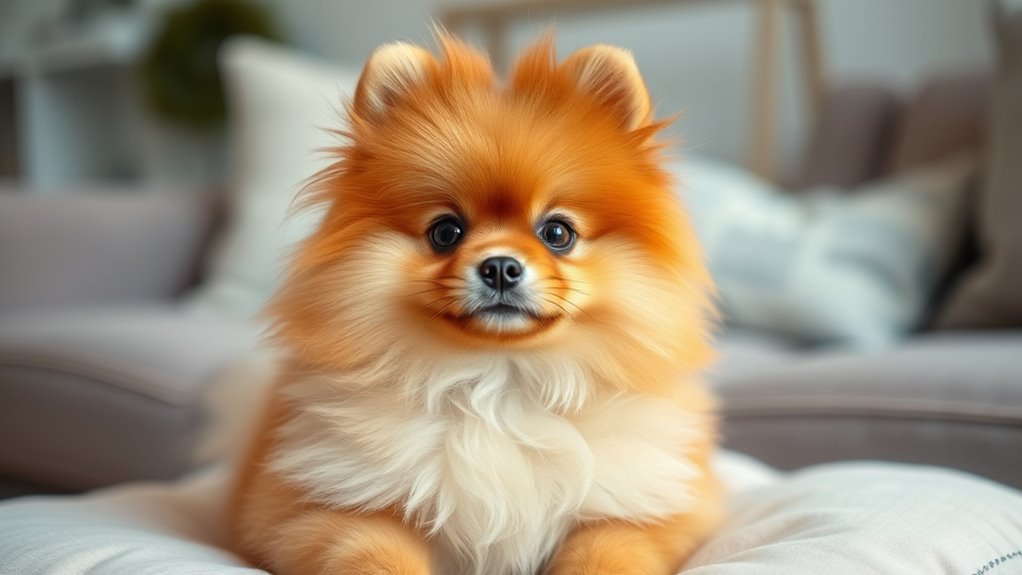

A Pomeranian personality is lively, affectionate, and confident, making them charming companions. They love to explore, stay alert, and enjoy being the center of attention, often forming strong bonds with their owners. Their intelligent and playful nature means they learn quickly but can be stubborn at times. With the right guidance, their spirited, loving personality shines through. If you’d like to discover how to better understand and care for this lively breed, there’s more to uncover ahead.
Key Takeaways
- Pomeranians are lively, affectionate, and confident, making them charming and engaging companions.
- They are alert, intelligent, and playful, thriving on mental stimulation and quick to learn commands.
- Naturally social, they form close bonds with family and are friendly with familiar people, cautious around strangers.
- Sensitive to tone and body language, they respond best when feeling secure and loved, often showing affectionate behaviors.
- Their strong personality and lively spirit make them stand out among small breeds, serving as excellent watchdogs.
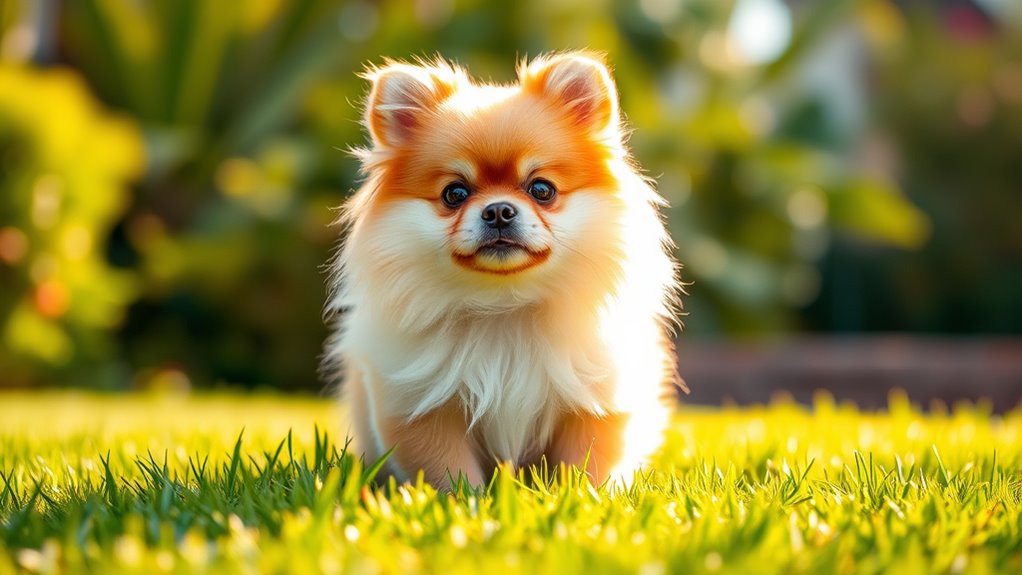
Have you ever wondered what makes Pomeranians such charming companions? Their personality is a key factor that draws many people to these tiny dogs. Pomeranians are known for their lively and affectionate nature, but understanding their temperament traits and social behavior reveals even more about what makes them so special. These dogs are typically confident and curious, eager to explore their surroundings and engage with their owners. They often display a bold attitude despite their small size, which can be both endearing and commanding. This lively spirit makes them stand out among toy breeds, and it’s one of the reasons they’re so beloved as companions.
Pomeranians’ lively, confident personality makes them charming and standout companions among toy breeds.
When it comes to temperament traits, Pomeranians are generally alert, intelligent, and playful. They love to be the center of attention and thrive on interaction. Their intelligence means they learn commands quickly and enjoy mental stimulation, making training sessions rewarding for both of you. However, their confident and sometimes assertive nature can lead to moments of stubbornness. If you want a well-behaved Pomeranian, consistency and positive reinforcement are essential. They tend to have a strong personality, which means they often want to be the boss of the household. This trait requires you to establish clear boundaries and be patient as they learn their place in your family.
Social behavior is another defining aspect of the Pomeranian personality. These dogs are naturally social creatures that crave companionship. They love being around their family members and often form close bonds with their owners. They are typically friendly with familiar people but can be reserved or cautious around strangers. Early socialization is vital to help them develop confidence and friendliness with new people and other animals. Pomeranians are also quite alert, making them excellent watchdogs despite their small stature. They tend to bark at unfamiliar noises or visitors, which can be a benefit if you want alertness, but it also calls for training to manage excessive barking. Their resale value remains strong due to their popularity and charming personality traits.
Despite their boldness, Pomeranians are sensitive and responsive to your tone and body language. They thrive when they feel secure and loved, and they often display affectionate behaviors like cuddling or following you around the house. Overall, their social behavior combines friendliness with a protective streak, making them lively, loving, and sometimes vigilant companions. Recognizing these traits helps you foster a strong bond and ensure your Pomeranian’s personality shines through in all its charming facets.
Frequently Asked Questions
How Does the Pomeranian’s Personality Change With Age?
As your Pomeranian ages, expect their puppy temperament to soften, making them calmer and more affectionate. Their energy levels may decrease, leading to less playfulness, but they’ll still enjoy cozy cuddles. In senior years, behavior might shift to increased clinginess or slight grumpiness, yet their loyal nature remains. You’ll notice their personality evolves, blending their lively puppy traits with a gentle, more relaxed demeanor, strengthening your bond over time.
Are Pomeranians Suitable for First-Time Dog Owners?
Yes, Pomeranians can be suitable for first-time dog owners, but you need to understand their training requirements and grooming needs. They’re intelligent but can be stubborn, so consistent, positive reinforcement training is essential. Their thick coat requires regular grooming to prevent matting and keep them comfortable. If you’re patient and committed to their care, a Pomeranian can become a loving, manageable companion for first-time owners.
What Are Common Behavioral Issues in Pomeranians?
You might notice common behavioral issues in Pomeranians like puppy biting and separation anxiety. They tend to bite when teething or feeling anxious, so early training helps. Separation anxiety can cause excessive barking or destructive behavior when you’re away. To manage these issues, provide consistent routines, plenty of toys, and positive reinforcement. Understanding their needs and addressing these behaviors early guarantees a well-behaved, happy Pomeranian.
How Do Pomeranians Interact With Children and Other Pets?
You’ll find that Pomeranians can interact with children and other pets if properly socialized. Start early with dog socialization and introduce them gently to new environments and companions. Use consistent training tips to set boundaries and encourage good behavior. Supervise interactions, especially with young kids, to prevent biting or nipping. With patience and positive reinforcement, your Pomeranian can become a friendly, confident member of your family and social circle.
Can Pomeranians Adapt Well to Apartment Living?
Think of your Pomeranian as a lively spark in a cozy room—they thrive in an apartment lifestyle. These tiny bundles of energy adapt well to small spaces, but you need to meet their indoor exercise needs to keep them happy. Regular play and short walks help prevent boredom, making your apartment feel like a palace for your spirited companion. With love and attention, they flourish in compact living.
Conclusion
So, after all this, your tiny Pomeranian might act like a fearless lion, but don’t be fooled—beneath that fluff is a tiny heart full of loyalty. It’s amusing how such a small dog can have such a big personality, isn’t it? Just remember, their confident attitude masks a sensitive soul that craves love and attention. So, cherish every moment, because despite their bravado, they’re the little companions who truly hold your heart.