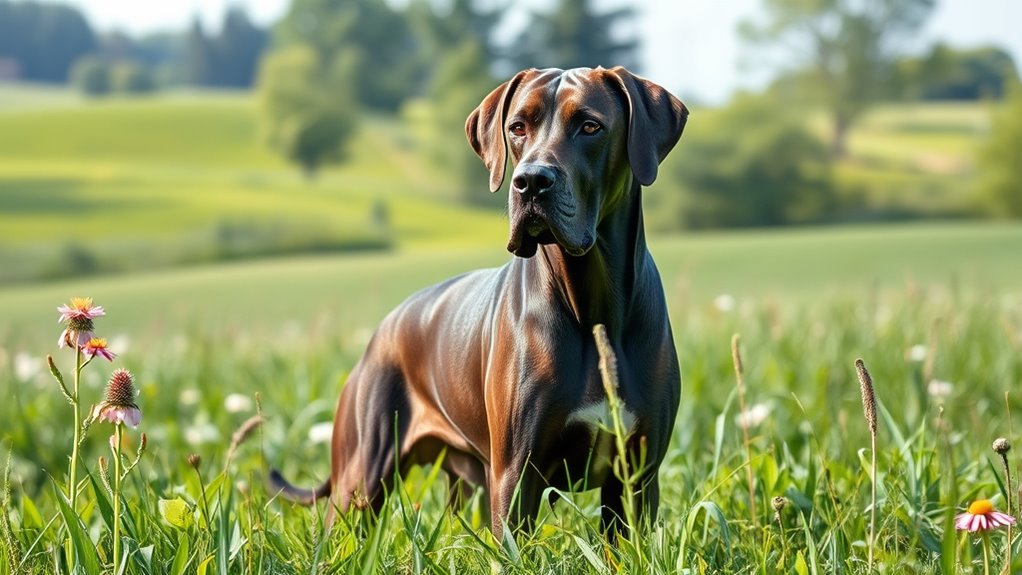

Great Danes are known for their gentle giant nature, combining their impressive size with a calm, friendly attitude. They’re typically affectionate, social, and enjoy being around people and other pets. Proper training and early socialization help bring out their best qualities, while routine grooming and exercise keep them healthy and happy. If you’re curious about how to support their gentle demeanor and care needs, there’s plenty more to discover about this remarkable breed.
Key Takeaways
- Great Danes are known for their calm, friendly, and gentle demeanor despite their large size.
- Their gentle nature makes them excellent family pets and good with children and other pets.
- Proper socialization and positive reinforcement training enhance their confident and well-behaved temperament.
- They require routine grooming and regular exercise to support their health and maintain their gentle disposition.
- Their size and calm temperament make them striking, affectionate companions that thrive on routine and gentle leadership.
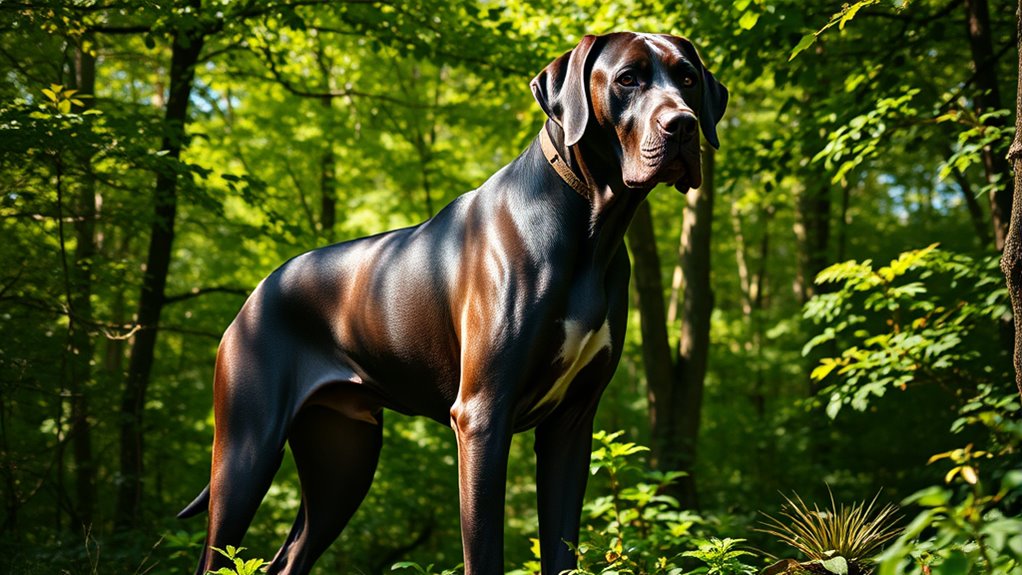
Have you ever wondered what makes the Great Dane one of the most impressive dog breeds? It’s their size, sure, but it’s also their gentle nature that truly captures hearts. These dogs are known for their calm, friendly demeanor, making them excellent companions for families, singles, and seniors alike. Because of their size, you might think they’re hyper or unruly, but with proper dog training, you’ll find they’re surprisingly easy to manage. Consistent, positive reinforcement works best, and early socialization helps them become confident and well-behaved. You’ll want to establish a routine that includes regular walks and playtime, which not only keeps them healthy but also strengthens your bond. Remember, their training needs patience and gentle guidance—harsh methods won’t suit their sensitive nature.
Grooming a Great Dane is straightforward, but their size demands some planning. They have short coats that are low-maintenance, so brushing once a week with a rubber mitt or soft brush will remove loose hair and keep their skin healthy. During shedding seasons, you might need to increase the frequency, but overall, grooming tips for this breed are simple. Regular baths are recommended, especially if they spend a lot of time outdoors, to keep their coat and skin clean. Don’t forget to check their ears, teeth, and nails regularly. Cleaning their ears prevents infections, and brushing their teeth weekly helps maintain dental health. Their nails tend to grow quickly, so trim them as needed, especially if they aren’t naturally worn down by activity.
When it comes to their grooming and training needs, remember that consistency is key. Because Great Danes are gentle giants, they thrive on routine, which helps them feel secure. Keep training sessions short but frequent, and always reward good behavior with praise or treats. This breed responds well to calm, assertive leadership, so patience and kindness will get you far. Their social nature means they love being around people and other pets, but early socialization is crucial to prevent shyness or over-guarded tendencies.
Frequently Asked Questions
How Does the Great Dane’s Temperament Vary With Age?
As a Great Dane ages, you’ll notice their puppy behavior fades, replaced by a calmer, more relaxed temperament. When they’re young, they might be playful and energetic, but as seniors, they tend to be mellow and affectionate. You’ll see their gentle giant nature shine through more, enjoying quiet cuddles and less hyperactivity. Their senior temperament makes them great companions for a peaceful, loving home, adapting beautifully to your lifestyle.
Are Great Danes Suitable for Families With Small Children?
Yes, Great Danes are suitable for families with small children because they’re gentle and protective. You’ll find that their calm demeanor makes them great companions, but you should be prepared for their training requirements to guarantee good behavior. Their grooming needs are moderate, needing regular brushing. Just supervise interactions to keep everyone safe, and your family can enjoy a loving, loyal pet that’s both friendly and easy to care for.
What Health Issues Are Common in Great Danes?
You should be aware that Great Danes are prone to health issues like hip dysplasia, bloat, and heart problems. To keep your dog healthy, focus on proper dog nutrition and avoid overfeeding. Regular grooming tips, such as brushing their short coat and checking for skin issues, also help maintain their health. Staying vigilant and providing routine vet care guarantees your gentle giant remains happy and healthy throughout their life.
How Much Exercise Does a Great Dane Need Daily?
You should provide your Great Dane with about 1 to 2 hours of exercise daily through moderate activities like walks and playtime. Incorporate varied exercise routines to keep them engaged and healthy, but avoid overexertion to protect their joints. Also, guarantee their diet requirements support their activity level, focusing on balanced nutrition to maintain their size and energy. Regular exercise and proper diet help prevent health issues common in this breed.
What Is the Lifespan of a Great Dane?
Did you know that Great Danes typically live around 7 to 10 years? Their lifespan is shorter compared to smaller breeds due to their rapid aging process. You’ll notice they age faster, often showing signs of aging by their fifth or sixth year. Proper care, regular vet visits, and a healthy diet can help extend their lifespan and improve their quality of life during their years with you.
Conclusion
As you marvel at the Great Dane’s gentle nature, remember there’s more beneath that towering frame. Their calm, affectionate spirit hides surprises you might never expect. Will you discover just how much love and loyalty a gentle giant like this can offer? Keep watching, because once you truly get to know a Great Dane, you’ll realize the biggest mysteries are yet to come. Are you ready to uncover the secrets hidden within this gentle giant’s heart?