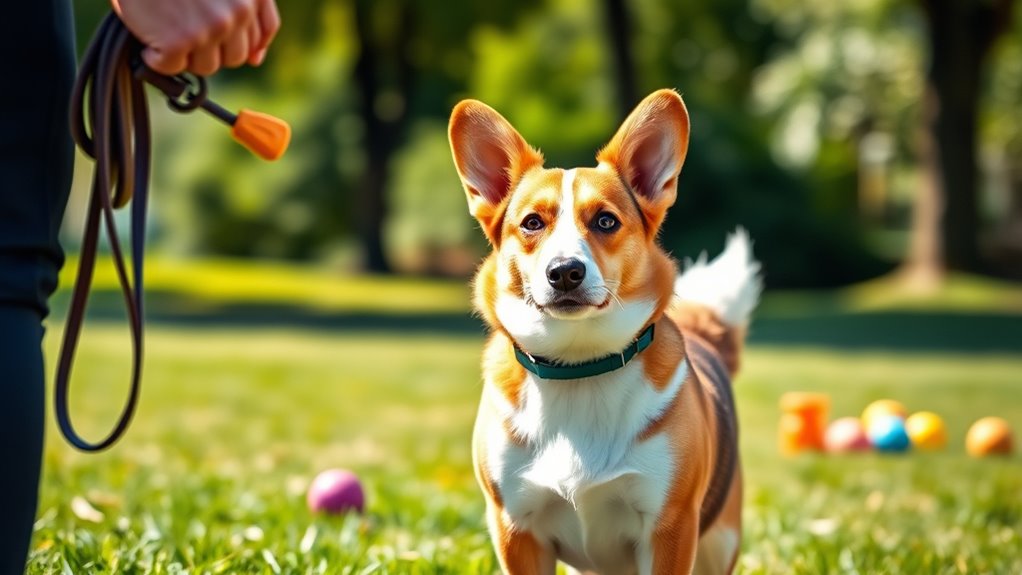

To successfully train your Corgi, focus on early socialization by gradually introducing them to new sights, sounds, and people with positive reinforcement. Use positive methods like treats and praise during leash training and when they exhibit good manners. Be consistent, patient, and calm to build trust and confidence. Proper training prevents issues like puppy fearfulness or leash pulling and leads to a happy, well-behaved companion. If you want to know more, you’re in the right place.
Key Takeaways
- Early socialization with positive reinforcement builds confidence and prevents behavioral issues.
- Gradually introduce new sights, sounds, and smells to develop trust and calmness.
- Start leash training early using treats, praise, and consistent routines to promote polite walking.
- Reinforce good behavior with rewards, avoiding punishment to foster trust and obedience.
- Proper training prevents future problems, strengthens the bond, and ensures a happy, well-mannered Corgi.

Corgis are intelligent and energetic dogs that can be both charming and challenging to train. Their lively nature means they thrive on mental stimulation and social interaction, making puppy socialization a pivotal part of their early development. When you bring a Corgi puppy home, start exposing them to different environments, people, and other animals in a positive, controlled way. This helps prevent future behavioral issues like fearfulness or aggression. Introducing your puppy to new sights, sounds, and smells builds their confidence and encourages well-rounded social skills. Be patient and gentle during these sessions, rewarding calm and friendly behavior to reinforce good habits. Socialization isn’t just about meeting others; it’s about creating a foundation of trust and familiarity that lasts a lifetime. Proper socialization also helps your puppy develop trust and familiarity, which are essential for their overall well-being.
Leash training techniques are another indispensable aspect of raising a well-behaved Corgi. These dogs are known for their strong herding instincts, which can make walking on a leash challenging if not properly trained. Start leash training early, using a harness or collar that fits comfortably. Keep training sessions short and positive, using treats and praise to motivate your dog. When your puppy pulls or becomes distracted, gently stop walking and wait for them to return to your side before moving forward. This teaches your Corgi that walking calmly by your side is rewarding. Consistency is key—use the same commands and routines to help your pup understand what you expect. Gradually introduce more distractions as your puppy becomes confident on the leash, always rewarding calm behavior. Remember, patience is essential; some Corgis might test boundaries, but with steady reinforcement, they’ll learn to walk politely.
Throughout this process, stay attentive to your puppy’s cues and avoid punishment. Positive reinforcement fosters trust and encourages your Corgi to repeat good behaviors. Regular socialization and leash training set the stage for a happy, obedient companion. As your puppy matures, these foundational skills will help prevent issues like leash pulling or social anxiety, making walks more enjoyable for both of you. Keep training sessions fun and engaging, and celebrate small victories to build your puppy’s confidence. With time, patience, and consistency, you’ll develop a strong bond and a well-mannered Corgi eager to explore the world alongside you.
Frequently Asked Questions
How Can I Stop My Corgi From Barking Excessively?
To stop your corgi from barking excessively, identify their barking triggers and address them calmly. Use noise desensitization techniques by exposing your dog gradually to sounds that cause barking, rewarding calm behavior. Consistency is key—ignore unnecessary barking and praise quiet moments. Providing mental stimulation and regular exercise also helps reduce boredom-related barking. With patience and training, your corgi will learn when barking is appropriate, making both your lives easier.
What Are Effective Ways to Prevent Separation Anxiety in Corgis?
Did you know that up to 17% of dogs suffer from separation anxiety? To prevent it in your corgi, start crate training early, making the crate a safe space. Use gradual desensitization by leaving for short periods and slowly increasing your time away. This helps your dog adjust and reduces anxiety. Consistency, patience, and positive reinforcement are key to helping your corgi feel secure when you’re apart.
How Do I Teach My Corgi to Walk Politely on a Leash?
To teach your Corgi polite walking on a leash, start with consistent leash training. Use treats to reward calm behavior and keep sessions short. Gently correct pulling by stopping or changing direction. Practice in low-distraction areas before venturing outside. Be patient and positive, reinforcing good leash manners daily. Over time, your Corgi will learn to walk politely on a leash, making walks enjoyable for both of you.
What Are Common Health Issues Linked to Behavioral Problems?
Imagine you’re in a vintage speakeasy, but your corgi’s health issues are no joke. Common problems linked to behavioral issues include diet concerns and grooming challenges, which can cause discomfort and anxiety. Poor diet can lead to obesity, affecting behavior, while grooming neglect might result in skin infections or irritations. Addressing these health issues early helps improve your pup’s behavior, making life more enjoyable for both of you.
How Can I Socialize My Corgi With Other Dogs and Pets?
You can socialize your Corgi by arranging playdates with well-behaved dogs and gradually introducing them to other pets. Keep sessions short and positive, rewarding calm behavior with treats and praise. Use gradual exposure to new environments and animals, ensuring your Corgi feels safe and comfortable. Consistency is key—over time, these positive experiences will help your Corgi develop friendly, confident interactions with other dogs and pets.
Conclusion
Now that you understand your corgi’s behavior and training needs, you’re ready to build a stronger bond. But remember, every moment you spend guiding and understanding your pup reveals even more about their unique personality. Will you discover their full potential? The journey isn’t over—it’s just beginning. Stay patient, stay consistent, and watch as your corgi surprises you in ways you never imagined. The next chapter of your adventure together awaits—are you ready?