Your dog’s pool water gets dirty faster because dogs shed hair, skin cells, dirt, and debris into the water with each splash or shake. Outdoor play introduces additional mud and contaminants that quickly cloud the water. Without regular cleaning, filtration, and chemical balance, bacteria and algae grow rapidly. Keeping up with proper maintenance helps delay this, but if you want tips on managing it effectively, there’s more to discover.

Get pet supplies delivered free — and shop member deals
- Fast, free delivery on millions of items
- Access to Prime Big Deal Days deals on October 6–7
- Prime Video, Amazon Music and more included
Key Takeaways
- Dogs shed hair, skin cells, and dirt constantly, quickly contaminating pool water.
- Outdoor environments introduce debris, mud, and external contaminants during playtime.
- Shaking off after swimming disperses dirt and hair throughout the pool.
- Infrequent cleaning and poor filtration allow contaminants to accumulate rapidly.
- Imbalanced water chemistry promotes bacterial growth, shortening water clarity and safety.
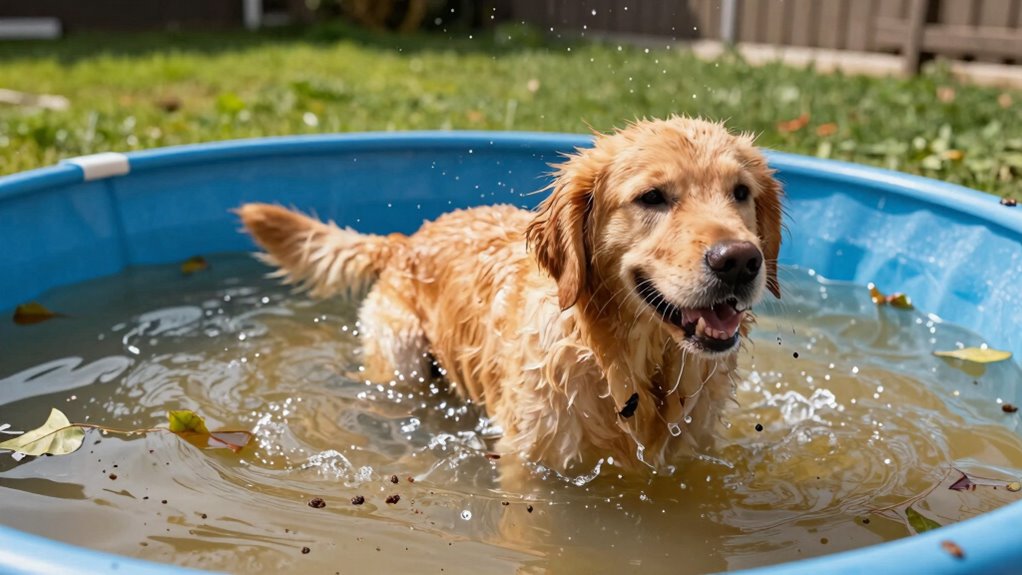
Many dog owners are surprised to find that their pet’s pool water becomes dirty much faster than expected. You might think that a quick rinse or a few days of use wouldn’t make much difference, but the reality is that your dog’s pool needs regular attention to stay clean and safe. The rapid buildup of dirt, hair, and bacteria isn’t just an inconvenience; it can impact your dog’s health if ignored. Understanding why this happens can help you improve your pool maintenance routine and keep your furry friend happy and healthy.
Dog pools require regular cleaning to stay safe and hygienic, as dirt and bacteria build up quickly.
Your dog’s natural behaviors contribute considerably to the quick contamination of pool water. Dogs shed hair and skin cells, which can quickly accumulate in the water, creating a cloudy appearance and providing a breeding ground for bacteria. Additionally, dogs often carry dirt, mud, and debris on their paws and fur, which they bring into the pool when they jump in or shake off after a swim. This outside dirt mixes with the water, making it look and feel unclean much sooner than in a typical swimming pool for humans. It’s essential to recognize that their natural outdoor activities accelerate the need for regular cleaning and water refreshment. Since outdoor environments are full of contaminants, outdoor contamination plays a significant role in how quickly the water gets dirty. Regularly inspecting and cleaning the pool can help mitigate these effects, especially when considering the outdoor environment that contributes to the accumulation of debris.
Another factor that influences how quickly the water becomes dirty is the level of pool maintenance you perform. Unlike traditional pools, dog pools often require more frequent changes of water or thorough cleaning because they’re used in outdoor environments and are less equipped with filtration systems. If you don’t regularly skim debris, scrub the sides, or change the water, contaminants will build up rapidly. Proper pool maintenance isn’t just about aesthetics; it’s about safeguarding your dog’s health. Dirty water can harbor bacteria, parasites, or fungi that cause infections or illnesses, especially if your dog has any cuts or sensitive skin. Additionally, filtration systems can help reduce some contaminants, but they still require regular upkeep to be effective.
You should also consider the importance of water chemistry, which plays a critical role in keeping the pool safe. An imbalance in pH levels or disinfectant concentration can promote bacteria growth, making water dirty faster. Testing the water regularly and adjusting chemicals accordingly can extend the time between full cleanings. Using appropriate pool sanitizers and ensuring good filtration reduces contaminants and keeps water clearer longer, but these measures still require consistent upkeep. Proper chemical balance is vital for maintaining a safe and healthy swimming environment for your dog.
In the end, understanding that your dog’s natural habits and outdoor environment contribute to rapid water contamination helps you prioritize regular cleaning and proper pool maintenance. By doing so, you protect your dog’s health, make pool time more enjoyable, and avoid the unpleasant surprise of constantly having to drain and refill the water. Keeping the pool clean isn’t just about appearance; it’s an essential part of responsible pet care and ensuring your dog’s safety during their favorite outdoor activity.
As an affiliate, we earn on qualifying purchases.
Frequently Asked Questions
How Often Should I Change the Water in My Dog’s Pool?
You should change your dog’s pool water at least every few days, especially during hot weather or heavy use. Regular water filtration helps keep the water cleaner longer, but it’s not enough on its own. Incorporate frequent dog grooming to reduce dirt and hair in the pool. By doing this, you’ll maintain fresh water, prevent bacteria buildup, and guarantee your pup stays happy and healthy during pool time.
Can Certain Dog Breeds Make the Water Dirty Faster?
Yes, certain dog breeds can make the water dirtier faster. Dogs with thick, dense coats shed more hair and dirt, which can quickly dirty the pool. Breeds that love to splash or dig tend to introduce more debris. Using a good water filtration system helps keep the water cleaner longer, regardless of breed. Regularly rinsing your dog’s coat before swimming also minimizes dirt and hair in the pool.
What Are the Best Ways to Keep Pool Water Clean?
To keep your dog pool water clean, prioritize regular pool maintenance and use effective water filtration. Skim debris daily and check chemical levels to prevent bacteria buildup. Run the filtration system consistently to circulate and purify the water. Consider adding a water clarifier or sanitizer as needed. These steps help maintain clear, safe water, reducing the frequency of full drain and refill, and ensuring your pup enjoys a healthy swimming environment.
Does Outdoor Temperature Affect How Quickly Water Gets Dirty?
Yes, outdoor temperature considerably affects how quickly your dog’s pool water gets dirty. As seasonal changes bring warmer weather, water evaporation speeds up, concentrating contaminants and debris. Higher temperatures promote algae growth and bacterial buildup, making the water dirtier faster. You need to monitor the water more frequently, add fresh water, and clean the pool regularly to keep it safe and enjoyable for your furry friend.
Are There Specific Chemicals Safe for Dog Pool Water?
You should use dog-safe chemicals to maintain your pool water. Look for products specifically designed for pet pools, like enzyme-based treatments or non-toxic sanitizers, to keep the water clean without harming your dog. Regularly testing and adjusting pH levels is essential, too. Proper pool water maintenance with safe chemicals helps prevent bacteria buildup and keeps your dog healthy and happy during pool time.
As an affiliate, we earn on qualifying purchases.
Conclusion
Just like a mirror reflects your face, your dog’s pool mirrors their lively spirit—and sometimes, that energy stirs up more dirt than you expect. Remember, the pool isn’t just a place to splash and cool off; it’s a symbol of your pet’s joy and vitality. Keeping it clean isn’t just about maintenance—it’s about honoring the vibrant, messy life of your furry friend. Embrace the chaos, and cherish the moments, knowing a clean pool keeps their happiness flowing.
As an affiliate, we earn on qualifying purchases.
As an affiliate, we earn on qualifying purchases.
Fall Picks
fall essentials
As an affiliate, we earn on qualifying purchases.