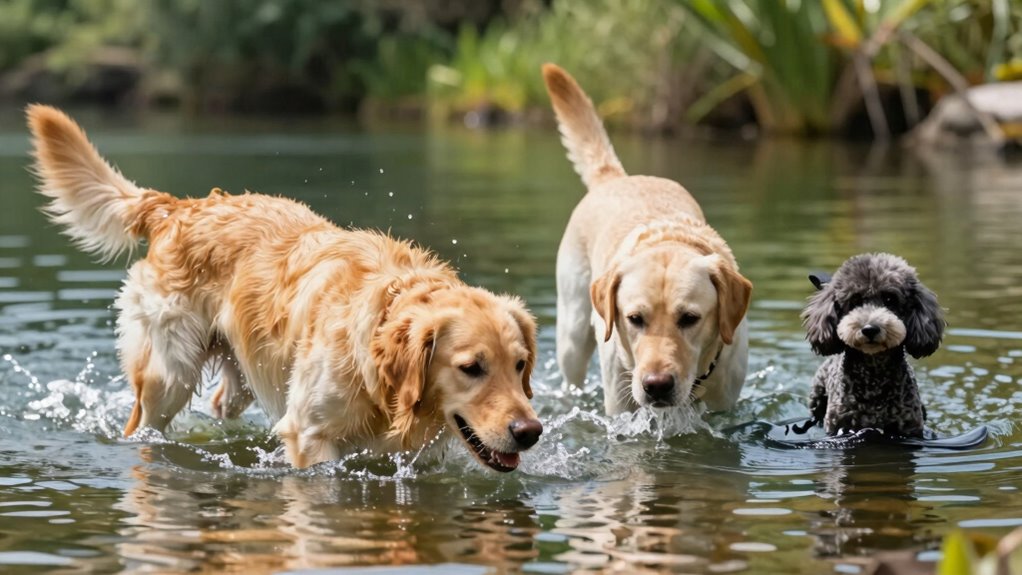

Not all water-loving dogs respond the same way because their breed traits, history, and individual temperament influence how they interact with water. Some breeds like retrievers and spaniels are naturally more comfortable, but each dog is unique. Factors like genetics and past experiences also play a role. Even a confident swimmer can tire or panic. To keep your dog safe and happy, understanding these differences is key—there’s much more to discover about making water fun and safe for your dog.

Get pet supplies delivered free with Prime
- Fast, free delivery on millions of items
- Prime Video, Amazon Music and more included
- Member-only deals all year
Key Takeaways
- Breed history and genetics influence each dog’s natural water enthusiasm and comfort level.
- Individual temperament and experiences shape how each water-loving dog behaves around water.
- Water safety skills vary, so not all water-loving dogs are confident or strong swimmers.
- Environmental factors and water conditions affect each dog’s enjoyment and safety in water.
- Proper supervision and understanding of breed traits ensure safe, positive water experiences for each dog.
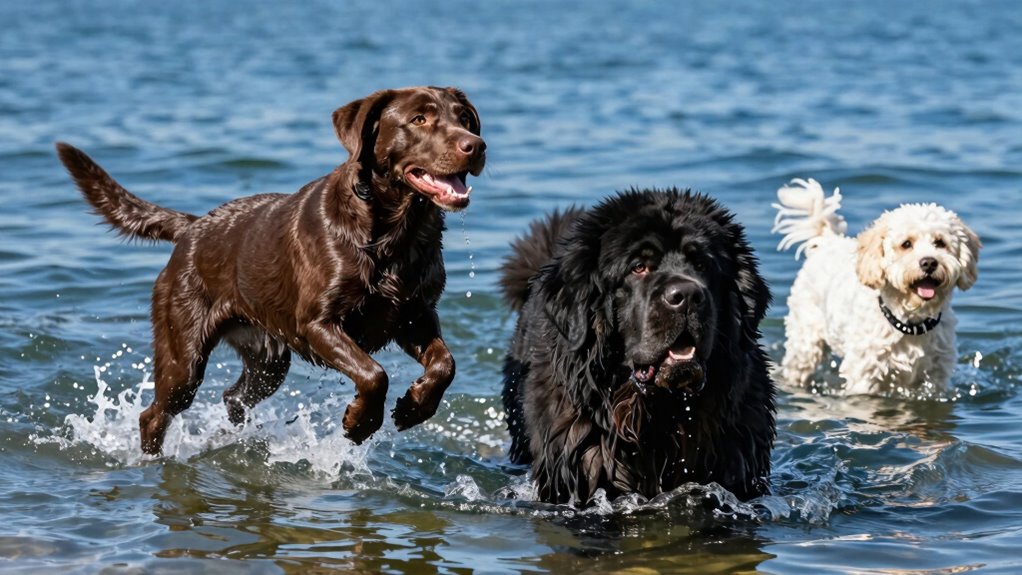
Have you ever wondered why some dogs seem to thrive around water? It’s a fascinating topic because not all water-loving dogs are the same. Some breeds seem naturally drawn to swimming, splashing, and playing in lakes or pools, while others might tolerate water but aren’t particularly enthusiastic. When you think about dog breeds known for their affinity with water, like retrievers, spaniels, or water terriers, it’s clear that genetics and history play a role. These breeds often have a history of working in or around water, which influences their natural instincts and comfort levels. However, just because a dog breed is known for loving water doesn’t mean every individual dog will share that trait.
That’s why understanding water safety is essential. Dogs that love water can quickly find themselves in risky situations if you’re not vigilant. Even breeds that are considered natural swimmers can tire or become disoriented if they’re not used to deep water or if they get caught in strong currents. As a responsible owner, you need to assess your dog’s comfort level and swimming ability before letting them loose in water. Keep a close eye on them, especially in unfamiliar environments, and never assume they can handle themselves without supervision. A good rule of thumb is to introduce your dog gradually to water, ensuring they’re comfortable and confident at each step.
Assess your dog’s comfort and always supervise when introducing them to water environments.
You should also consider the environment: shallow pools, calm lakes, or secure beaches are safer options for water-loving dogs who are still learning. Always use a dog life jacket if you’re unsure about their swimming skills or if they’re in deep water. Remember, even the most confident water dogs can get tired or scared, and exhaustion or panic can lead to accidents. Water safety isn’t just about the dog’s ability; it’s about your vigilance and preparation. Additionally, understanding breed traits can help you anticipate your dog’s behavior and comfort level around water. Recognizing how breed history influences a dog’s natural affinity for water can further inform your approach to water activities. Being aware of water safety tips is also crucial to prevent emergencies and ensure enjoyable outings.
Furthermore, being aware of water quality and potential hazards can significantly reduce risks. Stagnant or contaminated water can cause health issues, so avoid letting your dog drink from questionable sources. Always check for water contaminants and potential pollutants before allowing your dog to swim or drink. Also, watch out for sharp objects, strong currents, or wildlife that might pose a threat. Knowing your dog’s breed traits, combined with attentive supervision, helps you create safe water experiences that are fun and stress-free. Ultimately, every water-loving dog is unique, and understanding their individual needs and limits is key to ensuring they enjoy water safely.
As an affiliate, we earn on qualifying purchases.
Frequently Asked Questions
Can Any Dog Learn to Enjoy Water Activities?
Most dogs can learn to enjoy water activities, but it depends on their temperament and past experiences. You should start slowly, using positive reinforcement and patience during training considerations. Some breeds naturally love water, while others may be hesitant. By gradually introducing your dog to water in a safe, controlled environment and respecting their comfort level, you increase the chances they’ll develop a love for water activities.
Do Water-Loving Breeds Require Special Grooming?
Yes, water-loving breeds often require special grooming. Their coats tend to get dirty or matted more easily, so you’ll need specific grooming tools like slicker brushes and de-matting combs to keep coat maintenance manageable. Regular baths are essential to remove dirt and prevent skin issues. Additionally, trimming hair around their ears and paws helps avoid matting and guarantees comfort during water activities. Proper grooming keeps your water-loving dog happy and healthy.
Are Water-Loving Dogs Better Swimmers Than Others?
Water-loving dogs are often better swimmers than others, but breed differences play a vital role. Some breeds, like retrievers and spaniels, naturally excel at swimming due to their body structure and water affinity. However, you should always prioritize water safety, regardless of breed. Even strong swimmers need supervision, proper equipment, and gradual exposure to water to stay safe and enjoy their time in the water safely.
How Do Water-Loving Dogs Handle Cold Water Temperatures?
Water-loving dogs generally handle cold water better due to their natural affinity, but water resistance and insulation matter. They may tolerate chilly temps longer, yet you should still watch for signs of hypothermia risk, like shivering or lethargy. Ensuring they have a warm, dry environment afterward helps prevent cold-related issues. Always supervise and limit their exposure to cold water, even if they seem enthusiastic and comfortable.
Are Water-Loving Dogs More Prone to Certain Health Issues?
Imagine a river flowing freely, sometimes calm, sometimes wild—that’s your water-loving dog’s temperament. They aren’t inherently more prone to health issues, but their love for water can bring training challenges or expose them to risks like ear infections or skin problems. Staying vigilant, providing proper care, and understanding their unique temperament helps prevent health issues, ensuring your adventurous pup stays happy and healthy in their favorite watery world.
As an affiliate, we earn on qualifying purchases.
Conclusion
Remember, not all water-loving dogs are cut from the same cloth. Some thrive in the water, while others prefer a quick dip before retreating to dry land. As the saying goes, “You can’t judge a book by its cover,” and the same applies here. Understanding your dog’s unique preferences helps you nurture their natural instincts and keep them happy. Embrace their individuality, and you’ll both enjoy the waves together—each in your own perfect way.
dog swimming pool with shallow area
As an affiliate, we earn on qualifying purchases.
As an affiliate, we earn on qualifying purchases.
dog water toy for water-loving breeds
As an affiliate, we earn on qualifying purchases.
As an affiliate, we earn on qualifying purchases.
Halloween Picks
halloween
As an affiliate, we earn on qualifying purchases.