
If you’re choosing between dog stairs and ramps for your pet’s back and hips, consider their mobility needs. Ramps are gentler and better for pets with joint issues, reducing strain on hips and muscles, while stairs can put extra stress on sensitive joints. Lightweight ramps are portable and easier for small or older dogs to navigate. To find the best fit for your pet, explore more about each option’s benefits and drawbacks.
Key Takeaways
- Ramps generally reduce joint strain by providing a gentle incline, beneficial for dogs with hip or back issues.
- Stairs may cause more stress on hips and back due to repeated jumping or uneven steps.
- Ramps are better for large or arthritic dogs needing low-impact, continuous support.
- Stairs offer stability and control but might be less suitable for mobility-impaired pets.
- Choosing between stairs and ramps depends on your dog’s specific mobility condition and comfort needs.
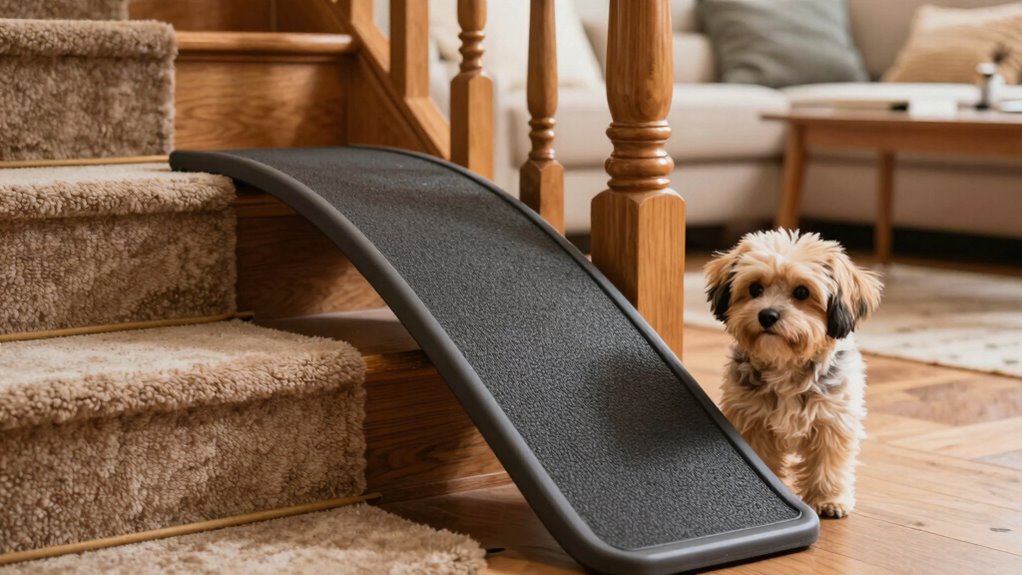
When helping your dog reach higher surfaces, choosing between stairs and ramps can make a significant difference in their comfort and safety. One of the first factors to consider is material durability. You want something sturdy that can withstand daily use without wobbling or breaking. Ramps often feature materials like aluminum, plastic, or wood, each offering different levels of strength and longevity. Aluminum ramps are lightweight yet durable, making them easy to move and resistant to rust, which is ideal if you’re using them outdoors. Plastic ramps are typically lightweight and affordable, but they may not be as long-lasting over time. Wooden ramps, while sturdy, require more maintenance and can warp if exposed to moisture. Stairs, on the other hand, are usually constructed with wood, carpet, or plastic. Wooden stairs tend to be more durable and can support more weight, but they might need regular maintenance to prevent splintering or warping. Carpeted stairs provide traction, reducing the risk of slips, but the carpet can wear out over time. When selecting between stairs and ramps, consider how resilient the material is—this affects not only safety but also the overall lifespan of the device. Additionally, evaluating the material durability helps ensure the device remains safe and functional over time.
Ease of installation is another vital aspect. Ramps typically feature a simple design that can be set up quickly, especially if they come with pre-drilled holes or foldable sections. Many ramps are designed for portability, so you can easily move them between different locations or store them away when not in use. The installation process for ramps usually involves just unfolding or attaching a few parts, making them convenient even if you’re not particularly handy. Stairs, on the other hand, might require more effort to assemble, especially if you’re customizing or building them yourself. They often involve securing risers and treads, which can be more time-consuming and may require tools. For pet owners who need a quick, straightforward solution, ramps tend to be easier to set up and take down, especially portable models with minimal assembly.
Ultimately, your choice hinges on balancing material durability and ease of installation. If you want something that lasts long and is straightforward to set up, a well-made ramp with durable materials might be your best bet. If you’re looking for something more permanent and are comfortable with a bit more assembly, stairs made of sturdy materials can offer stability and comfort. Whichever option you choose, make sure it aligns with your dog’s size, mobility needs, and your ability to maintain and install the device properly.
As an affiliate, we earn on qualifying purchases.
Frequently Asked Questions
Are Dog Stairs or Ramps More Suitable for Elderly Dogs?
For your elderly pet’s safety and senior dog mobility, ramps are usually more suitable than stairs. Ramps provide a gentle incline, reducing strain on their back and hips, making it easier for them to move independently. Stairs can be challenging and risky for aging joints. You’ll help your senior dog stay comfortable and safe by choosing a ramp, ensuring they can access furniture or vehicles without unnecessary discomfort or injury.
How Do I Clean and Maintain Dog Stairs and Ramps?
You should regularly clean your dog stairs and ramps with a damp cloth and mild soap to keep them hygienic. Focus on non-slip surfaces by checking for wear and replacing them if needed to prevent slips. Establish cleaning routines weekly or as needed, especially if your dog uses the stairs frequently. Keeping the surfaces dry and free of debris helps maintain safety and prolongs their lifespan.
Can Dog Stairs and Ramps Prevent Joint Issues?
Dog stairs and ramps can help prevent joint issues by reducing the strain on your pet’s back and hips. As a mobility aid, they make it easier for your dog to get on and off furniture or into your car, minimizing jumping and impact. Using these aids regularly supports your dog’s joint health, especially for older or arthritic dogs, promoting comfort and mobility over time.
Are There Size Differences for Small Versus Large Dogs?
Think of dog stairs and ramps as tailored suits—they come in different sizes for small and large dogs. Small dogs need compact, lightweight options with lower height and size considerations, while larger dogs require sturdy, high weight capacity designs to support their bulk. Picking the right size guarantees your furry friend comfortably navigates without strain. Always check weight capacity and size considerations to match your dog’s specific needs for safety and ease.
What Materials Are Safest for Dog Stairs and Ramps?
You should choose dog stairs and ramps made from safe, durable materials like sturdy plastic, wood, or metal. Look for non-slip surfaces to prevent slips and injuries, especially on the treads or ramp surface. These materials offer good durability and stability, ensuring your dog feels secure when using them. Avoid slippery or brittle materials that could cause accidents or break over time, prioritizing your pet’s safety and comfort.
As an affiliate, we earn on qualifying purchases.
Conclusion
Whether you choose stairs or a ramp, you’re building a bridge of comfort for your furry friend’s daily adventures. Think of stairs as a gentle ladder guiding your pup safely to new heights, while a ramp acts like a smooth, welcoming runway. Whichever path you pick, you’re crafting a cozy staircase to their happiness and health. With your loving touch, you’re turning everyday moments into a gentle climb toward comfort and joy.
As an affiliate, we earn on qualifying purchases.
As an affiliate, we earn on qualifying purchases.