The ideal crate time varies depending on your dog’s age, breed, and behavior. For adult dogs, sticking to 4-6 hours during the day is generally safe, while puppies should stay confined for no more than 2 hours to prevent stress and accidents. Watch for signs of distress like barking or agitation, and avoid overdoing it. To learn how to balance crate time with your dog’s needs, keep exploring these guidelines.
Key Takeaways
- Adult dogs should not be crated longer than 4 to 6 hours during the day.
- Puppies generally require no more than 2 hours of crate time to prevent distress.
- Signs of over-crating include excessive barking, agitation, or destructive behavior.
- Breed, age, and individual temperament influence safe crate duration.
- Regular breaks for exercise and socialization are essential for a healthy crate routine.
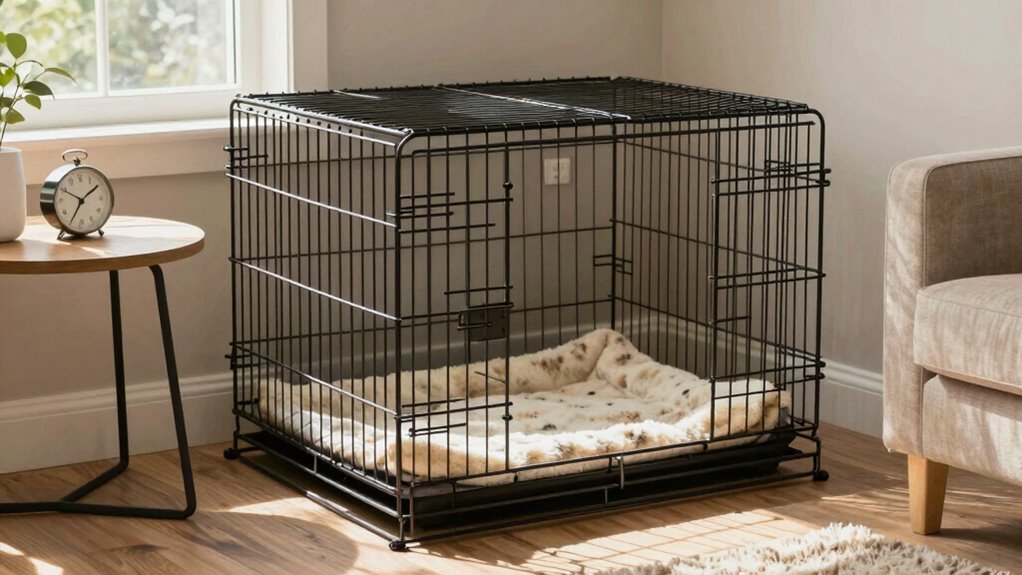
How long is too long to keep your dog in a crate? That’s a question many dog owners ask during the process of crate training. The truth is, the appropriate duration depends on your dog’s age, breed, and individual dog behavior. Puppies, for example, have tiny bladders and limited attention spans. They shouldn’t be confined for as long as adult dogs, or you risk causing anxiety or accidents. Conversely, adult dogs can usually tolerate longer periods, but even then, there are limits. Understanding these boundaries helps ensure your dog’s well-being and promotes healthy dog behavior.
Knowing your dog’s limits prevents anxiety and promotes healthy behavior during crate training.
In crate training, the goal isn’t to isolate your dog for hours on end but to create a safe, comfortable space that your dog looks forward to. When you’re establishing this routine, you should gradually increase crate time, always paying attention to your dog’s responses. If your dog starts whining excessively or shows signs of distress, it’s a clear sign you’ve pushed the limit too far. As a general rule, adult dogs shouldn’t be crated for more than four to six hours at a stretch during the day. Puppies, on the other hand, should be confined for no more than two hours at a time, with frequent breaks for potty and play. Overdoing it can lead to negative dog behavior, such as separation anxiety, destructive tendencies, or excessive barking.
It’s also essential to contemplate your dog’s natural behavior. Some breeds are more prone to anxiety or require more mental stimulation, which means they might need shorter crate sessions with more frequent breaks. Others may be perfectly content in their crate for longer periods if they’ve been properly crate trained. Recognize that crate training should be a positive experience; if your dog begins to see the crate as a punishment rather than a safe space, it’s a sign you need to re-evaluate your approach. Consistent, positive reinforcement encourages your dog to view the crate as a secure retreat.
Being mindful of how long you leave your dog in a crate helps prevent behavioral issues and keeps your pet happy and healthy. Remember to always tailor crate time to your dog’s age, breed, and behavior. Never force your dog into a crate for extended periods, and always ensure they have enough time outside for exercise, socialization, and bathroom breaks. Proper crate training isn’t about confinement but about creating a balanced routine that respects your dog’s needs. When you follow these guidelines, you’ll foster a healthier, happier relationship built on trust and understanding.

Midwest 30-Inch Single Door iCrate, for Medium Breeds, 21-40 lbs
- Ideal for medium breeds: Fits 21-40 lbs dogs like French Bulldogs
- Safe and secure design: Rounded corners, slide-bolt latch, Paw Block
- Durable metal construction: Rust-resistant black e-coat finish
As an affiliate, we earn on qualifying purchases.
As an affiliate, we earn on qualifying purchases.
Frequently Asked Questions
Can Puppies Stay in Crates Overnight Every Night?
You shouldn’t leave puppies in crates overnight every night for extended periods. During crate training, it’s normal for puppies to stay in their crate for a few hours, but overnight confinement should be restricted to ensure they get enough sleep, bathroom breaks, and social interaction. Dog confinement is essential for training, but you need to balance it with their needs, gradually increasing time as they grow older and more comfortable.
What Are Signs My Dog Is Uncomfortable in the Crate?
If your dog shows signs of distress, like excessive barking, whining, or attempts to escape, they may be experiencing crate discomfort. Other signs include pacing, drooling, or scratching at the door. You’ll notice if your dog seems anxious or overwhelmed in the crate. Pay attention to these cues, and guarantee the crate is a comfortable, safe space. Addressing these signs early helps your dog feel secure and reduces stress.
Is It Okay to Leave My Dog in a Crate While at Work?
It’s generally okay to leave your dog in a crate while at work, but only for appropriate durations based on their age and training. During crate training, you should gradually increase confinement time, ensuring your dog feels safe and comfortable. Avoid leaving your dog in dog confinement for too long, as it can cause stress or discomfort. Always provide plenty of exercise and mental stimulation before and after crate time.
How Do I Safely Extend Crate Time for Anxious Dogs?
You can safely extend crate time for anxious dogs by gradually increasing their duration, just like building trust step-by-step. While crate training helps manage anxiety, rushing it can backfire. Use positive reinforcement, calming toys, and consistent routines to ease their progression. Remember, patience is key—your dog’s comfort and safety depend on a slow, thoughtful approach that prioritizes their emotional well-being during each extension.
Should I Use a Crate for Travel or Just at Home?
You should use a crate for both travel safety and at home. It helps with crate training, providing your dog a secure space, and guarantees safe travel by preventing distractions. When traveling, a well-ventilated, appropriately sized crate keeps your dog calm and protected. At home, it aids in house training and reduces anxiety. Always make sure the crate is comfortable, and never leave your dog in it for too long.

Midwest 42-Inch Single Door iCrate, for Large Breeds, 71-90 lbs
- Ideal for large dogs: Fits 71-90 lbs breeds like Retrievers
- Safe, secure design: Rounded corners, slide-bolt latch, Paw Block
- Durable metal construction: Rust-resistant black e-coat finish
As an affiliate, we earn on qualifying purchases.
As an affiliate, we earn on qualifying purchases.
Conclusion
Remember, it’s best not to leave your dog in a crate for more than a few hours. For example, if you have a busy day and need to leave your pup alone, aim for no more than 4-6 hours to prevent stress or discomfort. Just like Sarah discovered with her rescue, giving her dog breaks and plenty of playtime made crate time less stressful. Keep it balanced, and your furry friend will thank you!

Sunheir Washable Pee Pads for Dogs, Reusable Puppy Pads for Dog Playpen 2PC
- Super Absorbent & Leakproof: Locks in liquids, prevents leaks, up to 20 uses
- Washable & Reusable: Machine washable, durable, maintains softness
- Multiple Sizes & Designs: Variety of sizes, colors, patterns for pets
As an affiliate, we earn on qualifying purchases.
As an affiliate, we earn on qualifying purchases.

Ferplast Atlas Vehicle SUV Dog Crate, Assembled Car Dog Crate Measures 32L x 20W x 24H & is Ideal for Small to Medium Dog Breeds, Black
- Designed for SUV cargo areas: Fits specific SUV cargo spaces
- Dimensions: 32L x 20W x 24H inches
- Door size: 11.25W x 17.32H inches
As an affiliate, we earn on qualifying purchases.
As an affiliate, we earn on qualifying purchases.