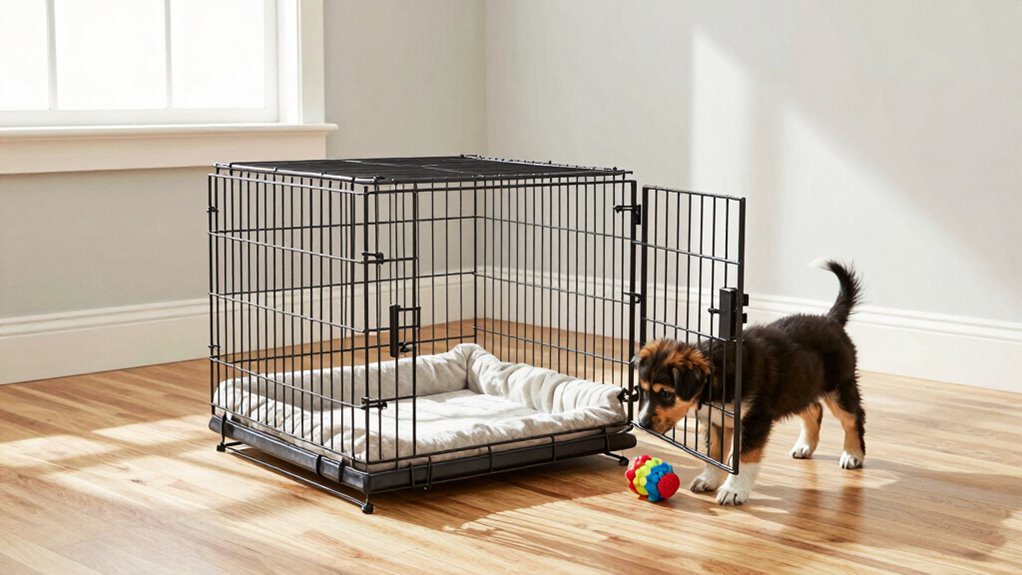

Many owners choose a crate that’s too big or too small, making training harder and causing stress for your dog. A crate should be just right—large enough to stand, turn, and lie comfortably, but not so big that they can eliminate in one corner. Proper bedding and setup can make a big difference in how your dog perceives the space. Keep an eye out for simple fixes that create a calmer, more secure environment—more tips to come.
Key Takeaways
- Choosing a crate that’s too large reduces confinement effectiveness; select a size that allows standing, turning, and lying down comfortably.
- Neglecting to use dividers for puppies can lead to excessive space, hindering housebreaking and causing inappropriate elimination.
- Using thick, fluffy bedding may be hard to clean and encourage chewing; opt for simple, washable, and breathable materials.
- Positioning the crate in noisy or inaccessible areas can cause stress; place it in a quiet, secure spot to promote comfort and calmness.
- Overlooking the emotional impact of crate size and setup can lead to anxiety; ensure the environment feels safe, cozy, and appropriate for long-term well-being.
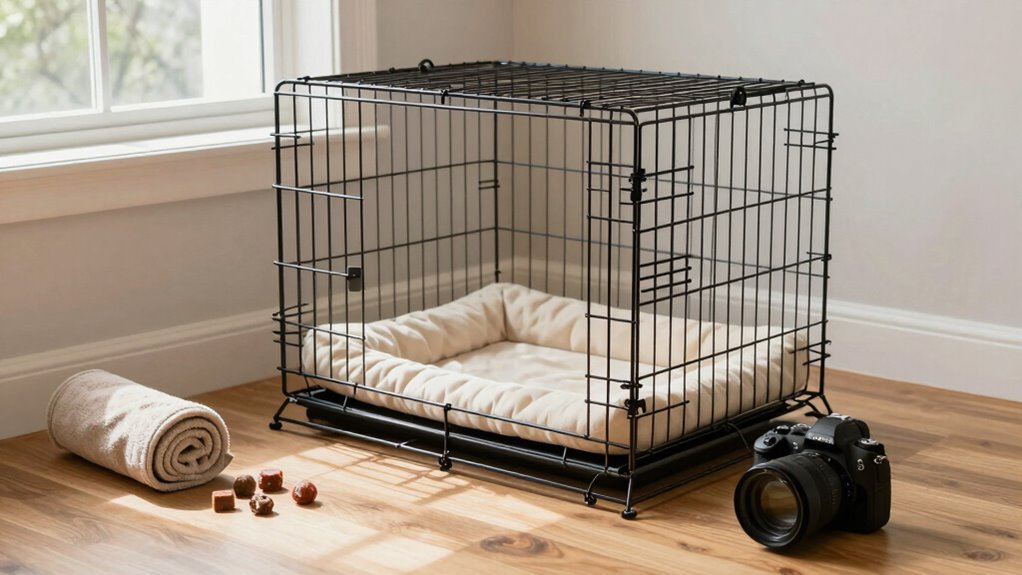
Setting up a crate for your dog is an essential step in effective training and housebreaking. The first thing to get right is choosing the proper crate size. If it’s too small, your dog will feel cramped and uncomfortable, which can lead to stress and resistance to the crate. On the other hand, a crate that’s too large defeats the purpose of confinement, making it easier for your dog to eliminate in one corner and sleep in another. Aim for a crate that allows your dog to stand up, turn around, and lie down comfortably without feeling restricted. For puppies, consider a size that can be adjusted with dividers, so you can grow with your dog and prevent them from having too much space to eliminate in. As your dog matures, switch to a size that fits their adult frame, ensuring it remains a cozy, den-like environment. Proper crate size is also linked to sound healing principles, as a comfortable environment can influence your dog’s emotional well-being and reduce anxiety.
Next, pay careful attention to bedding materials. Many people make the mistake of using thick, fluffy bedding that’s difficult to clean or that encourages your dog to chew and destroy it. Instead, choose simple, washable materials like a basic blanket or a dog bed that fits inside the crate. The bedding should be soft enough to provide comfort but durable enough to withstand chewing, if that’s a habit your dog has developed. Avoid materials that trap hair or debris, as this can make cleaning cumbersome. You want bedding that’s easy to remove and wash regularly to maintain a clean and hygienic space. Also, keep in mind that some dogs prefer a cooler surface, so a flat, breathable mat might be better than plush bedding, especially in warmer climates or for dogs prone to overheating.
Many people overlook these essential details, but getting the crate size and bedding materials right from the start can make a significant difference. A well-fitting crate with appropriate bedding creates a safe haven for your dog, encouraging them to settle down and view it as a comfortable retreat rather than a punishment. Proper crate setup also helps prevent behavioral issues, as your dog associates this space with positive experiences. Remember, this isn’t just about choosing the right size or bedding but about creating an environment that promotes calmness, security, and ease in housebreaking. Start with these fundamentals, and you’ll set a strong foundation for successful crate training that benefits both you and your dog in the long run.
Frequently Asked Questions
How Long Should I Initially Crate Train My Puppy?
You should initially crate train your puppy for short periods, around 1 to 2 hours, gradually increasing as your puppy becomes more comfortable. Keep crate durations manageable to maintain puppy patience and prevent stress. Always monitor your puppy’s behavior and avoid leaving them in the crate too long, especially during the first few days. This approach helps build positive associations and makes crate training a smoother experience.
What Size Crate Is Best for a Growing Dog?
For a growing dog, choose a crate size that offers enough room for them to stand, turn around, and lie comfortably. Look for a crate with suitable dimensions that can accommodate their adult size without being too spacious. A crate that’s too big might encourage accidents, while one too small causes discomfort. Measure your dog and select a crate that provides a cozy, secure space, adapting as they grow.
Can Crate Training Help With Separation Anxiety?
Research shows crate training benefits dogs by providing a safe, secure space, which can substantially aid in separation anxiety management. When done correctly, crate training helps your dog feel protected and reduces stress during your absence. It teaches boundaries and promotes independence, easing their anxiety. You’ll notice calmer behavior and better coping skills over time, making crate training a valuable tool for managing separation anxiety effectively.
How Do I Prevent My Dog From Whining in the Crate?
To prevent your dog from whining in the crate, establish positive crate door habits by rewarding calm behavior when opening and closing it. Use calming techniques like soothing voice, treats, or a favorite toy to help your dog associate the crate with comfort. Gradually increase crate time, always rewarding patience, and avoid punishing whining. Consistency and patience will help your dog feel secure and reduce unnecessary noise.
Is It Okay to Leave My Dog in the Crate All Day?
Leaving your dog in the crate all day isn’t okay. Imagine a cozy, secure space that’s like a den—crates should be safe and comfortable for short periods. For crate safety, limit crate duration to avoid frustration or anxiety. Dogs need breaks, playtime, and social interaction. If you must leave them for long hours, consider a dog walker or pet sitter to verify they’re not confined too long or left lonely.
Conclusion
Now that you know the common pitfalls, you’re like a savvy captain steering your pup’s crate training ship away from stormy waters. With the right setup, you’re building a cozy haven where your dog feels safe and loved—a little nook in their world they can always return to. Keep your patience steady and your approach gentle; soon, your pup will see their crate as a trusty anchor in their journey, not a prison.