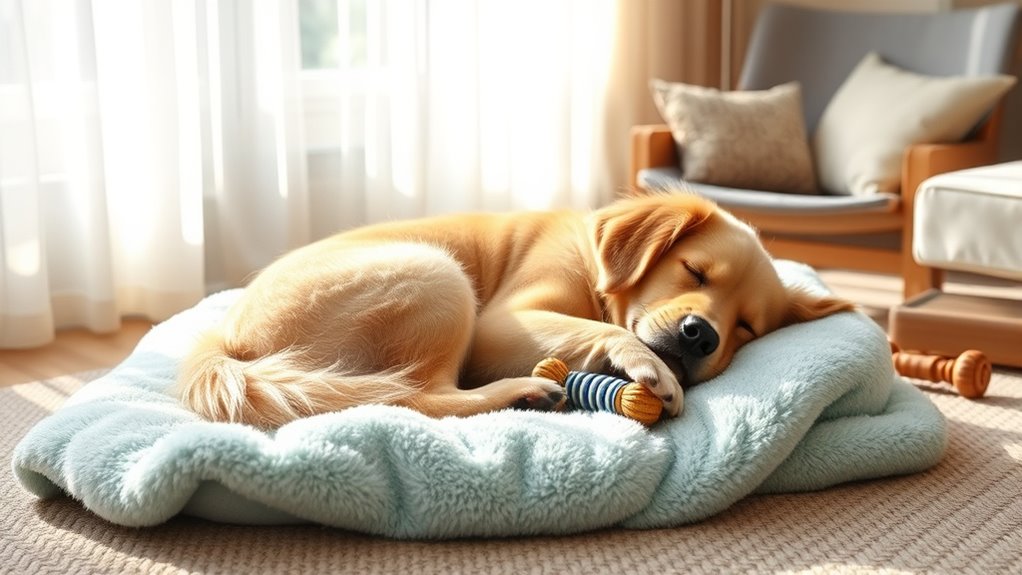

Sleep plays a crucial role in your dog’s health, as it helps repair tissues, supports immune function, and consolidates memories. When your dog gets enough restful sleep, they’re happier, healthier, and more balanced. Poor sleep can lead to stress, behavioral issues, and health problems over time. If you want to learn how to guarantee your dog gets quality rest and promotes their well-being, keep exploring key tips and habits.
Key Takeaways
- Adequate sleep supports immune function and tissue repair in dogs.
- Restful sleep promotes memory consolidation and cognitive health.
- Proper sleep balances hormonal regulation and overall physical well-being.
- Sleep deprivation can lead to behavioral issues and decreased responsiveness.
- Creating a comfortable, quiet environment enhances sleep quality and canine health.
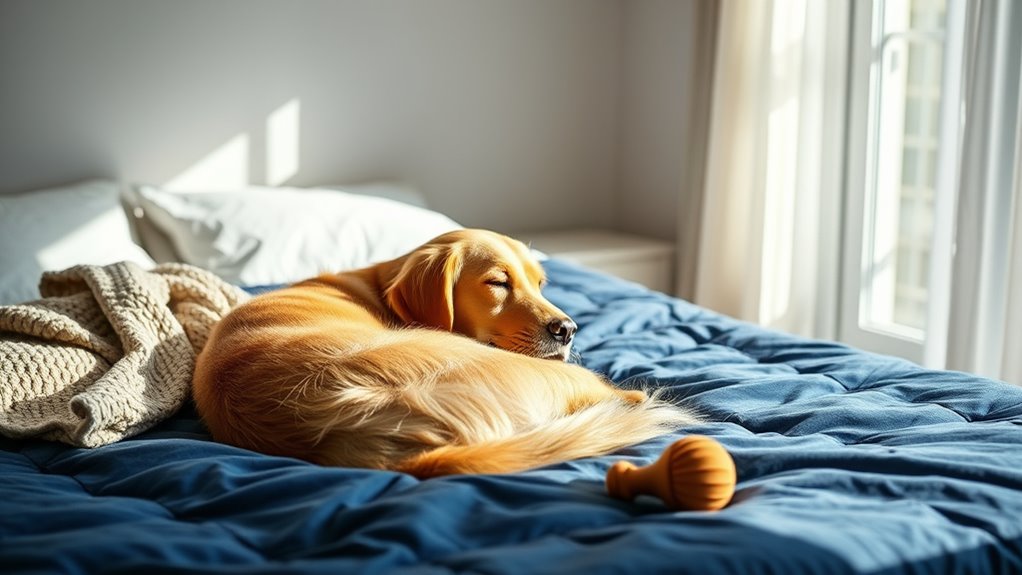
Have you ever wondered how dogs sleep and what their sleep patterns reveal about their health? Understanding how dogs rest isn’t just about knowing when they’re napping; it’s about recognizing what their sleep cycle says about their overall well-being. Dogs experience dreaming patterns much like humans do. When they enter REM sleep, you might notice twitching, paw movements, or even gentle growls. These movements indicate they’re dreaming, and observing them can offer clues about their mental health. For example, frequent or restless dreaming might suggest stress or anxiety, while peaceful, uninterrupted sleep points to a balanced state. Conversely, if your dog shows signs of sleep deprivation—such as difficulty settling down, frequent waking, or lethargy during the day—it could be a sign that something’s off. Sleep deprivation in dogs isn’t just about missing out on rest; it can compromise their immune system, slow down healing, or lead to behavioral issues. Just as in humans, quality sleep is essential for your dog’s physical and mental health, helping them recover from daily activities and maintain emotional stability.
The importance of sleep goes beyond just rest. During sleep, your dog’s body works to repair tissues, consolidate memories, and regulate hormones. If they’re not getting enough sleep, these processes slow down, and their health can decline over time. You might notice your dog becoming more irritable or less responsive, which could be linked to poor sleep quality. Additionally, sleep deprivation can impact their cognitive functions, making it harder for them to learn new commands or respond to familiar cues. It’s essential to create a calm environment that encourages restful sleep—dim lighting, comfortable bedding, and a quiet space all contribute to better sleep quality. Also, keeping a consistent schedule helps regulate their internal clock, making it easier for them to slip into deep, restorative sleep cycles. Using effective air purifiers in your home can improve indoor air quality, creating a healthier environment for your dog’s sleep.
Pay close attention to your dog’s sleeping habits. Frequent disturbances, excessive restlessness, or signs of fatigue can signal underlying health issues or stress. If you notice your dog isn’t dreaming as much—or if their dreaming patterns seem altered—it might be worth consulting a veterinarian. Sleep is a cornerstone of health, and recognizing the signs of healthy versus disturbed sleep can help you intervene early, ensuring your furry friend stays happy, healthy, and well-rested. Remember, a well-rested dog is a happy dog, and good sleep habits benefit both their body and mind.

EHEYCIGA Orthopedic Dog Beds for Extra Large Dogs 44x32Inch, Waterproof Memory Foam XL Pet Bed with Sides, Non-Slip and Egg-Crate Foam Big Dog Couch Bed with Washable Removable Cover, Grey
MEMORY FOAM: The EHEYCIGA orthopedic dog bed features memory foam and egg crate foam to provide even support…
As an affiliate, we earn on qualifying purchases.
As an affiliate, we earn on qualifying purchases.
Frequently Asked Questions
How Many Hours of Sleep Does an Average Dog Need Daily?
You should aim for your dog to get about 12 to 14 hours of sleep daily. Dogs’ sleeping habits vary based on age, breed, and activity level, but their canine rest patterns typically include several naps throughout the day and longer sleep periods at night. Pay attention to your dog’s behavior; if they’re sleeping more than usual, it might indicate tiredness or health issues. Ensuring proper rest supports their overall well-being.
Does Sleep Quality Change With a Dog’s Age or Breed?
Think of your dog like a fine wine that ages with time. Sleep quality indeed changes with breed differences and age-related changes. Younger puppies and energetic breeds often enjoy deep, restorative sleep, while older dogs or certain breeds may experience lighter, disrupted sleep. As your dog ages, their sleep needs and patterns shift, requiring extra comfort and routine. Paying attention to these changes helps guarantee they stay healthy and happy.
Can Irregular Sleep Patterns Indicate Health Issues in Dogs?
Irregular sleep patterns can signal health issues in dogs, especially if they disrupt your dog’s usual bedtime routines or sleep environment. If your dog suddenly sleeps less, more, or has trouble settling, it’s a sign to check for underlying problems like pain, anxiety, or illness. Maintaining a consistent bedtime routine and a comfortable sleep environment helps detect changes early, so you can seek veterinary care if needed.
What Are Signs of Sleep Disturbances in Dogs?
You might notice your dog acting restless, whining, or twitching during sleep, which are signs of disrupted dream cycles. If your dog shows signs of sleep deprivation, like excessive yawning, fatigue, or difficulty waking, it indicates disturbed sleep. These disturbances can affect their health, so keep an eye out for changes in behavior and make sure they get enough quality rest for overall well-being.
How Does Sleep Affect a Dog’s Behavior and Training?
Think of your dog’s mind as a garden; sleep is the nourishing rain. Dreaming benefits your dog by consolidating learning and reducing stress, which sharpens behavior and makes training easier. Sleep deprivation, however, can turn this garden into a drought, leading to irritability and difficulty focusing. By ensuring your dog gets enough restful sleep, you help them stay balanced, attentive, and enthusiastic to learn new commands.

Advanced Melatonin for Dogs – 170 Dog Melatonin Calming Chews for Small and Large Dogs – Natural Hemp Dog Sleep Aid, Puppy Sleeping Pills, Anxiety, Stress, Separation, Barking, Fireworks – Made in USA
Promotes Restful Sleep & Relaxation: Melatonin for dogs to sleep helps calm your pup during restless nights. A…
As an affiliate, we earn on qualifying purchases.
As an affiliate, we earn on qualifying purchases.
Conclusion
You might wonder if dogs really need as much sleep as humans do. The truth is, their health depends on it—sleep boosts their immune system, supports brain function, and keeps them happy. Some believe sleep is just rest, but recent studies show it’s crucial for canine well-being. So, next time your dog snoozes peacefully, know that those quiet hours are doing more than you think—they’re essential for a healthier, happier dog.

NEWEST 2 Pcs Cute Plush Dog Sleeping Masks, Soft Puppy Eye Cover for Sleeping with Adjustable Elastic Strap, Funny Cartoon Animal Eyeshade Blindfold for Blackout Travel Nap Night Sleep Party Girl Boy
[Package Include] You will get 2 pieces plush dog sleeping eye masks. Ideal for daily use or for…
As an affiliate, we earn on qualifying purchases.
As an affiliate, we earn on qualifying purchases.

Calming Collar for Dogs 4 Packs Dog Pheromone Calm Collars Relief Anxiety Stress Separation Lasts 60 Days Relieve Bad Behavior 25 Inches Size Flexible Adjustable for All Small Medium and Large Dog
[High Cost Performance of calming collars for dogs] Calming collar for dogs 4-pack all in one delicate box….
As an affiliate, we earn on qualifying purchases.
As an affiliate, we earn on qualifying purchases.