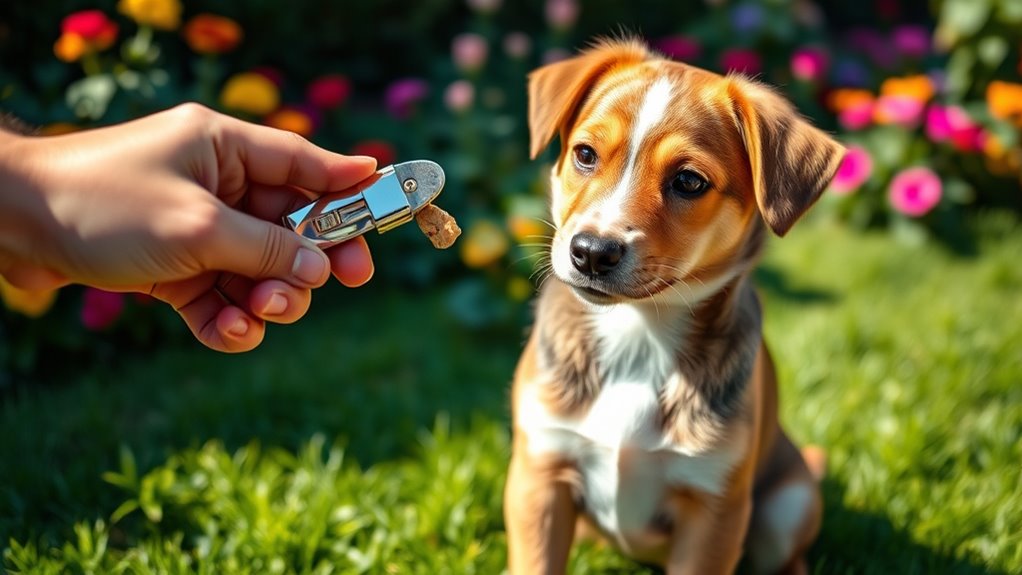

Clicker training is a simple, positive way to teach your pet new behaviors by using a click sound as a clear marker for good actions. Start by pairing the click with treats or praise so your pet associates it with a reward. Use the click consistently to reinforce small steps and gradually shape more complex behaviors. Keep sessions fun and frequent to build trust. If you keep practicing, you’ll soon understand how to apply these tips effectively.
Key Takeaways
- Introduce the clicker by pairing it with treats to create a positive association.
- Use the clicker to mark precise behaviors and reward immediately to reinforce learning.
- Practice consistently with all household members to avoid confusion and promote uniform training.
- Break behaviors into small steps, clicking and rewarding for each successful attempt.
- Keep training sessions short, fun, and regular to build trust and ensure steady progress.

If you’re new to training your pet, clicker training is an effective and positive method to teach desired behaviors. This approach relies heavily on positive reinforcement, where you reward your pet immediately after they perform the correct behavior. The clicker acts as a precise marker, signaling to your pet that they’ve done something right and that a reward is coming. This clarity helps your pet understand exactly what behavior earns praise, making training sessions more efficient. To succeed, you’ll need to maintain training consistency. Consistency ensures your pet doesn’t get confused or develop bad habits because they receive the same signals and rewards each time they perform a behavior correctly.
When starting out, you’ll want to introduce your pet to the clicker by pairing it with something they love, like treats or praise. Click and then reward right afterward, so your pet begins to associate the sound of the clicker with positive outcomes. This process, called classical conditioning, is essential because it creates a strong link between the click and the reward, making it a reliable signal for good behavior. Once your pet understands that the click means a reward, you can start shaping behaviors. For instance, if you’re teaching your dog to sit, click and reward every time they lower their hips to the ground. Over time, as your pet learns to associate the click with the desired behavior, you can gradually increase the criteria, only clicking when the behavior is performed perfectly. Introducing consistent training cues and understanding training technology can further enhance your effectiveness.
Training consistency plays a pivotal role in this process. Use the clicker and rewards at regular intervals, and make sure everyone in your household follows the same approach. If different people train your pet differently or use varied cues, your pet may become confused, slowing down progress. Keeping your training sessions short, frequent, and predictable helps your pet stay engaged and enthusiastic to learn. Also, be patient and persistent; some behaviors take time to master. Remember, the goal of positive reinforcement is to make training a fun and rewarding experience for your pet, not a stressful one. By sticking to a routine and using the clicker precisely, you’ll see your pet quickly grasp new commands and behaviors, building a foundation of trust and understanding that makes future training even smoother.

Interactive Dog Scent Training Kit Fun - Nose Work for Dogs, Hide and Seek Dog Toys, Enhance Dog Brain Games, Nose Scent work Games for All Ages Dog, Dog Scent Training Box, Scent Work Kit for Dogs
🐶【𝗜𝗠𝗣𝗥𝗢𝗩𝗘𝗦 𝗢𝗕𝗘𝗗𝗜𝗘𝗡𝗖𝗘 𝗦𝗞𝗜𝗟𝗟𝗦 】: Scent training kit for dogs requires dogs to follow commands such as "search" or...
As an affiliate, we earn on qualifying purchases.
Frequently Asked Questions
Can Clicker Training Work for All Types of Animals?
Yes, clicker training can work for many species because of its versatility and training adaptability. You’ll find it effective for dogs, cats, birds, and even small exotic animals. The key is adjusting your approach to suit each species’ unique behaviors and learning styles. With patience and consistency, you can successfully use clicker training across a wide range of animals, making it a flexible and valuable tool in your training toolkit.
How Long Does It Usually Take to See Results?
You can usually see results within a few days to a couple of weeks, but it varies depending on the animal and consistency. While some may pick up commands quickly, others need more time, so patience is vital. The training timeline depends on your dedication and the animal’s temperament. Remember, steady progress beats rushing—staying patient guarantees effective learning and a stronger bond, making the process rewarding for both of you.
What Should I Do if My Pet Becomes Distracted?
When your pet gets distracted, use distraction management strategies like removing temptations and increasing the training environment’s focus. Employ focus techniques such as calling your pet’s name softly or using a treat to regain attention. Keep training sessions short and engaging to maintain their interest. If distractions persist, pause the session briefly, then resume once your pet is more focused, ensuring they learn to stay attentive during training.
Is Clicker Training Effective for Aggressive Behaviors?
Absolutely, clicker training can be effective for aggression management. Think of it as a gentle guiding light, helping your pet understand calm behavior through consistent behavioral modification. By pairing the clicker with positive reinforcement, you reinforce desirable actions and gradually reduce aggressive tendencies. Patience and persistence are key; over time, your pet learns to replace aggression with trust and cooperation, making training a rewarding journey for both of you.
Can I Use the Same Clicker for Multiple Pets?
Yes, you can use the same clicker for multiple pets, but pay attention to clicker compatibility and clear distinctions during training. To avoid confusion, consider using different sounds or markers for each pet, or label their training sessions clearly. This approach helps with multi-pet training by ensuring each pet understands their commands without mixing signals, making the process smoother and more effective for all your animals.

Race&Herd Original Dog Scent Training Kit, Scent Work Training Kit for Dogs - Nosework for Dog Mental Stimulation Agility Training Equipment for Dogs, Brain Games Smell Training Kit for Loss of Smell
Engaging Dog Activities – Complete scent dog training kit includes tools for backyard play and training such as...
As an affiliate, we earn on qualifying purchases.
Conclusion
Now that you’ve learned the basics of clicker training, you’re ready to build a stronger bond with your pet. It’s simple yet powerful, like a gentle whisper of trust in a noisy world. While it takes patience, the rewards—joy, obedience, connection—are worth every moment. Just as a small click can change behavior, your consistent efforts will transform your relationship from uncertain to unbreakable. Embrace the process, and watch your pet thrive.
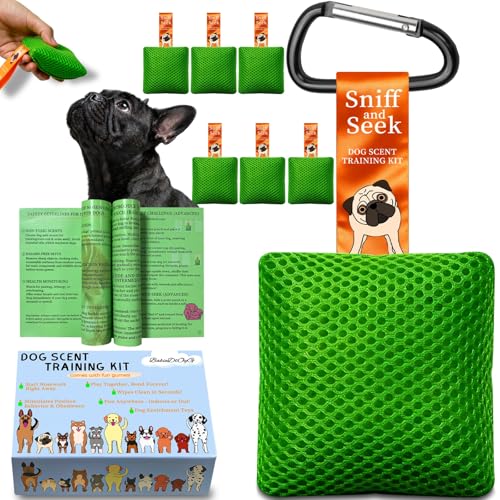
BabieDtOyG Dog Scent Training kit, Brain Games, Hide and Seek Toys - Fun Nose Work Games, Sniff and Seek Sniffing Toys, Nosework Kit, Scent Work Kit for All Ages Dog (Green)
🦴BUILD BOND FOR PET OWNER & DOGS-Engage your dog’s brain with our interactive dog scent training kit. Perfect...
As an affiliate, we earn on qualifying purchases.

BabieDtOyG Dog Scent Training kit, Brain Games, Hide and Seek Toys - Fun Nose Work Games, Sniff and Seek Sniffing Toys, Dog Nosework Kit, Scent Work Kit for All Ages Dog (Orange)
🦴BUILD BOND FOR PET OWNER & DOGS-Engage your dog’s brain with our interactive dog scent training kit. Perfect...
As an affiliate, we earn on qualifying purchases.