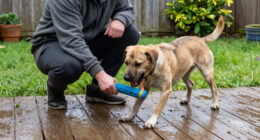
If your dog is panting excessively, it might be trying to cool down after exercise or due to heat. However, restlessness, open-mouthed breathing, or a change in gum color can signal health issues that need attention. Pain, heart disease, or lung problems could also lead to increased panting. If this behavior persists or occurs without a clear reason, it's essential to consult a vet. Discovering more about your dog's health can help you provide the care they need.

Get pet supplies delivered free with Prime
- Fast, free delivery on millions of items
- Prime Video, Amazon Music and more included
- Member-only deals all year
Key Takeaways
- Panting is a natural cooling mechanism, but excessive panting may indicate health issues requiring attention.
- Common causes include heat exposure, strenuous activity, or pain that dogs cannot verbally express.
- Monitor for signs like lethargy, distress, or changes in gum color alongside panting.
- If panting persists without a clear cause, seek veterinary help to rule out serious conditions.
- Early intervention is essential to prevent complications from underlying health problems related to excessive panting.

Have you ever wondered why your dog is panting? It's a common sight, especially on warm days or after a good romp in the park. Panting is actually a natural cooling mechanism that helps dogs regulate their body temperature since they can't sweat like we do. When your dog is engaging in physical activity or feeling hot, you might notice their breathing rate increase significantly. A normal breathing rate for dogs at rest ranges from 15 to 35 breaths per minute, but during exercise or excitement, it's normal for that number to shoot up.
However, when you observe excessive panting, it's important to pay attention. While panting can be a normal response to heat or activity, it might also signal underlying health concerns. If your dog is panting heavily while resting, that could be a red flag. Other signs to watch for include open-mouthed breathing, changes in gum color, or if your dog seems lethargic or distressed. These symptoms can indicate that something isn't quite right and may require you to consult a vet.
One of the most common causes of excessive panting is heat exposure. Dogs can easily overheat, especially if they've been playing outside on a hot day. If you suspect that your dog is panting because of the temperature, try moving them to a cooler area and providing fresh water.
However, if panting persists even after they've cooled down, it might be time to investigate further.
Another potential cause of excessive panting is pain. Dogs can't verbally express their discomfort, but they often show signs through their behavior. If your dog is panting and seems restless or uncomfortable, there might be an underlying health issue that needs addressing. Conditions like heart disease or lung disease can lead to heavy panting as well.
It's crucial not to ignore the signs your dog is showing. If their panting lasts for more than a few minutes without an obvious cause, don't hesitate to reach out to your vet. They can help you determine if the panting is merely a response to heat or exercise or if it's a sign of a more serious condition requiring immediate attention.
Products Worth Considering

PetSafe Guardian GPS Dog Fence for Properties 3/4 Acre or Larger

PETLIBRO Automatic Wet Food Cat Feeder with Semiconductor Cooling

Whisker Litter-Robot 4 Self-Cleaning Automatic Cat Litter Box (Black)
As an affiliate, we earn on qualifying purchases.
Frequently Asked Questions
When Should I Worry About My Dog's Excessive Panting?
When you notice your dog panting excessively, it's essential to pay attention to the situation.
If the panting suddenly starts and your dog shows signs of distress or has unusual gum color, you should worry.
Also, if their breathing rate exceeds 40 breaths per minute, it's a red flag.
Look for other symptoms like lethargy or refusal to eat or drink, and don't hesitate to consult your vet for guidance.
Why Is My Dog Panting so Hard Without Doing Anything?
If your dog's panting hard without doing anything, it's important to pay attention.
This behavior could signal underlying health issues like heart or lung problems, especially if their breathing rate is high.
Brachycephalic breeds often struggle with breathing, making them more prone to excessive panting.
Additionally, anxiety or stress might be at play.
Keep an eye out for other symptoms, and don't hesitate to consult your vet if you're concerned.
What to Give a Dog for Constant Panting?
Did you know that up to 30% of dogs experience anxiety at some point in their lives?
If your dog's panting is constant, consider calming aids like pheromone diffusers or anxiety wraps. For heat-related panting, provide cool water and shade.
If you suspect pain, consult your vet for appropriate pain relief. Should respiratory issues be the cause, bronchodilators might be necessary.
Always check with your veterinarian before administering any treatment.
How Long Is Too Long for a Dog to Pant?
If your dog's panting lasts more than a few minutes, it's time to take notice.
Generally, panting after exercise or heat should settle down within 5-10 minutes.
If it goes on for over 20 minutes or your dog shows signs of discomfort, lethargy, or unusual gum color, you should consult a veterinarian.
Conclusion
In conclusion, if your dog's panting feels like a storm brewing, it's essential to pay attention. Whether it's due to heat, anxiety, or health concerns, understanding the reasons can turn worry into action. Don't hesitate to consult your vet if you're unsure. Your furry friend relies on you to be their voice and protector. So, keep your eyes and ears open, and together, you can ensure their comfort and happiness through every pant and wag.