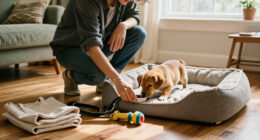

Heated beds are great, but proper placement is essential to guarantee safety, comfort, and efficiency. You should position your heated bed on a flat, stable surface away from water, flammable materials, and high-traffic areas. Keep airflow clear, avoid soft surfaces like carpets, and stay close to suitable outlets. Doing so prevents hazards and helps the bed heat evenly while saving energy. If you want to know more tips for ideal placement, keep going to learn detailed advice.

Get pet supplies delivered free with Prime
- Fast, free delivery on millions of items
- Prime Video, Amazon Music and more included
- Member-only deals all year
Key Takeaways
- Proper placement ensures even heat distribution, maximizing comfort and energy efficiency.
- Position on a flat, stable surface away from water and flammable materials enhances safety.
- Central locations with good airflow prevent heat buildup and improve circulation.
- Avoid soft or soft surfaces like blankets to prevent overheating and uneven heating.
- Proper placement reduces electrical hazards, minimizes energy use, and ensures safe operation.

When it comes to heated beds, placement can make all the difference in achieving ideal warmth and efficiency. If you position your heated bed improperly, you might find yourself wasting energy or risking safety issues. Proper placement ensures you get maximum comfort without unnecessary energy consumption. For example, placing the heated bed on a flat, stable surface helps distribute heat evenly, preventing hot spots that could lead to discomfort or damage. Avoid placing the bed on uneven or soft surfaces like plush carpets or thick blankets, which can insulate heat unevenly or cause overheating in certain areas. Ensuring the bed is positioned away from heat insulation materials is crucial for optimal performance. Energy efficiency is a major reason to pay attention to where you position your heated bed. By placing it in a spot where heat can circulate freely and reach all parts of the bed evenly, you reduce the need for higher settings and save on electricity. If the bed is tucked away in a corner or under furniture, heat might get trapped or dissipate too quickly, forcing you to increase the temperature or run the heater longer. Instead, choose a central location in your room, where airflow isn’t obstructed, and where heat can radiate effectively. Proper airflow can also prevent heat buildup and improve overall safety. Maintaining good ventilation around the bed can help dissipate excess heat and prevent overheating risks. Additionally, understanding the importance of proper thermal regulation can further enhance both safety and comfort. Safety considerations are equally important when selecting a spot for your heated bed. Keep it away from water sources such as sinks or humidifiers to prevent electrical hazards. Avoid placing the bed near flammable materials like curtains, paper, or bedding that could catch fire if they come into contact with heat. Make sure the cord is accessible but not stretched across high-traffic areas to prevent tripping or accidental disconnection. Also, consider the bed’s proximity to outlets—using an extension cord isn’t ideal, as it can pose fire risks if not rated properly. Instead, position the bed near a wall outlet designed for high power loads, ensuring you follow the manufacturer’s safety guidelines. Proper electrical safety practices are essential to prevent accidents when using heated beds.
As an affiliate, we earn on qualifying purchases.
Frequently Asked Questions
Can Heated Beds Be Used Outdoors Effectively?
Yes, you can use heated beds outdoors effectively if you prioritize outdoor insulation and weatherproof covers. These elements protect the bed from moisture, wind, and cold, ensuring consistent warmth. Proper insulation keeps the heat contained, while weatherproof covers prevent damage from rain or snow. By taking these precautions, your heated bed remains functional and safe, making outdoor use both practical and comfortable even in harsher weather conditions.
Are Heated Beds Safe for Children and Pets?
Heated beds can be safe for children and pets if you take proper precautions. Make certain the bed has child safety features like covers or automatic shut-offs to prevent burns or overheating. For pets, choose models designed with pet safety in mind and keep cords out of reach. Never leave children or pets unattended on or near heated beds, and always follow manufacturer instructions to minimize risks and ensure safety.
How Energy-Efficient Are Heated Beds?
Heated beds are like gentle fires—warm and comforting, yet they can sip energy if you’re not careful. Their energy efficiency depends on insulation considerations; well-insulated beds retain heat longer, reducing energy consumption. You can save power by choosing models with adjustable settings and placing them on insulated surfaces. Proper placement ensures the heat stays where you want it, making your heated bed both cozy and energy-wise.
Do Heated Beds Interfere With Other Electronics?
Heated beds generally don’t cause electrical interference with other electronics if properly installed. However, you should follow safety precautions like keeping the wiring neat and away from sensitive devices. Using quality insulated wiring and grounding the system helps prevent electrical issues. If you’re cautious about interference, choose a heated bed with proper shielding and make sure it meets safety standards. This way, you enjoy warmth without risking electrical problems with your other gadgets.
Can Heated Beds Be Used With All Mattress Types?
Heated beds can be used with many mattress types, but you’ll want to check mattress compatibility and heating technology first. Some foam or memory foam mattresses might trap heat or be sensitive to temperature changes, so verify your heated bed’s technology is suitable. Always follow manufacturer guidelines to prevent damage. This way, you get comfortable warmth without risking damage or discomfort, regardless of your mattress type.
electric heated bed safety cover
As an affiliate, we earn on qualifying purchases.
As an affiliate, we earn on qualifying purchases.
Conclusion
Now that you know how vital placement is, you might wonder if a heated bed is truly worth the effort. With proper positioning, you’ll enjoy consistent warmth and better sleep, making those chilly nights much more bearable. Don’t just toss it anywhere—think about your comfort zone and adjust accordingly. After all, isn’t a cozy, evenly heated bed worth a little extra attention? Ultimately, the right placement transforms a good idea into a great sleeping experience.
heated bed with temperature control
As an affiliate, we earn on qualifying purchases.
As an affiliate, we earn on qualifying purchases.
thermal insulation for heated beds
As an affiliate, we earn on qualifying purchases.
As an affiliate, we earn on qualifying purchases.
Columbus Day / Indigenous Peoples' Day Picks
long weekend sales
As an affiliate, we earn on qualifying purchases.