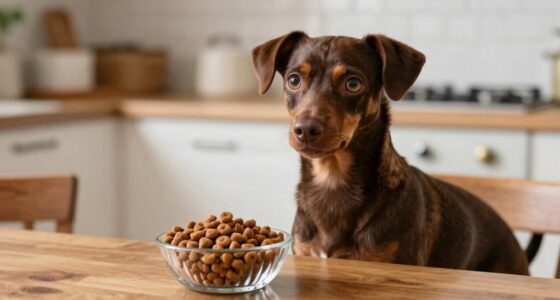

When you introduce a new treat, your dog may act differently because their instincts, sensory perceptions, and personal preferences shape their response. Some dogs get excited, cautious, or hesitant based on smells, textures, and past experiences. Confident dogs tend to approach with enthusiasm, while shy ones may hesitate. Paying attention to their body language and reactions can help you understand what they like. Keep exploring these signs, and you’ll discover more about what makes your dog comfortable and motivated.
Key Takeaways
- Dogs may react cautiously or hesitantly due to unfamiliar smell, texture, or taste of new treats.
- Sensory perceptions influence how dogs interpret and respond to novel treats.
- Individual preferences and past experiences shape their curiosity and willingness to try new snacks.
- Confidence levels and social cues can affect whether a dog approaches or avoids new treats.
- Observing body language helps identify a dog’s comfort and preferences with unfamiliar treats.
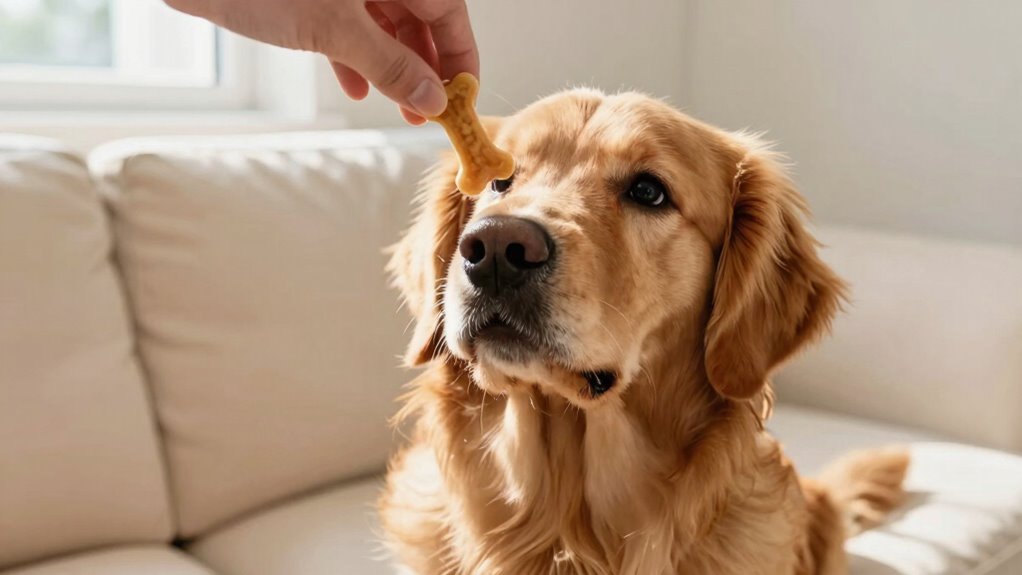
When your dog encounters new treats, you might notice them acting more excited, cautious, or even hesitant. This change in behavior is completely normal and often stems from their instinctual responses and individual treat preferences. Dogs aren’t wired to accept every treat blindly; instead, their behavior around new treats reflects their past experiences, sensory perceptions, and comfort levels. Dogs may also be influenced by their sensory perceptions, which affect how they interpret new smells and textures. You’ll see some dogs eagerly snatch up unfamiliar snacks, while others sniff cautiously, maybe even backing away before deciding whether they trust the new offering. These reactions give you insight into their dog behavior and how they process new stimuli, especially when it comes to food.
Your dog’s treat preferences play a significant role here. Just like humans, dogs develop likes and dislikes based on taste, smell, and texture. Some may prefer softer, meaty treats, while others might be more inclined toward crunchy snacks or fruit-flavored options. When a new treat appears, your dog’s initial reaction can tell you a lot about what they find appealing or unappealing. If they’re hesitant, it might be because the smell isn’t familiar or because they’ve had a negative experience with a similar treat in the past. Conversely, if they eagerly gobble it up, it indicates a natural curiosity and a positive treat preference. Recognizing these preferences helps you choose treats that motivate and reward your dog effectively.
Recognizing your dog’s treat preferences helps you choose rewards they love and trust.
In addition, your dog’s behavior around new treats is influenced by their confidence and socialization levels. A confident dog might approach a new treat with enthusiasm, eager to explore, while a more anxious or shy dog may take longer to warm up. Sometimes, their cautiousness isn’t about the treat itself but about the environment or your tone of voice during treat time. If they’re hesitant, it’s essential to give them time and encouragement rather than forcing them, which can reinforce negative associations. Understanding this behavior helps you foster trust and build positive treat experiences, making training more effective.
Ultimately, your dog’s reactions to new treats shed light on their unique personality and preferences. Paying attention to their body language and responses helps you tailor treat choices that suit their tastes and comfort levels. Over time, you’ll notice patterns in their dog behavior that guide you in selecting treats they love and trust, strengthening your bond and making treat time a positive, rewarding experience. Recognizing these individual treat preferences can significantly enhance your training and bonding efforts. Additionally, being aware of their sensory perceptions and past experiences with treats can improve your overall approach to sustainable living practices that support their health and well-being.
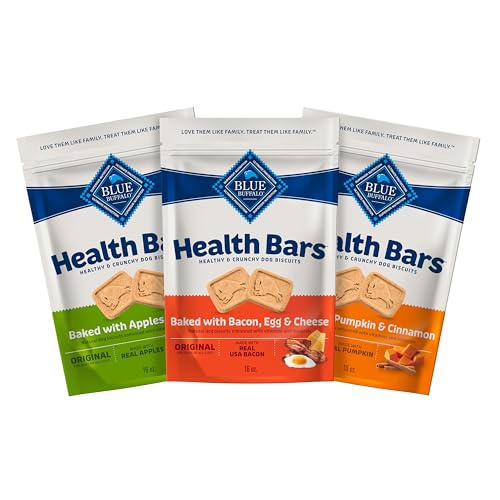
Blue Buffalo Health Bars Crunchy Dog Biscuits, Variety Pack, Bacon, Egg & Cheese, Apple & Yogurt, Pumpkin & Cinnamon, 16-oz Bags
FRESH BAKED AROMAS: A mouthwatering trio of savory bacon, egg & cheese, warm pumpkin and cinnamon, and sweet…
As an affiliate, we earn on qualifying purchases.
As an affiliate, we earn on qualifying purchases.
Frequently Asked Questions
Can a Dog’s Breed Influence Its Reaction to New Treats?
Yes, your dog’s breed can influence its reaction to new treats. Breed tendencies often determine a dog’s taste preferences and curiosity, making some more enthusiastic or hesitant. Additionally, dietary sensitivities vary across breeds, so certain treats might cause discomfort or allergies. Paying attention to your dog’s breed-specific needs helps you choose treats they’ll enjoy safely, and observing their reactions can guide you in selecting the best options for their health and happiness.
How Quickly Can a Dog Develop an Aversion to New Treats?
Your dog can develop a subtle aversion to new treats surprisingly quickly, often within a few encounters. This is influenced by taste sensitivity and behavioral conditioning, where initial reactions shape future responses. If a treat doesn’t meet their preferences or triggers discomfort, they may shy away after just a couple of tries. Being attentive to their cues helps you understand their evolving tastes, fostering trust and positive associations over time.
Do Age or Health Affect a Dog’s Response to New Treats?
Yes, age and health influence how your dog responds to new treats. Puppies may have developing preferences, making them more cautious or enthusiastic, while senior dogs often have sensitivities or dental issues that affect their acceptance. You should tailor treats accordingly, considering puppy preferences for milder flavors and senior sensitivities to avoid discomfort. Paying attention to your dog’s reactions helps guarantee treats are enjoyable and safe for their age and health.
Are Some Dogs Naturally More Cautious With Unfamiliar Foods?
Think of your dog as a tiny explorer, cautious yet curious. Some dogs are naturally more cautious with unfamiliar foods, showing puppy curiosity mixed with snack skepticism. This cautiousness isn’t just personality; it’s evolution’s way of keeping them safe. You notice this in their hesitation or sniffing before trying a new treat. Understanding this helps you be patient, encouraging your pup’s confidence while respecting their natural instincts.
Can Training Impact How a Dog Reacts to New Treats?
Training can definitely influence how your dog reacts to new treats, especially regarding treat novelty and food sensitivity. By gradually introducing unfamiliar treats with positive reinforcement, you help your dog become more comfortable and less cautious. Consistent training builds trust and reduces anxiety around new foods. Over time, your dog learns to accept new treats more easily, even if they initially show hesitation due to food sensitivity or treat novelty.

Good ‘N’ Tasty Soft and Crunchy Variety Pack, 8 Ounces, Treats for Dogs
GOURMET DOG TREATS: Made from premium chicken, wholesome duck or tasty beef, you’ll love the ingredients and your…
As an affiliate, we earn on qualifying purchases.
As an affiliate, we earn on qualifying purchases.
Conclusion
So, next time your dog suddenly turns cautious around a new treat, remember—those strange behaviors might just be their way of protecting you from a potential prankster. Ironically, what seems like suspicion is actually your pup’s way of saying, “Hey, I care enough to be cautious.” In the end, their wary antics remind you that even the most loyal friends have their quirks—especially when it comes to those mysterious new snacks.
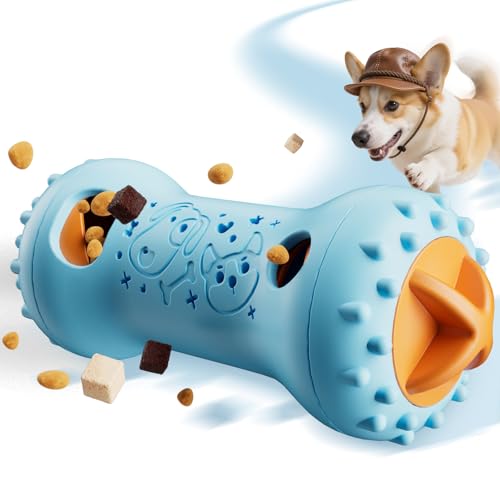
FOXMM Interactive Treat Dispensing Dog Toys – Adjustable Puzzle Toy to Keep Dogs Busy, Enrichment, Mental Stimulation, Cognitive Fun and Boredom Buster for Puppy Teething, for Small Medium Dogs
【Note】 NOT A CHEW TOY — Designed for interactive play only. We know every dog is unique, but…
As an affiliate, we earn on qualifying purchases.
As an affiliate, we earn on qualifying purchases.

Buddy Biscuits Trainers Training Bites Soft & Chewy Dog Treats, Bacon, 10 oz. Pouch
Highly Palatable with natural pork liver base
As an affiliate, we earn on qualifying purchases.
As an affiliate, we earn on qualifying purchases.